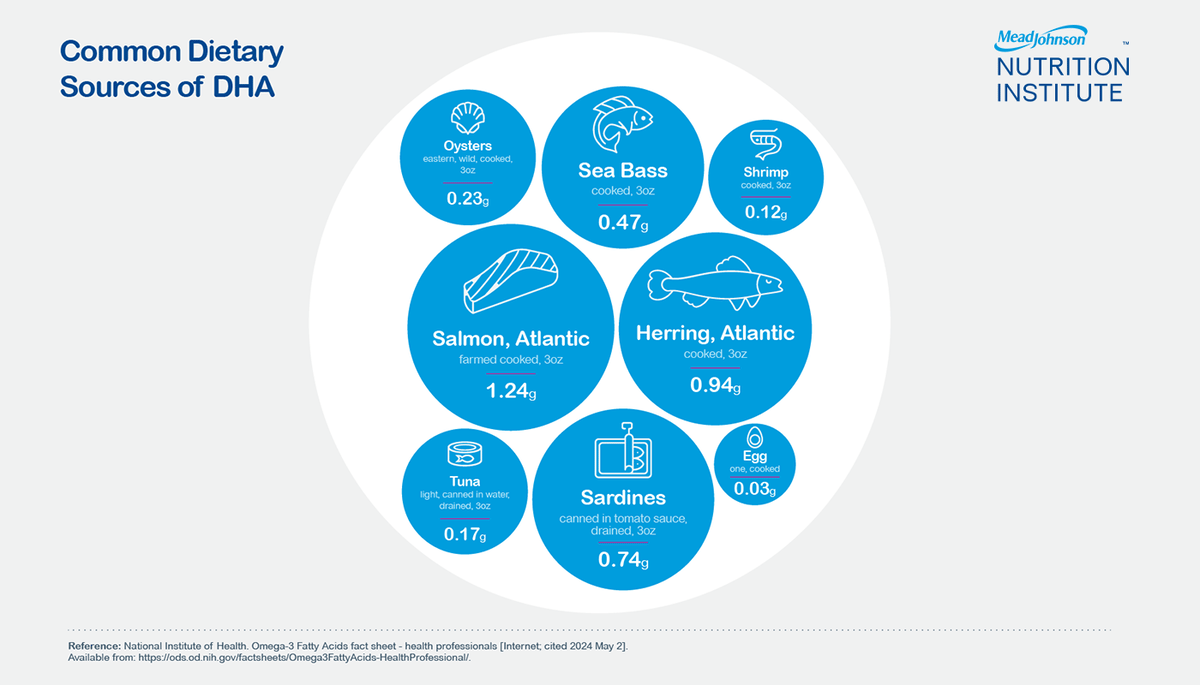
Common dietary sources of DHA
Docosahexaenoic acid (DHA), a long-chain omega-3 polyunsaturated fatty acid plays an important role in the brain and eye development for infants and children.1
DHA level in breast milk is impacted by the maternal intake of DHA. The Joint Food and Agriculture Organization of the United Nations (FAO) and the World Health Organization (WHO) Expert Consultation on Fats and Fatty Acids in Human Nutrition recommends at least 200 mg DHA a day for pregnant and breastfeeding women.2
Curious about DHA-rich foods? Download the infographic for the top food sources.
It is advised for pregnant and lactating women to have ongoing conversations with their doctors to determine the best sources of DHA from foods and/or supplements.
- Coletta JM, Bell SJ, Roman AS: Omega-3 Fatty Acids and Pregnancy. Rev Obstet Gynecol 2010, 3(4):163–171. https://www.ncbi.nlm.nih.gov/pubmed/21364848.
- Food and Agriculture Organization of the United Nations: Fats and Fatty Acids in Human Nutrition: Report of an Expert Consultation. FAO Food Nutr Pap 2010, 91:1-166 [Internet; cited 2024 Jul 15]. Available from: http://www.fao.org/3/i1953e/i1953e.pdf.
- National Institutes of Health: Omega-3 Fatty Acids Fact Sheet for Health Professionals [Internet; cited 2024 Jul 15]. Available from: https://ods.od.nih.gov/factsheets/Omega3FattyAcids-HealthProfessional/.