Role of Nutritional Intervention for Cesarean-Born Infants
Dr. Sarabeth De Castro examines how nutritional interventions may help address gut dysbiosis in cesarean-born infants by influencing early gut microbiome development. Gain insights on factors such as delivery mode, breastfeeding, and environmental exposures, and discover potential approaches like microbiota transfer and the use of prebiotics to improve gut health.
This presentation was delivered by Dr. Sarabeth De Castro, MD, Pediatric Gastroenterologist at the De La Salle Medical and Health Sciences Institute.

This presentation was delivered by Dr. Sarabeth De Castro, MD, Pediatric Gastroenterologist at the De La Salle Medical and Health Sciences Institute. Narrator:
Introducing Doctor Sarahbeth de Castro, an assistant professor at the College of Medicine, De La Salle Medical and Health Sciences Institute, and a pediatric gastroenterologist affiliated with major hospitals in Cavite, Philippines. Following completing her residency training in pediatrics at De La Salle Medical and Health Sciences Institute, Doctor DeCastro pursued further training in pediatric gastroenterology, hepatology, and nutrition at the Philippine Children's Medical Center.
Doctor Sarahbeth de Castro has authored multiple studies and has been the recipient of the Young Investigator Award by the European Society for Pediatric Gastroenterology, Hepatology and Nutrition for her research in nonalcoholic fatty liver disease, NAFLD in children. She currently serves as Secretary and a Board of Trustees member in the Philippine Society for Pediatric Gastroenterology, Hepatology and Nutrition.
Please welcome doctor de Castro.
Doctor Sarahbeth de Castro:
Good afternoon everyone. And of course, magandang hapon po to my dear Filipino colleagues and our participants. Well, I'd like to say thank you and I'm grateful to Doctor Pineau, of course, for the invitation to be part of this global summit. It is a good way to connect and also to meet these wonderful people.
Well, in the first session, we were able to establish that, of course, mode of delivery is highly important. Looking at the gut microbiota composition and also the gut microbial diversity for these infants and children. And with that we want to look at the possible or critical role of nutritional intervention, especially for those who are at risk. And this could be those who are cesarean delivery infants.
Well, trillions of these tiny organisms known as your microbes are all over, inside and out of our body. So they are in the nose, in the mouth, in the vagina, in the skin. And the majority would come out or within or stay within the gut. So, estimates, it was mentioned a while ago, it's between 30 trillion to 400 trillion of these microorganisms.
And looking at it, it will be basically around 1000g. But we are not after that amount or that weight of 1000g of these microbes. What we are after is that what could be the impact, what could be the role of these microbes inside our gut? Because mainly your gastrointestinal tract is the major immune organ and a lot of immune cells actually reside within the gut or within your gastrointestinal tract.
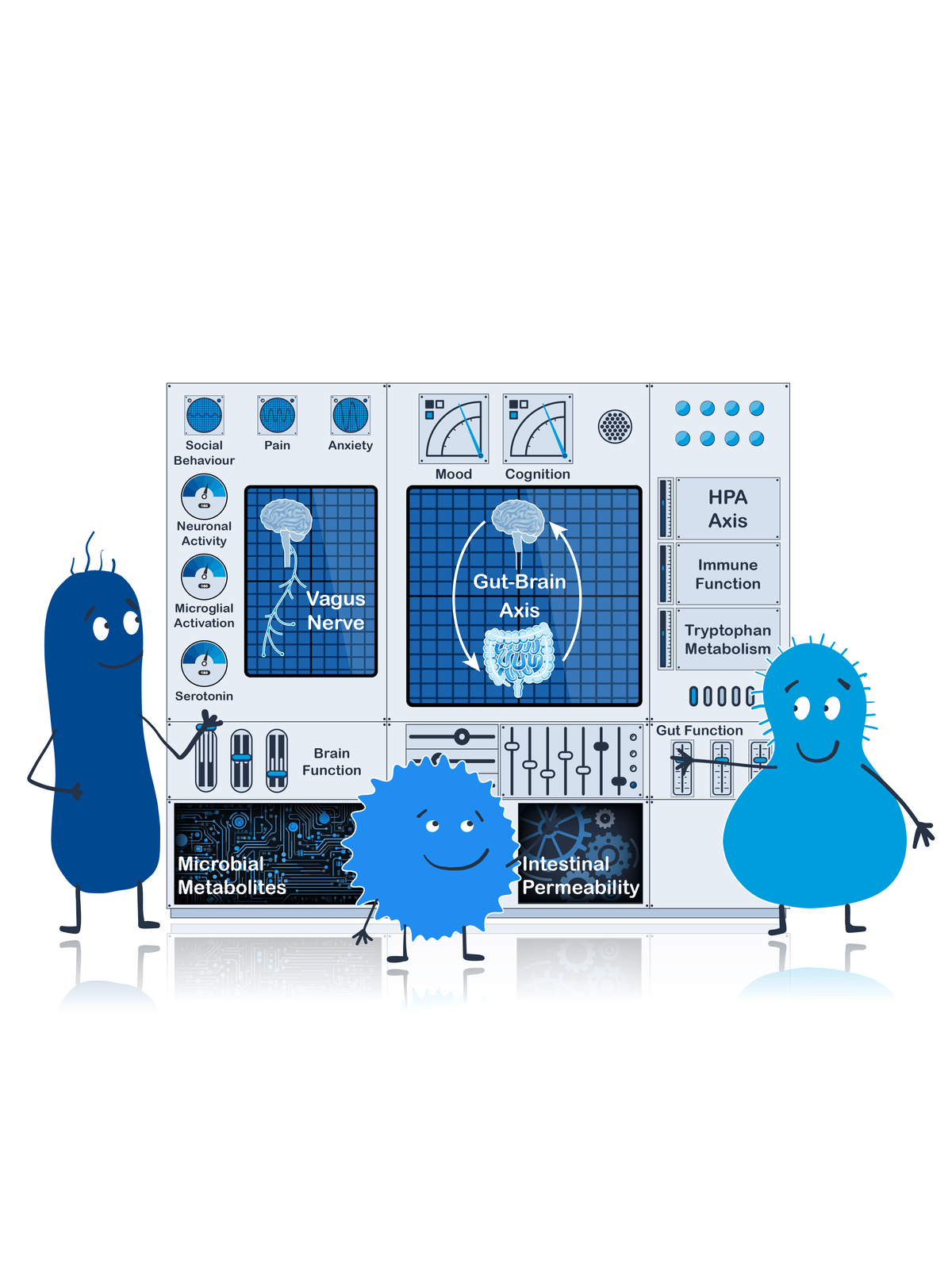
And indeed, the human gut is the habitat for a diverse and dynamic microbial ecosystem, and by saying that the microbiome plays an important role, looking at the vital homeostatic mechanisms of the body, again, protection against pathogens, you could have supports, enhances immune system development, modulation of the central nervous system. Basically, it was mentioned that your gut - up here - you have the gut brain axis that will also maintain the central nervous system function. Short chain fatty acid production. That is highly relevant. Of course, the metabolites, looking at the growth within your gastrointestinal tract.
Now, the host or the human gut is a host to a wide array of different microorganisms. This process or colonization would start at birth and continues up until early childhood. And this process of colonization, And this was mentioned a while ago by Doctor Diaz, that there are different factors that could probably influence the development of the gut microbiota of these children. And just to mention, briefly summarizing these factors for vaginally delivered infants, you have more of a diverse microbiota. For cesarean delivered infants, they have less colonization of your beneficial microbes or delayed colonization of your bifida bacteria. Of course you have antibiotic use. Your antibiotic use could lead probably to disrupting the microbiota of these infants, and later on would result to dysbiosis or imbalance, and later on may produce or may have a risk of development of your diseases. So other factors, premature delivery, I have to mention that there are premature infants, or most premature infants would have a lower diversity, looking at their microbes. And also they could have this immature immune response. And yesterday we were able to talk about complementary feeding and looking at the complementary food. If you have high diversity of your complementary feeding, then probably it would shape also the gut microbiota and also its diversity.
Now basically this are the differences. If you have vaginally delivered more of vaginal bacteria of the mother and also fecal microbiota. For your cesarean delivered, it is more increased abundance of your Clostridium difficile, and again more of the microbes within the skin Staph, Strep and also Propionbacterium and more of the pathogenic microbes I would say. That would give them the risk of development of dysbiosis later on. Okay. Now we have manner of delivery determined as one of the major determinants looking at the possibility or affecting the microbiome development of these infants.
And if we have that affectation of your microbiome early in life, this may result to the imbalance or dysbiosis, which in turn, in short and long term costs, would have the disease. And in this study that was published in Lancet in 2018, they tried to look at the risk or probably the consequences or the impact of CS delivery among infants and children.
They tried to use, three years as a cut off, looking at the short term consequences or impacts and also the long term impacts that would be more of a chronic lifestyle diseases. So basically short term impacts: respiratory distress, stress response, increase in behavioral stress, increase in cortisol, altered microbiome - we know that already - food allergy manifested at 36 months, immune function shown to have increase in T lymphocytes and also some certain cytokine levels, cardiovascular function, they have decrease in the systolic and also decrease in diastolic function of these children. For long term, on the other hand, again they are more of the chronic lifestyle diseases, obesity, some metabolic condition, type one diabetes mellitus, some gastrointestinal diseases. Over the past decade, we've been seeing a lot of increasing numbers of inflammatory bowel disease, even among Asian countries.
Also, you could have other autoimmune diseases. And a good example would be your juvenile or idiopathic arthritis in children. And because we want to prevent those long term impacts and those consequences, the question would be what could be the different strategies? Or do we have these strategies on how we can mitigate and reverse the effect of this dysbiosis, or those at risk, especially CS delivered infants? So basically this is a good diagrammatic representation of both having the environmental strategy and also some nutritional strategies that basically would cover it, especially for infants who are at risk. So briefly let's look at the environmental factors. The role of this environmental factors in the assembly, looking at the composition and diversity of your gut microbiota has yet to be elucidated.
We know about the hygiene hypothesis. Briefly it was mentioned yesterday because this theory is based on the premise that if you have exposure to your pathogens early in life, then it is actually beneficial, looking at the education and development of that human or the immune system and also the gut. So the sanitary conditions could sometimes, or over sanitation, could sometimes hamper our natural way of educating our immune system.
So exposure to green. So if you have urbanization you could have over sanitation and also your antibiotic use, separation from the outdoors. And some literatures would say that exposure to green spaces, or those who are living in rural areas, would have a more positive increase in the good microbes in their gastrointestinal tract. So basically, early life exposure to microbe rich environment may be beneficial to these infants or especially to human health, and that would be called your ‘microbial old friends’. Individuals who were known or are known to grow up in urban cities or in the city compared to the rural areas, they have less diverse of this gut microbiota. And how about, it was mentioned a while ago, the pets. So we all love our fur friends. And in this study they tried to assess and look at the presence of pets and also siblings. So findings revealed that the presence of pets within the household may be protective. Looking at the diversity of microbial community, how about those with siblings? So there are studies saying that it can promote, or it will promote the growth of a good diverse microbiota. But there are some studies looking at, or saying that, it has, comparable effect, looking at the presence or non presence of siblings within the same household. But indeed, we could say that there are factors that could probably impact the development of this gut microbiota in children.
And in this one, they assess the use of antibiotics, and reported disrupted maternal transmission of Bacteroides and high levels of colonization of health care associated opportunistic or harmful pathogens, especially in babies born in C-section and also vaginally delivered, but with antibiotic prophylaxis by the mother and not breastfed during the neonatal period. I would say that babies born by caesarean, well they have other disadvantages. But all is not lost for them because we have the following strategies by looking at it, that could probably reverse or mitigate the effect of this CS delivery - vaginal seeding and fecal microbiota. In vaginal seeding, the process is that you have this soaked gauze, soaked with vaginal secretions of the mother, and then immediately after birth, swipe to the mouth, to the nose and all over the body of that infant. It's quite risky, and most ob gyn experts still does not recommend the use of your vaginal seeding. But there are some studies, pilot studies, that look at the advantage of this vaginal seeding in approximating that microbes of infants compared to vaginally delivered and also cesarean delivery. So later on, we will try to look at that. Fecal microbiota transplantation. The process is that you get the mothers - reassess or assess at five weeks, some would say two weeks to five weeks prior to delivery - and then after that careful assessment prior to delivery, they will harvest the microbes or the microbiota of this mother from the feces. And then later on, after delivery, it will be mixed with 5ml of colostrum and then transplanted to the baby or to the infant.
But again, there are some evidences and there are some literature looking at it, but I would say more evidence that will support probably the safety of this procedure among infants on how it will estimate and help in the microbiome development. We have a lot to wait on that. Basically, we have to look at the advantages, of course, optimal nutrition for children would be giving of your human meal, prebiotics and probiotics, and of course we will look at the advantage of your nutrient MFGM in increasing the growth of your beneficial microbes as well in the gastrointestinal tract.
So to mention your maternal child microbial seeding. This may be a simple intervention that may partially restore the microbiome development. But you have a lot of controversies even in the Philippines and other Asian countries surrounding the process, the risk, the safety concerns and the rationale and regulatory issues. And still, it should not be performed and not recommended yet by our OB-GYNexperts. So in one study looking at infant development and also that vaginal microbial transfer, it's quite, looking at this study, it has an advantage in a way. But again, we have to look at the evidence and also the numbers of the subjects that were involved in the study, because the neurodevelopment was assessed to be higher among those who had VMT than saline. And significantly, it improved the gut microbiota maturation and also regulates the certain fecal metabolites of these children and also some metabolic functions.
Now moving on to feeding. So, feeding we want to promote breastfeeding. We want to have those bioactive components in human milk. We know that your bioactive components it will help functions of immune system, also your gastrointestinal tract maturity and also in your development and overall health of that infant. So in human milk there is relative abundance of bifidobacterium in the intestines of breastfed infants. It will provide the infant with maternal microbes as well nutrients and antibacterial agents, which are highly relevant for the infant health or development of this child. And lastly, it will help improve the imbalance of the gut microbiota or the dysbiosis itself.
Now, just to share the human bioactive components, of course, you have the macronutrients and also the micronutrients present in human milk, optimal nutrition for all infants. But we have also some bio actives that are highly relevant for the development of immune system, gut microbiota, and also overall development. Commensal bacteria, presence of this bacteria will make, or in a way shift, that developing gut microbiota, especially those who are at risk infants or those who are delivered cesarean. Now, in one study that assessed the presence of your MFGM and lactoferrin, and they tried to look at different subjects and assess the microbes - presence of different or diverse microbes - within their gastrointestinal tract. So again, one group standard, the other group is your reference, and then the other would be your experimental milk substitutes. So the results revealed that there is more diverse microbial community with breastfeeding prior to complementary feeding, including that of the predominance of your beneficial microbes such as bifidobacteria. Divergence, though, this appears when complementary feeding was started, and that is between six months to 12 months of age, and one when all the feeding groups are actually similar. So that pertains the role of your complementary feeding or nutrition itself. Because adding or improve your complementary feeding would actually help in that development of your gut microbiota composition and also diversity. And because of that, we are moving to the introduction of solid foods. Definitely if you have good, diverse, complementary feeding, remember that eight food groups that were mentioned, you have to have at least five of that eight food groups to be called a good or well, diverse diet. It will drive a shift towards that of a good microbiome composition, increasing the microbial diversity. And also it will mediate the transition towards that of an adult like microbiome, looking at again, the composition and diversity of these microbes.
Now I have a question and I hope this will have100%. Hopefully. Doctor Diaz. True or false? Prebiotics are nondigestible food ingredients that benefits the host by selectively stimulating the favorable growth and activity of probiotic bacteria. So let's start the poll. Oh wow I hope this won't change. Oh no. Still more than the 96%. Well, I think we can stop the poll. It's 95. Of course it's true. Well, we have to talk about biotics. You have probiotics, you have prebiotics, you have postbiotics and you have synbiotics. And by definition, of course, for it to be a good probiotics W.H.O., ‘live microorganism administered in adequate or right amounts will provide or confer a health benefit to the host’. So that will be your probiotics. Prebiotics ‘non digestible food ingredient benefit the host selectively stimulating the favorable growth or activity of the probiotic bacteria’. Simply speaking, they are food for the probiotic. Synbiotics, if you combine your pro and prebiotics, that will be your synbiotics. And postbiotics would be the post or after lives or ‘preparation of inanimate microorganisms and their components that confer a health benefit to the host’. But basically, for this presentation, we would focus on the role of probiotics and prebiotics, looking at gut microbiota composition and diversity.
Now, this may look a little blurry, but what I'd like to share in this one is that this study, a mining study on looking at the genomic traits or genome traits that will determine the different gut colonization potential for Bifidobacteria and Lactobacillus species. And in this study, it was discovered that lactobacilli have three different lifestyles. It can be free living, it can be nomadic, and it can be human adapted.
And it is only the human adapted strains that are capable of colonizing effectively, the gut. So the best, or in this study, the result revealed also that the best human adapted species or strain of your lactobacilli is your lactobacilli gasseri. On the other end, for your Bifidobacterium species, they are quite conserved, but most of the strains that were identified in this study revealed that this Bifidobacterium species are mostly human adapted or host adapted.
So given that probiotics, it can strengthen the intestinal barrier, regulates the immune mucosal immune function, also produce metabolites. Basically, they are beneficial to the host in maintaining health. So in one study looking at supplementation of a probiotic that will help restore microbial composition among antibiotic treated and also cesarean delivered infants, had strong overall impact on the microbiota, but still highly dependent on the diet of the child. So basically a lot of other factors should be considered. Only breastfed infants showed expected increase of your good microbes, bifidobacteria and reduction of your harmful or pathogenic microbes. Birth mode and antibiotic use significantly associated we know, with altered microbiota and composition as well.
So the ISAPP looking at the definition of your prebiotics, non digestible fermented by the specific bacteria colonizing the colon. I'm saying that because not all probiotics would utilize your prebiotics, because they can be selectively utilized by specific microbes that will be able to ferment, degrade, and use these prebiotics in order to have health benefit to the host. Natural, found in breast milk and also food, synthetic, you have other prebiotics that could be used for human health. So, GOS, galactose oligosaccharides, known to greatly stimulate your Bifidobacterium species and lactobacilli, and to lesser extent, some of these microbes, and also your polydextrose, not just stimulating the growth or the increase of your secretary IGA, but also stimulating Bifidobacteria, which are beneficial microbes in the gut.
So just to mention, this milk substitute given or supplemented with your PDX and GOS showed 1.5 times increase. Looking at the Bifidobacterium species, if you compare day 30 and day 60 of supplementation of this PDX and GOS. Now there are also studies or papers looking at the factors that will influence the composition of intestinal microbiota. So how about giving probiotics for maternal, for the mothers. So no association between the use of probiotics during pregnancy and intestinal microbiota of the offspring is different up until one month. Colonization rate differed most markedly among vaginally delivered and also those born cesarean delivered. Infants who were fed exclusively with those GOS and FOS had higher amounts or counts looking at bifidobacteria and lactobacilli in their stools.
How about your human milk oligosaccharides? We've heard around seven, five, ten years looking at the role of your human milk oligosaccharides, pathogenic, lessening pathogenic invasion, also providing its bifidogenic effect and a lot of other benefits or advantages we can get for your human milk oligosaccharides. Next, to your fats and lactose. Looking at human milk and your human milk oligosaccharides serve as a preferential substrate for specific bacteria, and most especially your bifidobacteria. And because you 2F’L is one of the most abundant human milk oligosaccharides, in one study, they tried to assess the role, or investigated the differences, of the infant gut microbiota composition between secretor and non-secretor mothers and take into account the birth mode. So, results revealed that infants of non-secretor mothers are particularly vulnerable to the effects of CS delivery, and they also impact early gut microbiota development. And combination of your cesarean delivery and lack of, or less of, your 2’FL would probably have an impact or profound effect looking at the altered microbiota of these infants. Lastly, how about your MFGM? MFGM, a three layered biological membrane surrounding that milk fat globule. Known as immune booster and also it will help in neurodevelopment, but what is new with regards to MFGM is that your milk fat globule membrane can also have, or has, this bifidogenic effect, looking at the different MFGM components. Similar to this bifidogenic effect with human milk, with complementary feeding stage, and it also showed reduction of the level of your H. influenzae. And in this study they also, look at the report or the result in which they have seen increase or stimulation of your Akkermansia or a new generation probiotic or NGB that basically, compose or comprise a huge part also of your gastrointestinal tract.
So just to mention your major active components within MFGM, this was discussed also yesterday. You have the lactadherin, sialic acid and the phospholipid component. And it showed, looking at this one, increase in the levels of your Bifidobacterium species, correlating it positively with the growth of beneficial microbes. And negative correlation, less of this Escherichia and also Shigella, looking at less of this harmful or pathogenic microbes within the gastrointestinal tract. And lastly MFGM, we know that it accelerates neurodevelopment, and in this trial that was done by Li in 2019, they have seen improved cognitive outcome, language outcome and also motor outcome. And that would prove that your MFGM accelerates neural development as well.
And further follow up of the Li study, we have the Colombo study briefly just to mention that after 5.5 years, they tried to re-assess these children using another questionnaire or test. And what they found is that they have improved visual spatial. They have improved processing and overall full-scale IQ of these children. So key messages again, your human microbiome plays an important role in controlling a lot of your homeostatic mechanisms in the body. Vaginal delivery or your cesarean delivery, these are modes of delivery that would serve as a major determinant, looking at the composition of your gut microbiota and also its diversity. We have the different strategies on how we can manage dysbiosis, but we have a lot of other factors to consider. Looking at human milk, of course, you have the bioactive components, giving a diverse complementary feeding or complementary food, the advantage of your pro and prebiotics in stimulating the growth of the beneficial microbes, human milk oligosaccharides, and lastly, your milk fat globule membrane. So thank you again everyone for listening and enjoy the rest of your day.This presentation was delivered by Dr. Sarabeth De Castro, MD, Pediatric Gastroenterologist at the De La Salle Medical and Health Sciences Institute. Narrator:
Introducing Doctor Sarahbeth de Castro, an assistant professor at the College of Medicine, De La Salle Medical and Health Sciences Institute, and a pediatric gastroenterologist affiliated with major hospitals in Cavite, Philippines. Following completing her residency training in pediatrics at De La Salle Medical and Health Sciences Institute, Doctor DeCastro pursued further training in pediatric gastroenterology, hepatology, and nutrition at the Philippine Children's Medical Center.
Doctor Sarahbeth de Castro has authored multiple studies and has been the recipient of the Young Investigator Award by the European Society for Pediatric Gastroenterology, Hepatology and Nutrition for her research in nonalcoholic fatty liver disease, NAFLD in children. She currently serves as Secretary and a Board of Trustees member in the Philippine Society for Pediatric Gastroenterology, Hepatology and Nutrition.
Please welcome doctor de Castro.
Doctor Sarahbeth de Castro:
Good afternoon everyone. And of course, magandang hapon po to my dear Filipino colleagues and our participants. Well, I'd like to say thank you and I'm grateful to Doctor Pineau, of course, for the invitation to be part of this global summit. It is a good way to connect and also to meet these wonderful people.
Well, in the first session, we were able to establish that, of course, mode of delivery is highly important. Looking at the gut microbiota composition and also the gut microbial diversity for these infants and children. And with that we want to look at the possible or critical role of nutritional intervention, especially for those who are at risk. And this could be those who are cesarean delivery infants.
Well, trillions of these tiny organisms known as your microbes are all over, inside and out of our body. So they are in the nose, in the mouth, in the vagina, in the skin. And the majority would come out or within or stay within the gut. So, estimates, it was mentioned a while ago, it's between 30 trillion to 400 trillion of these microorganisms.
And looking at it, it will be basically around 1000g. But we are not after that amount or that weight of 1000g of these microbes. What we are after is that what could be the impact, what could be the role of these microbes inside our gut? Because mainly your gastrointestinal tract is the major immune organ and a lot of immune cells actually reside within the gut or within your gastrointestinal tract.
And indeed, the human gut is the habitat for a diverse and dynamic microbial ecosystem, and by saying that the microbiome plays an important role, looking at the vital homeostatic mechanisms of the body, again, protection against pathogens, you could have supports, enhances immune system development, modulation of the central nervous system. Basically, it was mentioned that your gut - up here - you have the gut brain axis that will also maintain the central nervous system function. Short chain fatty acid production. That is highly relevant. Of course, the metabolites, looking at the growth within your gastrointestinal tract.
Now, the host or the human gut is a host to a wide array of different microorganisms. This process or colonization would start at birth and continues up until early childhood. And this process of colonization, And this was mentioned a while ago by Doctor Diaz, that there are different factors that could probably influence the development of the gut microbiota of these children. And just to mention, briefly summarizing these factors for vaginally delivered infants, you have more of a diverse microbiota. For cesarean delivered infants, they have less colonization of your beneficial microbes or delayed colonization of your bifida bacteria. Of course you have antibiotic use. Your antibiotic use could lead probably to disrupting the microbiota of these infants, and later on would result to dysbiosis or imbalance, and later on may produce or may have a risk of development of your diseases. So other factors, premature delivery, I have to mention that there are premature infants, or most premature infants would have a lower diversity, looking at their microbes. And also they could have this immature immune response. And yesterday we were able to talk about complementary feeding and looking at the complementary food. If you have high diversity of your complementary feeding, then probably it would shape also the gut microbiota and also its diversity.
Now basically this are the differences. If you have vaginally delivered more of vaginal bacteria of the mother and also fecal microbiota. For your cesarean delivered, it is more increased abundance of your Clostridium difficile, and again more of the microbes within the skin Staph, Strep and also Propionbacterium and more of the pathogenic microbes I would say. That would give them the risk of development of dysbiosis later on. Okay. Now we have manner of delivery determined as one of the major determinants looking at the possibility or affecting the microbiome development of these infants.
And if we have that affectation of your microbiome early in life, this may result to the imbalance or dysbiosis, which in turn, in short and long term costs, would have the disease. And in this study that was published in Lancet in 2018, they tried to look at the risk or probably the consequences or the impact of CS delivery among infants and children.
They tried to use, three years as a cut off, looking at the short term consequences or impacts and also the long term impacts that would be more of a chronic lifestyle diseases. So basically short term impacts: respiratory distress, stress response, increase in behavioral stress, increase in cortisol, altered microbiome - we know that already - food allergy manifested at 36 months, immune function shown to have increase in T lymphocytes and also some certain cytokine levels, cardiovascular function, they have decrease in the systolic and also decrease in diastolic function of these children. For long term, on the other hand, again they are more of the chronic lifestyle diseases, obesity, some metabolic condition, type one diabetes mellitus, some gastrointestinal diseases. Over the past decade, we've been seeing a lot of increasing numbers of inflammatory bowel disease, even among Asian countries.
Also, you could have other autoimmune diseases. And a good example would be your juvenile or idiopathic arthritis in children. And because we want to prevent those long term impacts and those consequences, the question would be what could be the different strategies? Or do we have these strategies on how we can mitigate and reverse the effect of this dysbiosis, or those at risk, especially CS delivered infants? So basically this is a good diagrammatic representation of both having the environmental strategy and also some nutritional strategies that basically would cover it, especially for infants who are at risk. So briefly let's look at the environmental factors. The role of this environmental factors in the assembly, looking at the composition and diversity of your gut microbiota has yet to be elucidated.
We know about the hygiene hypothesis. Briefly it was mentioned yesterday because this theory is based on the premise that if you have exposure to your pathogens early in life, then it is actually beneficial, looking at the education and development of that human or the immune system and also the gut. So the sanitary conditions could sometimes, or over sanitation, could sometimes hamper our natural way of educating our immune system.
So exposure to green. So if you have urbanization you could have over sanitation and also your antibiotic use, separation from the outdoors. And some literatures would say that exposure to green spaces, or those who are living in rural areas, would have a more positive increase in the good microbes in their gastrointestinal tract. So basically, early life exposure to microbe rich environment may be beneficial to these infants or especially to human health, and that would be called your ‘microbial old friends’. Individuals who were known or are known to grow up in urban cities or in the city compared to the rural areas, they have less diverse of this gut microbiota. And how about, it was mentioned a while ago, the pets. So we all love our fur friends. And in this study they tried to assess and look at the presence of pets and also siblings. So findings revealed that the presence of pets within the household may be protective. Looking at the diversity of microbial community, how about those with siblings? So there are studies saying that it can promote, or it will promote the growth of a good diverse microbiota. But there are some studies looking at, or saying that, it has, comparable effect, looking at the presence or non presence of siblings within the same household. But indeed, we could say that there are factors that could probably impact the development of this gut microbiota in children.
And in this one, they assess the use of antibiotics, and reported disrupted maternal transmission of Bacteroides and high levels of colonization of health care associated opportunistic or harmful pathogens, especially in babies born in C-section and also vaginally delivered, but with antibiotic prophylaxis by the mother and not breastfed during the neonatal period. I would say that babies born by caesarean, well they have other disadvantages. But all is not lost for them because we have the following strategies by looking at it, that could probably reverse or mitigate the effect of this CS delivery - vaginal seeding and fecal microbiota. In vaginal seeding, the process is that you have this soaked gauze, soaked with vaginal secretions of the mother, and then immediately after birth, swipe to the mouth, to the nose and all over the body of that infant. It's quite risky, and most ob gyn experts still does not recommend the use of your vaginal seeding. But there are some studies, pilot studies, that look at the advantage of this vaginal seeding in approximating that microbes of infants compared to vaginally delivered and also cesarean delivery. So later on, we will try to look at that. Fecal microbiota transplantation. The process is that you get the mothers - reassess or assess at five weeks, some would say two weeks to five weeks prior to delivery - and then after that careful assessment prior to delivery, they will harvest the microbes or the microbiota of this mother from the feces. And then later on, after delivery, it will be mixed with 5ml of colostrum and then transplanted to the baby or to the infant.
But again, there are some evidences and there are some literature looking at it, but I would say more evidence that will support probably the safety of this procedure among infants on how it will estimate and help in the microbiome development. We have a lot to wait on that. Basically, we have to look at the advantages, of course, optimal nutrition for children would be giving of your human meal, prebiotics and probiotics, and of course we will look at the advantage of your nutrient MFGM in increasing the growth of your beneficial microbes as well in the gastrointestinal tract.
So to mention your maternal child microbial seeding. This may be a simple intervention that may partially restore the microbiome development. But you have a lot of controversies even in the Philippines and other Asian countries surrounding the process, the risk, the safety concerns and the rationale and regulatory issues. And still, it should not be performed and not recommended yet by our OB-GYNexperts. So in one study looking at infant development and also that vaginal microbial transfer, it's quite, looking at this study, it has an advantage in a way. But again, we have to look at the evidence and also the numbers of the subjects that were involved in the study, because the neurodevelopment was assessed to be higher among those who had VMT than saline. And significantly, it improved the gut microbiota maturation and also regulates the certain fecal metabolites of these children and also some metabolic functions.
Now moving on to feeding. So, feeding we want to promote breastfeeding. We want to have those bioactive components in human milk. We know that your bioactive components it will help functions of immune system, also your gastrointestinal tract maturity and also in your development and overall health of that infant. So in human milk there is relative abundance of bifidobacterium in the intestines of breastfed infants. It will provide the infant with maternal microbes as well nutrients and antibacterial agents, which are highly relevant for the infant health or development of this child. And lastly, it will help improve the imbalance of the gut microbiota or the dysbiosis itself.
Now, just to share the human bioactive components, of course, you have the macronutrients and also the micronutrients present in human milk, optimal nutrition for all infants. But we have also some bio actives that are highly relevant for the development of immune system, gut microbiota, and also overall development. Commensal bacteria, presence of this bacteria will make, or in a way shift, that developing gut microbiota, especially those who are at risk infants or those who are delivered cesarean. Now, in one study that assessed the presence of your MFGM and lactoferrin, and they tried to look at different subjects and assess the microbes - presence of different or diverse microbes - within their gastrointestinal tract. So again, one group standard, the other group is your reference, and then the other would be your experimental milk substitutes. So the results revealed that there is more diverse microbial community with breastfeeding prior to complementary feeding, including that of the predominance of your beneficial microbes such as bifidobacteria. Divergence, though, this appears when complementary feeding was started, and that is between six months to 12 months of age, and one when all the feeding groups are actually similar. So that pertains the role of your complementary feeding or nutrition itself. Because adding or improve your complementary feeding would actually help in that development of your gut microbiota composition and also diversity. And because of that, we are moving to the introduction of solid foods. Definitely if you have good, diverse, complementary feeding, remember that eight food groups that were mentioned, you have to have at least five of that eight food groups to be called a good or well, diverse diet. It will drive a shift towards that of a good microbiome composition, increasing the microbial diversity. And also it will mediate the transition towards that of an adult like microbiome, looking at again, the composition and diversity of these microbes.
Now I have a question and I hope this will have100%. Hopefully. Doctor Diaz. True or false? Prebiotics are nondigestible food ingredients that benefits the host by selectively stimulating the favorable growth and activity of probiotic bacteria. So let's start the poll. Oh wow I hope this won't change. Oh no. Still more than the 96%. Well, I think we can stop the poll. It's 95. Of course it's true. Well, we have to talk about biotics. You have probiotics, you have prebiotics, you have postbiotics and you have synbiotics. And by definition, of course, for it to be a good probiotics W.H.O., ‘live microorganism administered in adequate or right amounts will provide or confer a health benefit to the host’. So that will be your probiotics. Prebiotics ‘non digestible food ingredient benefit the host selectively stimulating the favorable growth or activity of the probiotic bacteria’. Simply speaking, they are food for the probiotic. Synbiotics, if you combine your pro and prebiotics, that will be your synbiotics. And postbiotics would be the post or after lives or ‘preparation of inanimate microorganisms and their components that confer a health benefit to the host’. But basically, for this presentation, we would focus on the role of probiotics and prebiotics, looking at gut microbiota composition and diversity.
Now, this may look a little blurry, but what I'd like to share in this one is that this study, a mining study on looking at the genomic traits or genome traits that will determine the different gut colonization potential for Bifidobacteria and Lactobacillus species. And in this study, it was discovered that lactobacilli have three different lifestyles. It can be free living, it can be nomadic, and it can be human adapted.
And it is only the human adapted strains that are capable of colonizing effectively, the gut. So the best, or in this study, the result revealed also that the best human adapted species or strain of your lactobacilli is your lactobacilli gasseri. On the other end, for your Bifidobacterium species, they are quite conserved, but most of the strains that were identified in this study revealed that this Bifidobacterium species are mostly human adapted or host adapted.
So given that probiotics, it can strengthen the intestinal barrier, regulates the immune mucosal immune function, also produce metabolites. Basically, they are beneficial to the host in maintaining health. So in one study looking at supplementation of a probiotic that will help restore microbial composition among antibiotic treated and also cesarean delivered infants, had strong overall impact on the microbiota, but still highly dependent on the diet of the child. So basically a lot of other factors should be considered. Only breastfed infants showed expected increase of your good microbes, bifidobacteria and reduction of your harmful or pathogenic microbes. Birth mode and antibiotic use significantly associated we know, with altered microbiota and composition as well.
So the ISAPP looking at the definition of your prebiotics, non digestible fermented by the specific bacteria colonizing the colon. I'm saying that because not all probiotics would utilize your prebiotics, because they can be selectively utilized by specific microbes that will be able to ferment, degrade, and use these prebiotics in order to have health benefit to the host. Natural, found in breast milk and also food, synthetic, you have other prebiotics that could be used for human health. So, GOS, galactose oligosaccharides, known to greatly stimulate your Bifidobacterium species and lactobacilli, and to lesser extent, some of these microbes, and also your polydextrose, not just stimulating the growth or the increase of your secretary IGA, but also stimulating Bifidobacteria, which are beneficial microbes in the gut.
So just to mention, this milk substitute given or supplemented with your PDX and GOS showed 1.5 times increase. Looking at the Bifidobacterium species, if you compare day 30 and day 60 of supplementation of this PDX and GOS. Now there are also studies or papers looking at the factors that will influence the composition of intestinal microbiota. So how about giving probiotics for maternal, for the mothers. So no association between the use of probiotics during pregnancy and intestinal microbiota of the offspring is different up until one month. Colonization rate differed most markedly among vaginally delivered and also those born cesarean delivered. Infants who were fed exclusively with those GOS and FOS had higher amounts or counts looking at bifidobacteria and lactobacilli in their stools.
How about your human milk oligosaccharides? We've heard around seven, five, ten years looking at the role of your human milk oligosaccharides, pathogenic, lessening pathogenic invasion, also providing its bifidogenic effect and a lot of other benefits or advantages we can get for your human milk oligosaccharides. Next, to your fats and lactose. Looking at human milk and your human milk oligosaccharides serve as a preferential substrate for specific bacteria, and most especially your bifidobacteria. And because you 2F’L is one of the most abundant human milk oligosaccharides, in one study, they tried to assess the role, or investigated the differences, of the infant gut microbiota composition between secretor and non-secretor mothers and take into account the birth mode. So, results revealed that infants of non-secretor mothers are particularly vulnerable to the effects of CS delivery, and they also impact early gut microbiota development. And combination of your cesarean delivery and lack of, or less of, your 2’FL would probably have an impact or profound effect looking at the altered microbiota of these infants. Lastly, how about your MFGM? MFGM, a three layered biological membrane surrounding that milk fat globule. Known as immune booster and also it will help in neurodevelopment, but what is new with regards to MFGM is that your milk fat globule membrane can also have, or has, this bifidogenic effect, looking at the different MFGM components. Similar to this bifidogenic effect with human milk, with complementary feeding stage, and it also showed reduction of the level of your H. influenzae. And in this study they also, look at the report or the result in which they have seen increase or stimulation of your Akkermansia or a new generation probiotic or NGB that basically, compose or comprise a huge part also of your gastrointestinal tract.
So just to mention your major active components within MFGM, this was discussed also yesterday. You have the lactadherin, sialic acid and the phospholipid component. And it showed, looking at this one, increase in the levels of your Bifidobacterium species, correlating it positively with the growth of beneficial microbes. And negative correlation, less of this Escherichia and also Shigella, looking at less of this harmful or pathogenic microbes within the gastrointestinal tract. And lastly MFGM, we know that it accelerates neurodevelopment, and in this trial that was done by Li in 2019, they have seen improved cognitive outcome, language outcome and also motor outcome. And that would prove that your MFGM accelerates neural development as well.
And further follow up of the Li study, we have the Colombo study briefly just to mention that after 5.5 years, they tried to re-assess these children using another questionnaire or test. And what they found is that they have improved visual spatial. They have improved processing and overall full-scale IQ of these children. So key messages again, your human microbiome plays an important role in controlling a lot of your homeostatic mechanisms in the body. Vaginal delivery or your cesarean delivery, these are modes of delivery that would serve as a major determinant, looking at the composition of your gut microbiota and also its diversity. We have the different strategies on how we can manage dysbiosis, but we have a lot of other factors to consider. Looking at human milk, of course, you have the bioactive components, giving a diverse complementary feeding or complementary food, the advantage of your pro and prebiotics in stimulating the growth of the beneficial microbes, human milk oligosaccharides, and lastly, your milk fat globule membrane. So thank you again everyone for listening and enjoy the rest of your day.
.webp?width=1200&quality=75&auto=webp)