Puntos Clave
Gut microbiota imbalance in US
Ir a la secciónHow may probiotics support infants’ health?
Ir a la secciónWhat are the challenges in studying probiotics?
Ir a la secciónAbbreviations
Ir a la sección
Junnan Gu, PhD & Rebecca Hill, PhD
Gut microbiota imbalance is widespread among healthy US infants
A 2021 metagenomic study highlights that dysbiosis, an imbalance in gut microbiota, may be an unappreciated issue for healthy infants in the US. This first-ever US-wide survey found a low abundance of Bifidobacterium, especially Bifidobacterium infantis (B. infantis), together with a high abundance of potential pathogens in the fecal samples of 227 healthy infants studied. This finding is striking when considering how our modern lifestyle may shape gut microbiome development in early infancy and what we might be able to do to modulate microbiome development during this key period.1
How may probiotics support infants’ health?
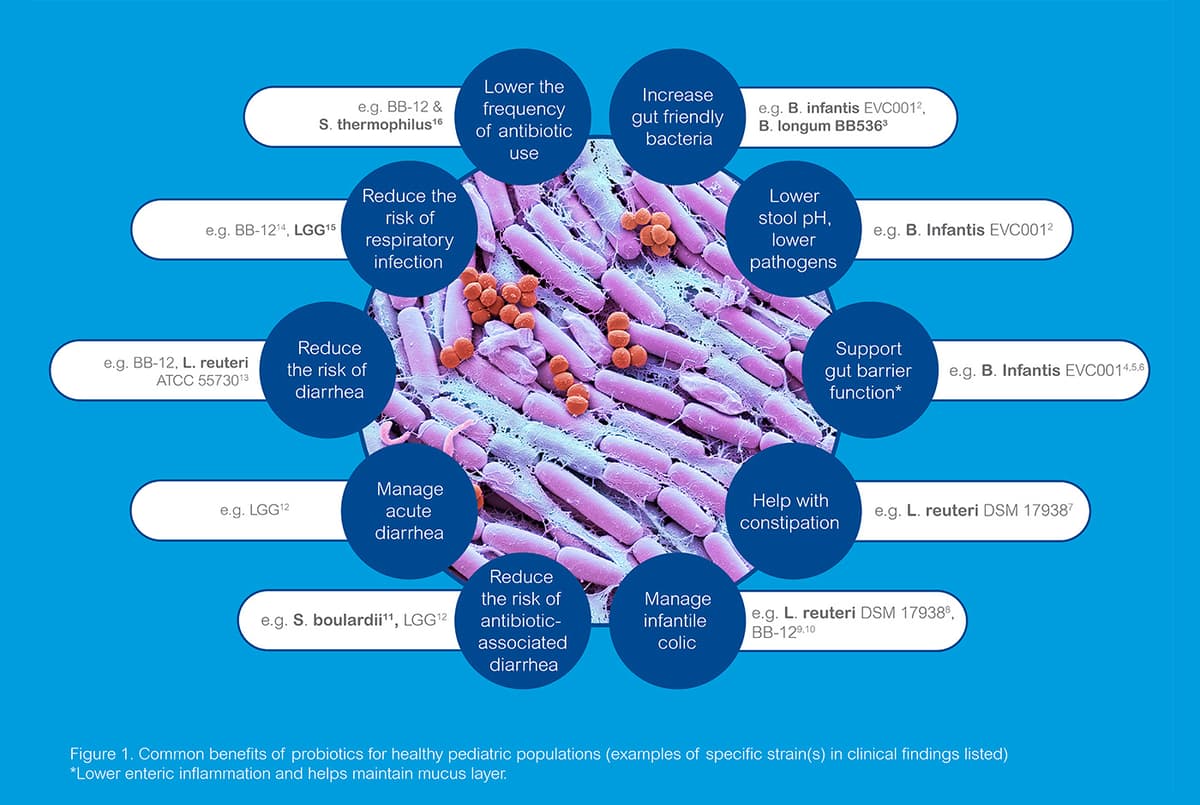
Probiotics have the potential to positively impact the composition and/or activities of infants’ gut microbiota, and so influence the health of babies. Many probiotics on the market for infants and young children are strains of Bifidobacterium and Lactobacillus. Common benefits for healthy pediatric populations include supporting the balance between beneficial/pathogenic bacteria, gut barrier protection, colic relief, reducing the risk of infections, and diarrhea management.
What are the challenges in studying probiotics?
Scientific support for probiotics continues to grow rapidly, but challenges remain when interpreting the evidence and developing guidelines for probiotic usage, largely because there are differences in:
- Clinical study design (e.g. well-designed randomized controlled trials versus observational studies; outcome measures);
- Target populations (e.g. healthy versus disease states; age ranges);
- Probiotic strain, including whether used in combination or alone;
- Levels of probiotics used.
Although the safety and tolerability of some probiotic strains in healthy infants and children have been supported by scientific evidence, more studies are warranted to better understand the efficacy and long-term health effects of specific strains within this population.
Abbreviations:
Bifidobacterium longum subsp. infantis (B. infantis), Bifidobacterium longum (B. longum), Bifidobacterium animals subsp. lactis BB-12 (BB-12), Lactobacillus reuteri (L. reuteri), Lactobacillus rhamnosus GG (LGG), Saccharomyces boulardii (S. boulardii), Streptococcus thermophilus (S. thermophilus)


.webp?width=1200&quality=75&auto=webp)