
Key Take Outs
How nutritional changes can impact digestive comfort and support gut health
An infant’s digestive tract is still developing during the first 1,000 days of life.1 During this time, key elements of digestion, such as enzyme activity, motility, and microbiome remain immature. This immaturity of the digestion tract can lead to discomfort which can present as crying, fussiness, gassiness, and constipation.2-5
The problem
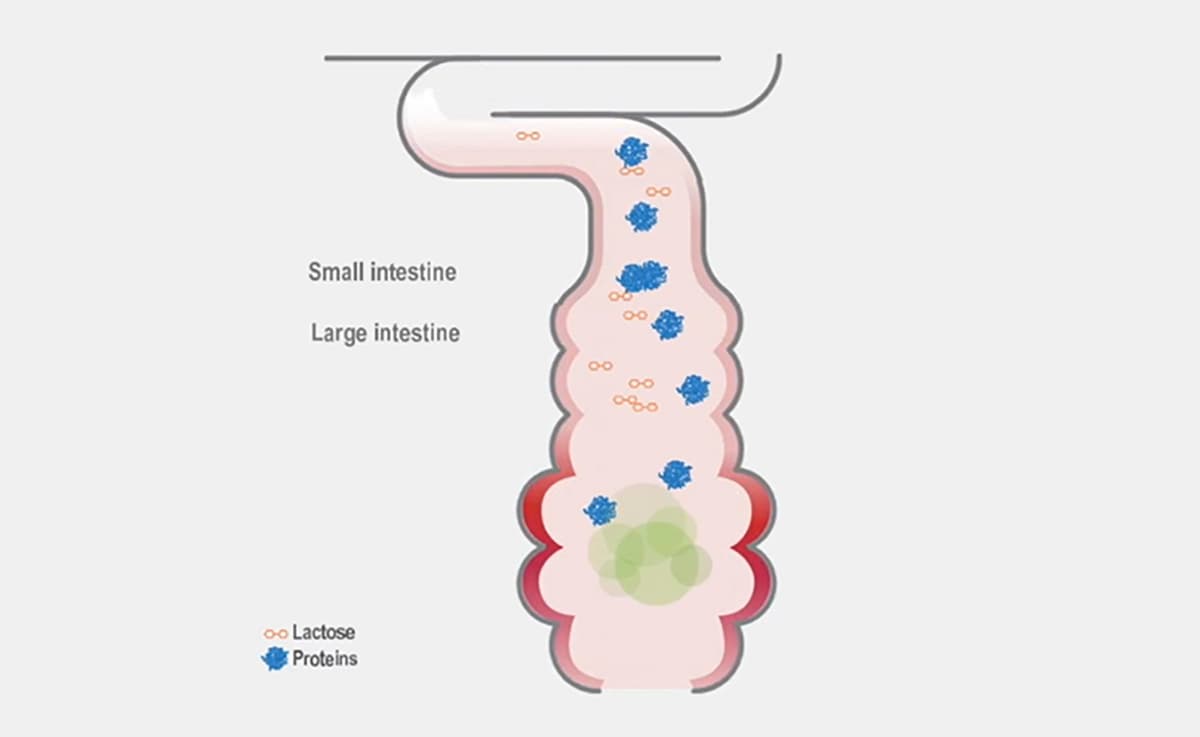
The problem: Infants can experience digestive discomfort because of their immature digestive tract.
While these immaturities can lead to discomfort in infants, specialized nutrition can offer support and promote gut health. Specialized infant formula that uses partially hydrolyzed proteins can reduce strain on the digestive system because they are easier to digest than in intact cow’s milk protein, especially when combined with reduced lactose.6-11 Furthermore, prebiotics like Galactooligosaccharides (GOS) and Polydextrose (PDX) nourish beneficial gut bacteria. GOS feed beneficial bacteria in the proximal large intestine. Polydextrose, or "PDX", is a more complex carbohydrate with a slower fermentation rate, and feeds bacteria throughout the large intestine. 9,12-15
The solution
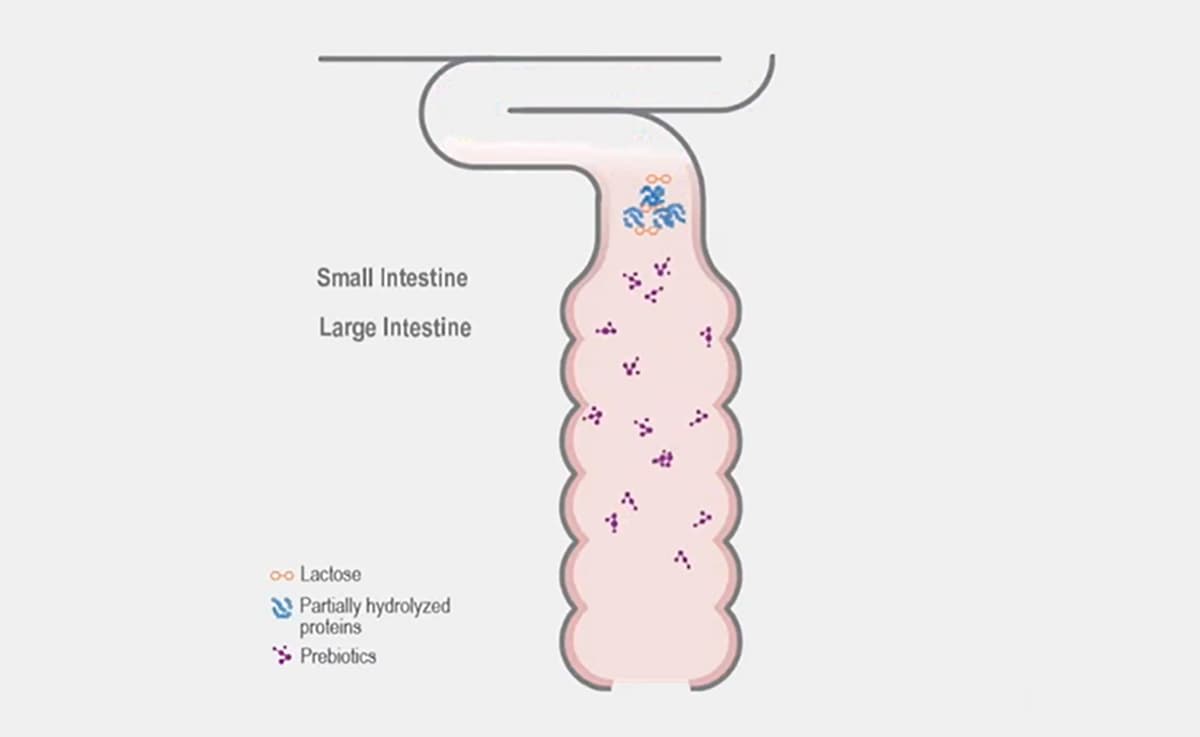
The solution: Infant formula can be tailored to ease discomfort and support the development.
Enhance your practice and support your youngest patients with practical, evidence-based nutritional solutions. To learn more watch our latest video and discover how to make a positive impact on infant digestive health.
- Henderson C: The science behind infant digestion. Verywell Family [Internet; updated 2021 Jul 14; cited 2024 Jun 19]. Available from: https://www.verywellfamily.com/infant-digestion-431681
- MJNI: Data on File. Quality of Life Study Ph TH US MX 2109.
- Iacono G, Cavataio F, Montalto G, Florena AM, Tumminello M, Soresi M, Notarbartolo A, Carroccio A: Intolerance of cow's milk and chronic constipation in children. Dig Liver Dis 2005, 37(6):432-438.
- Vandenplas Y, Hauser B, Salvatore S: Functional gastrointestinal disorders in infancy: impact on the health of the infant and family. Pediatr Gastroenterol Hepatol Nutr 2019, 22(3):207-216.
- Bellaiche M, Michaud L, Turbo A, Vandenplas Y: Functional gastrointestinal disorders in infants: A French prospective study. Acta Paediatr 2018, 107(7):1276-1282.
- Berseth CL: Probiotics in the prevention of necrotizing enterocolitis in preterm infants: A multicenter, randomized, controlled trial. Clin Pediatr (Phila) 2009, 48(1):58-65.
- Fawley R, Heitlinger L: Lactose Intolerance in Children. American College of Gastroenterology website [Internet; updated 2021; cited 2024 Jun 19]. Available from: https://gi.org/topics/lactose-intolerance-in-children/
- Indrio F, Riezzo G, Cavallo L, Raimondi F, Francavilla R: Prophylactic use of probiotics for gastrointestinal disorders in children. Nutrients 2022, 14(7):1405.
- Fabrizio V, Penagini F, Dilillo D, Borrelli O, Fanos V, Baldassarre ME: Gut microbiota and nutritional management of infantile colic. Front Pediatr 2022, 10:894626.
- Heyman MB: Lactose intolerance in infants, children, and adolescents. Pediatrics 2006, 118(3):1279-1286.
- Walsh J, Jones R, Wessely S: Functional somatic symptoms and consultation letters in primary care: An intervention study. Br J Gen Pract 2016, 66(649).
- Cool R, Heiss CJ, Carruth BR, Davy BM: Use of a dairy product and its effects on growth and health outcomes in infants: A systematic review. Nutrients 2023, 15(8):1942.
- Vandenplas Y: Gut microbiota development in early life: Probiotics are useful tools. Gut Microbes 2014, 5(6):681-687.
- Scalabrin D, Harris CL, Johnston WH, Berseth CL: Long-term safety assessment in children who received hydrolyzed protein infant formulas with Lactobacillus rhamnosus GG: A randomized, double-blind, controlled trial. JPGN 2012, 54(3):343-352.
- Salminen S, Stahl B, Vinderola G, Szajewska H: Infant formula supplemented with biotics: Current evidence and future perspectives. J Pediatr Gastroenterol Nutr 2016, 62(1):80-86.

.webp?width=1200&quality=75&auto=webp)