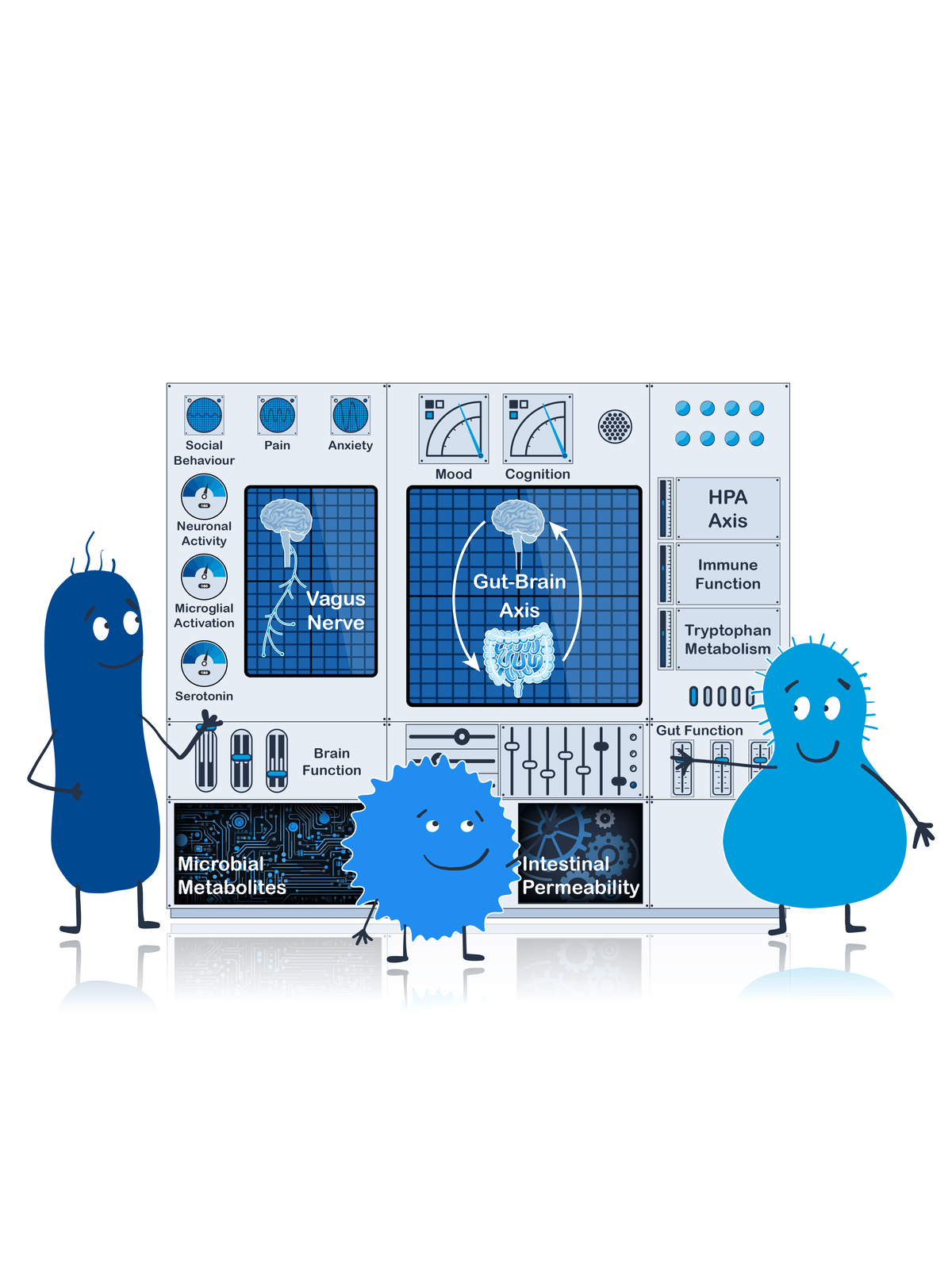
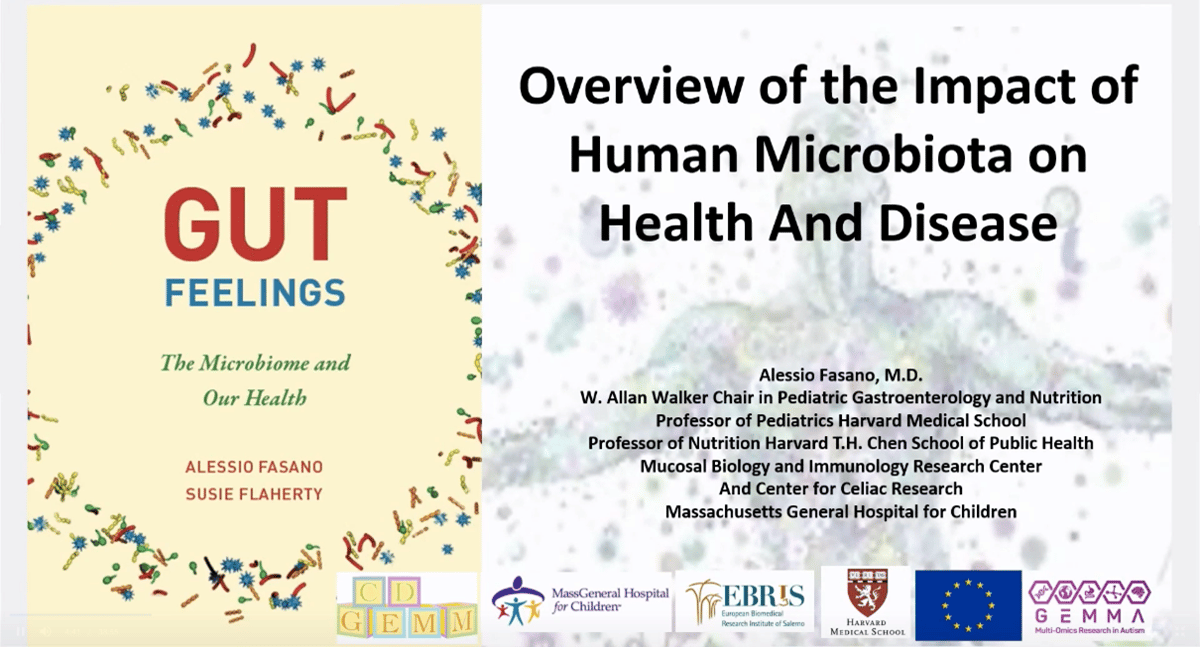
Overview of the impact of human microbiota on health and disease
Discover the intricate interplay between genetics, environment, and the microbiome in shaping human health and disease, and learn how the "Perfect Storm" of gut barrier, immune system, and microbiome influences chronic inflammatory diseases.
Renowned expert Dr. Alessio Fasano takes us through the pivotal role of diet in shaping the gut microbiome, the critical importance of the first 1,000 days of life in establishing a healthy gut-microbiome relationship, and the association between Western lifestyles and an increased risk of chronic inflammatory diseases. He explores how dietary interventions can potentially mitigate the risk of chronic inflammatory diseases and optimize well-being.
This presentation was delivered at the 56th Annual Meeting of the European Society for Paediatric Gastroenterology Hepatology and Nutrition (ESPGHAN) by Dr. Alessio Fasano, Professor and Director of the Mucosal Immunology and Biology Research Center at Massachusetts General Hospital for Children, USA.
Nítida Pastor:
We are on time. Let’s start. Welcome. Welcome to Mead Johnson Nutrition Institute symposium. It’s a pleasure to have all of you here, which is a clear sign of your commitment Looking for the best start in life for babies. And also, what we do in early infancy has an impact on what is happening later on. Then whatever we do is so taking care of ourselves in a very indirect way. What we are going to focus today is, as you can see on the screen, is microbiome and non-communicable diseases: A life long journey. And this is the reason why whatever we do have a long lasting effect. And this is what I want to repeat, because it's going to be one of the key messages that we do. Taking care of the babies is a window of opportunity for us to influence and it’s a gift that life give us, due to our profession, and we need to take advantage of that. Hey. Saying that the agenda for today is, first of all, we are going to listen to Doctor Alessio Fasano and he's going to give an overview of the impact on human microbiota on health and disease is well nice you know to have him for ages but also for his cutting edge science publications.
And then we will have the opportunity to have a depth in-depth dialog with him because it's not what he's going to present. It's also the question that we have and we want to know from him. And the way we have just a 15-minute presentation is like something is missing. Then we want to have the opportunity of a 1 to 1 clear dialog that I need to tell you that we don't know what is going to happen. The question will come, but let's see how how the evolution of this session you asked to us. Yeah. And later on we will have open questions for all of you. Then I hope that this is a new way to do the symposium, but you will take the opportunity to enjoy it, but also to be part of this session.
Dr Alessio Fasano doesn’t need a presentation. But I want just to remark a few things about his amazing career, he is a Pediatric gastroenterology and chief of the Division of Pediatric Gastroenterology and Nutrition at Mass General Brigham, but also a professor of nutrition at Harvard. He's well known by his discovery in 2000 on Zonulin a protein linked to gut dysbiosis. And this is completely a cutting edge science on autoimmunity. His work spans bacteria pathogenesis got to microbiome intestinal permeability and any other subject matter topics. He directs the center of coeliac research and the treatment there. And he's an author of “Gluten Freedom” and co-author of “Gut Feelings The Microbiome and Our Health”. Really this is something that it's, completely linked to the session today. When we talk about gut feelings, we may think of gut. That's the brain. But also we can think on leaky gut. Leaky brain. Who knows ? Thank you so much Dr Alessio Fasano. Looking forward to listen to you, I will enjoy too.
Dr Alessio Fasano:
So, good afternoon everybody. Thank you Nítida for the kind introduction and Mead Johnson Nutrition to sponsored. How inspirational and coincidental is that they talk on microbiome nutrition and stools has been placed in the brown color of, you know, room I thought that was very inspirational. So no point. And then I'm sorry. It's, you guys are eating, there are a couple of seats here in the front for those there are standing there if you want to come, ciao Roberta. in the next half an hour trying to give you an overview of what, you know, you heard from, you know, Nítida. That's going to be, what I believe, something extremely interesting, in terms of how we do our, you know, profession, particularly focus on nutrition and, child health.
I want to start to just put this in perspective that all diseases of humankind, until the recent past were considered to be based on two necessary and sufficient elements, who you are, genetically speaking. So your genetic background and the environment in which you live and when the two elements will come together, that would be the syndicates to develop any disease of humankind.
inlcuding ones that we face in pediatrics, then we realize from all epidemiological studies that it's true, they are necessary, the not not sufficient. Yeah, at least not the three elements to create the perfect storm. So to speak, to develop. any disease, you know, that affect humankind's, a certain element is necessary because these two worlds are normally segregated by barriers.
The most visible or obvious is the skin. But there are many others, probably the most complex. And, you know, impactful is the gut barrier. So a lot of you know, that barrier and increase antigen trafficking, of environmental stimuli that can instigate inflammation on a specific genetic background seems to be a third element. So of course we talk about inflammation, particularly chronic inflammatory diseases.
So in the immune system gut to be involved in all this. And last and not least which is the object of our chat today, this ecosystem for which we know very little because, you know, technical limitation until the recent past, that is the, microbiome will and probably we of course, you know, you all aware that we have microbiome all over our body, but more studied and more complex, most impactful is the gut the microbiome. I put this elements separate in the sense of, you know, artificial presentation. But they are highly integrated, particularly the last three. So if you lose gut barrier capability and therefore there is an increased antigen trafficking. And of course the immune system instigates new inflammation and vice versa, as you will see in a moment.
You know, chronic inflammation can, you know, jeopardize the gut barrier. And if you have increased permeability the microbiome goes off balance and vice versa, and so on and so forth. But probably the less alert were the low hanging fruit for the near future. For us to really move the field forward is the appreciation that the if I'm born with the predisposition to develop any disease, I don't know food allergy, autoimmunity, cancer that doesn't mean that necessarily this will materialize as we believed before having these genes, in other words, does not imply that this will clinically become operative.
If it does, it does not. Depends how we play our genetic cards, and mostly who dictate that for what we understand, now both from animal models and now from humans, is the microbiome that epigenetically can can decide if, when, why and how we start that march from genetic predisposition to clinical outcome. And I'm going to present some evidence, you know, in a moment and, you know, Doctor Szajewska tomorrow will have a presentation on the specific of the epigenetic role in celiac disease. The other concept, not because we're gastroenterologists. So we want to self embellish our self, is that many, many, many, many centuries ago, the father of medicine Hippocrates already appreciated that whenever comes to health and disease balance, it really starts from the intestine to the point that he statements of all disease begins in the gut.
I believe is still a valid statement. A few years later, in 2000, I made that statement slightly differently. The gut, it's not like Las Vegas. What happened the gut stayed in the guts. And again, we see this over and over again as an example of a variety of chronic inflammatory diseases, apparently has nothing to do with the gut. Just think about neuroinflammation or neurodevelopment or, you know, autoimmune diseases. And, you know, involved in the pancreas, for example, or the joints or in the brain. And now we have evidence that this starts, all there. Why? Because the intestine mucosa, it's a source of battlefields on a daily basis. The gut immune system that is the richest area in the body has to make decisions when to fight and when to tolerate, when to get rid of the enemy and when to let it go.
And if this decision making process is guided epigeneticaly, make the correct way, that's how we stay healthy. But if the decision making is poisoned by changes that mainly dictate our lifestyle, this will translate in the wrong decision process that will eventually start that famous march. From genetic predisposition to clinical outcome. And this is a cartoon that talks about this.
You know much that we put forward that while ago. It was kind of visionary at that time or, you know, not well accepted, but I believe that is pretty solid for what we see. And if you go from left to right, from 1 to 4, that's what happened to us. Eventually when we march from a genetic predisposition that become actuality, if we're in point number one, we are in what we call technically mucosal homeostasis.
The microbiome is in balance in symbiotic relationship with us antigen trafficking looking tightly, tightly regulated. And that will be the way that we do antigen sampling that will induce causal tolerance in allergy. That is mediated by a variety of players, including some immune cells like the dendritic cells, macrophages, particularly Tregs. anti-inflammatory cytokines like IL-10 and TGF-beta. The problem arises when you move from 1 to 2. That's now you have an uncontrolled antigen trafficking particularly in the space in between cells, what we call the paracellular pathway. Just to this thing context. That space was consider until the relatively recent past sealed by cement. So everything that is negotiating between us and the environment has to come through the cell and not in between cells until in the late 70s, early 80s, a Japanese group, you know, was able to demonstrate that that space is a highly dynamic controlled by very, very dynamic structure that we call junctions and therefore antigen trafficking of untouched antigens.
So large molecules, that technically cannot make it through may eventually occur in this space. And if we have this flow of uncontrolled antigen trafficking or antitoxin for example. Yes derived from microorganism, this can start the instigation of the immune system to generate inflammation. Because that's the way that the immune system is programmed. I see something that does not belong to my body and I fight against this.
And when you fight, there is always collateral damage. that is inflammation, and then the inflammation is needed by a variety of cytokines particular TNF alpha, interferon gamma. That per se increase got to be built now from 2 to 3. And you got this vicious slope of increase antigen trafficking inflammation to inflammatory cytokines. The further increase in damaging traffic until you break tolerance and you develop an inflammatory process, which one depends on who you are, genetically speaking, if you are predisposed, let's say for functional disorders, you develop IBS.
And if you are, you know, predisposed to H1 immune response, you develop cancer TH2 food allergies. which we will be touched upon a little bit today and TH 17 autoimmunity. And that's something else that I will use as an example. The conundrum how do you move from 1 to 2 has been lingering there? And a lot of them you can also immunologists, you know, just shrug your shoulders.
it is is happening. We don't know how until by serendipity, as needed. I was mentioning we discovered this molecule that is called Zonulin. That is a modulator of these tight junctions that, when produced in an excessive amount, may eventually create in the syndicates to allow this uncontrolled antigen trafficking and therefore instigation inflammation on a specific genetic background since the discovery almost 25 years ago now, there being a plethora of more than a thousand papers published, this molecule that links this molecule to a variety, a condition that goes from, you know, behavioral disorders to the process of aging, you know, metabolic disorders atuoimmunity, cancer and so on and so forth.
The common denominator, in all these diseases, you know, diseases, it's inflammation. That's what it is. And, you know, again, with that understanding now, the question is, it's looks like that this perturbation of the, segregation between the external world and us by these impairment, these barriers seem to be a key element that, as I mentioned to you, start that march.
And, you know, if you look at what really caused this, you know, that tremendous changes of the physiology of antigen trafficking. And now we start to understand a variety of conditions that can do that. But mostly the bottleneck, as you will see in the moment, is this dysbiosis. That is probably the most impactful reason why there is a upregulation that this pathway, including Zounlin pathways that increase antigen trafficking, and this dysbiosis can be due to a variety of conditions that we're going to list in at the moment that droplets, drug, alcohol consumption, pathogen, toxins, oil, this of course impinge on the immune response. Now, if that's the premise, if this is what we're dealing with, the consequential of collarary is that, well, if we want to mitigate this inflammatory conditions, we need to really change the status quo and try to mitigate dysbiosis by fixing the problem. If it’s alcohol, if it’s antibiotics and anti-inflammatory drugs, whatever.
However, I believe that of all the remedies that you see on the right, the two, that really has been a focus of research and even some clinical applicability that we're going to discuss a little bit today is the use of probiotics and the change of diet habits. I would say, you know, in general health, you know, diet.
And we will visit a little bit, but not this As well as. speaking of nutrients and barrier. Now they are the good guys, the bad guys. So we start to have really the appreciation. Why for example, fibers, specific you know, molecules like glutamine , vitamin D now is really a major focus of its impact on immunity.
And eventually also, you know, the, changing the microbiome can affect, you know, the immune response in the right condition, including the response to anti-cancer treatment, so on and so forth. Cysteine, vitamin A and tryptophan, they all seem to fortify the barrier and therefore protecting us against this uncontrolled antigen trafficking. On the other hand, there are the bad guys, you know, substances that jeopardize different kind of mechanisms that we don't have at the time to go through, the barrier like, you know, ethanol, bile acids, other emulsifiers, fructose and glycan and so on and so forth.
So with that in mind, what we do on this premise, you know, the question is, what is the march that is going on, how we explain the explosion of this chronic inflammatory diseases, including autoimmunity, food allergies that we see happening particularly for the same reason, Western lifestyle. And again, I don't know if you can guess what doesn't matter.
But the point that I want to make with this part of this slide is the following. No matter what kind of environmental trigger you want to consider, mom lifestyles during pregnancy is she drinking smoking just she live in a rural or urban area? Is she stressed or, you know, perinatally, am I born on a preterm, full term? Am I in the NICU? Am I being exposed to, you know, antibiotics and my threats? You know, breastfeeding or formula feeding or postnatally? What is my level of stress? The level of allergies and so on And so all this has been demonstrated, not supposed, demonstrated to affect the composition and the function of the microbiome. And because dysbioses increase antigen drastically by increasing permeability, that's how you start that march from genetic predisposition to clinical outcome.
But the other notion that is very pertinent to us as a pediatrician is that the first thousand days of life, from conception till we turn two, really dictate our clinical destiny. Really does. And we ask ourselves why, if I embrace a western lifestyle, my risk of these chronic inflammatory diseases increases. The answer is simply because we derailed from what was the plan of evolution. I wish that you would look at yourself 80% of you are taking a picture of this slide, just like amazing. All right, so we were we were destined to develop to be born by vaginal delivery, to eat real food and not junk. Legal or not infection. Because 10 million years ago, when we started this journey, you would die, of infection And then if you survive, you develop, you know, eventually, protection. No antibioitics So of course, that were antibiotics at that time. And the microbiome with that premise, with that plan was established to be in a friendly, symbiotic relationship with the host.
And because 2 million years ago, you die, either infection or dinosaur would eat you that you don't have the time to develop cardiovascular diseases because life expectancy was 13-14 years should not come a surprise that the microbiome microbes has a great deal to inform the immune system how to work and indeed is now accepted notion that the program of the immune system to decide if, when, why and the how. Unleash inflammation is all dictated by programing by the microbiome. During these two years of life.
Inflammation is nothing else. To create a very hostile environment from microbes to grow is too hot. There are chemicals, that would kill you. There were, you know, cells like immune cells that eat you of course, you are destroying the tissue that you inflamed, but the overall organism will survive. Therefore, correct programing is paramount to really turn on inflammation.
When we're under attack at. Turn it off. When the enemy is being defeated. What happen now if we embrace a Western lifestyle that I'm fortunate the decision making process is being jeopardized by a an imbalance in the microbiome due with excessive C-sections. The of course of welcome to the use if this well it's you know survival issue for mom and or baby but not justified.
If the gut ecology says decide when to go on vacation. Eating junk, the use and abuse of antibiotics, you know, this frequent infection, all this translated and balanced microbiome that instruct the immune system to put the part of new information way too low. And because of that, on a specific continuous stimuli, inflammation on specific genetic background, it's a matter of time in which we tolerance and we start that march that.
Well, I was telling you about. So that's the reason why there is so much attention now in manipulating microbiome to slow down or even reverse what we've been doing wrong over time. And if you look at this first thousand days of life and you start, what can go wrong that will derail that appropriate engraftment of a symbiotic, you know, microbiome in the baby, starting from mom style again, what she eats.
I told you the stress, the infection and so on and so forth. Or the infants, you say antibiotics and so on and so forth, environmental that the vast majority of all these elements are influenced by the diet. So of all the elements that we have to point out that being responsible, that this derailment, that in the Western Hemisphere brought this epidemic of chronic inflammatory diseases. Your point once you may take antibiotics two, three times a year, but we eat 3 or 4 times a day. And that's the reason why the for the low hanging fruit, to try to put us back on track is to really focus on what we've been doing wrong with the nutrition and try to put remediation of the problem and therefore manipulating the microbiome to maintain health.
Nutrition seems to be the most logical way to go. If you look at you know, what are the reasons why we got sick and die now, the vast majority, the most impactful in nutrition. And this is not always like this. And matter of fact, the main reason why we got sick and died until the, you know, late 40s and early 50s, so not long time ago, this 2 million years, it was infection.
There were infections. Now it's way mainly the reason why we're sick and die is because, you know, inappropriate nutrition. And if you look at the diet habits that increase our risk to develop problems, with the exception of the first one, there's a high, you know, sodium diet and of course increases your blood pressure and therefore the change in cardiovascular diseases.
But I can make the point in that as well. All the ups are to do with the way that we feed our microbiome, you know, what's the prebiotic elements that eventually favored, a symbiotic relationship with our microbiome. So in the Western Hemisphere, we typically now have a diet low in whole grains, in fruits, vegetables, seeds, and so on and so forth, and disgracefully, because now we have to think also health equity.
These diets, they are poor of these elements are premise of people with low socioeconomical income. This is disgraceful for two reasons. Once because again this is going to be class A, class B people over time if they can or cannot afford that diet. And two, the paradoxically this was the diet the poor until the by price. Yeah I come from a humble family and I come from a region in which the Mediterranean diet because nothing else that was the way to eat. Getting meat every two, three weeks, not every day. Where are the proteins These were coming from legumes. And that's the way that we evolved. And now, if I'm a mother of a single mother with three kids and I have €10 a budget, what do you think? That I feed my kids fruits and vegetables. All the junk food that's fills the belly. That's where the other, you know, conundrum that we're going to face in the near future. I'm going to wrap it up to give you a couple examples. So we have time, of course. for question and answer of what all this entails and how really in the near future is going to be the way that we change health care to try to mitigate this inflammatory processes. And I'm going to give you an example of immunity, as we'll see here. This is an example and an example of, allergy. That would be food allergies. You sample this new disease stems for a very ambitious project that we started more a decade ago to do this multi-omics analysis because the microbiome is nothing else, and piece of a very complex puzzle of omics that come together.
And it's and you I mentioned already, genetically speaking, you know, it really depends who you are, but also environment, you know, metabolomics and so on and so forth. In doing this study that involves now more than 5 or 600 families collecting a huge amount of samples and maintaining them. Because the other important thing is, without data, clinical data, you cannot make any sense of your nutritional, you know, intake or it needs or, you know, the microbiome composition and so on and so forth but when you use that and you connect with, you know, mathematically defined, the model with artificial intelligence, you can suck the gut modeling of why some people on specific genetic background take the wrong turn, and some others they do not. And in doing this mathematical modeling as a proof of concept, we were able to analyze the microbiome of these kids all at risk of coeliac disease because somebody in the family has coeliac disease. That's the inclusion criteria to be part of the study. And look at the marks. You know, we call these kids by hand sometimes before they were born until they eventually developed. coeliac disease or not. And what we realize is that they say a a microbiome signature that highly, highly precisely predicts who down the road we're talking about almost 90% will eventually develop.
coeliac disease or not. And when you ask where is this signature? What what is the characteristic The signature. Two elements the loss of protective components, the microbiome, the the brake on inflammation and the acquisition and enrichment of components, that favor, inflammation from the microbiome. And because the first one it's extremely interesting question being what these kids they lost in their microbiome that put them at risk.
to develop coeliac disease. compared to the one that despite to be a risk they do not. It came down to only five microorganisms. All of them already designed as quote unquote probiotics because they've been reported in the literature to ameliorate inflammation. How do they do that? So what is the mechanism that eventually create the sydicate the protective?
First of all, now we have the capability, technical capabilities. That's the reason why I'm seeing, you know, we're on an unprecedented situation not to isolate microbes. So, you know, at the beginning when we start to study the microbiome, we use, you know, genetically culture independent measurements, because we're under the impression the vast majority of the microbiome cannot be cultivated. Now we have the capability to do so.
And these five students have been isolated from the kids at risk, did not develop coeliac disease and sequence. And compared to the reference, you know, strains. And they had 2% mutation in genes that control something interesting function in communicating with the hosts, mainly on three domains genes that control the host's immunity response. Gene the control hydrogen trafficking ability of the host. And gene that control, you know cell turnover of the host. And by using a variety of techniques that I don't have the time to go into the details, including gut organoids, of kids coeliac disease or potential coeliac disease to compare them to the controls. And doing a series of of testing, we realized that if you put this strains on an organoids that is been exposed to gluten, the detrimental effect of gluten on antigen trafficking, and, you know, cell turnover and inflammation already demonstrated and published is completely ameliorate. And if you ask how they do that, epigenetics. So in other words, this strains produce molecules, then instruct causal hosts to reprogram the genetic makeup to tolerate gluten. So in other words this miRNA show that they are capable to touch on the epigenetic cell turnover and pluripotency changes in the host, barrier function in the host, innate and adaptive immune response in the hosts. So if gluten is there, do not react. But once they are lost gluten is capable to communicate with mucosal host, and start the chain of events that leads to the problem. So to summarize. Now we know that the first thing that happened months before it's the gut dysbiosis followed by this epigenetic reprograming of the mucosa, followed by an upregulation of zonulin pathway.
They don't have a chance to discuss. And with that break tolerance and then onset of full blown coeliac disease, what that means now we have steps. We have biomarkers that eventually we can use to intercept the disease, including the manipulation of the microbiome. Let's move to food allergies here. Also, there's been a tremendous change in the status quo here even for TH2 new responses. We've seen an increment of the man. This is the classical, you know, distribution of, you know, the progression of allergic march in which typically we see peaks of atopic dermatitis and food allergies in childhood that will decrease over the years while in opposite tendency we have allergic rhinitis and allergic asthma. However, why typically food allergies in the past tend to resolve early in life, particularly cow’s milk protein tolerance.
Typically, the dogma was by year one everybody will be back to normal. That's not the case anymore. And we have, you know, people that have sustained food allergies over time. Why this is all happening this. Well, because again, there's been a change. Also, the understanding how you break tolerance in the context of TH2 immune response. And once again, dysbiosis, it seems to play a role.
And this is a recurring theme. So I'm saying again, same thing. You have a diversified microbiome. So always imbalance you know, do you produce specific metabolites or postbiotics like short chain fatty acids. They keep, you know, biotic you know terms. The anti trafficking the immune cells are not exposed investigated by these bad guys and so on and so forth. Everybody said but when you lose the protective elements for example short fatty acid because dysbiosis. Now what happened is that this will have an effect to some of the connective elements of the gut mucosal immune system, particularly TRegs. There is a release of pro-inflammatory cytokines that promote TH2 immune response and then recruitment of immune cells including mast cells and eosinophils. You know well they play a role in TH2 immune response. So how do eventually we can't modify the status quo, what we can do about this. And here, you know, there have been a plethora of studies, probably the most studied of all these probiotics. Way to fix the problem is been focused on lactobacilli particularly the lactobacillus species because they've been the ones have been used the first. And we know a lot of detail about this, you know, I was particular group of probiotics. The metabolites that produce that can be protective, the, the effect that they have on immune system and when, they produce this all this element is pulled by postbiotics as I was telling you, the gut is not Las Vegas because this may eventually go down in circulation, can reach different organs and affect a variety of crosstalk between gut.
and other organs, including the gut brain axis. Mitigating neuroinflammation in development developmental diseases like autism or, you know, neurodegeneration. The gut lung axis, the gut heart axis, liver axis, gut bone axis, and so on and so forth. So there is, again, a huge amount of opportunities eventually to explore the use on these probiotics to mitigate this.
This part I'm going to focus to finish up my chat, on the use of one of these Lactobacillus lactobacillus gg and cows milk, you know, allergies. Most of the studies from Roberto and his group that have been then confirmed by other folks. But for example, it's an extensively hydrolyzed, cows milk formula.
You are, you know lgg you accelerate the recovery for Cows milk Allergy if, eventually, you use that for a long time. The safety of this, you know, use it's been demonstrated so up to five years, and since that also this combination is more effective in preventing IBS, like, you know, symptoms, you know, this formula plus LGG is more effective, investigational, slowing down the allergy march so that you can go on the progression is slower and induce a stronger modulation of epigenetic mechanism, associated an immune tolerance acquisition in children. So there is also some mechanism understanding there. I'm going to finish up because this is a pediatric audience. And I want to make sure that we got this right. particularly for those there, you know, in clinical practice, we are in an unprecedented time to change the destiny of the next generation of kids that window of opportunity that thousand days of life, the way that we feed these kids would dictate their destiny, but not just in this child for the entire lifespan.
And again, changing the attitudes favoring a more compatible nutrition habits use costly antibiotics when needed. Eventually, you know, makes use also of these helpful probiotics would change the destiny of this individual for the entire lifespan. So what I might take home message is so we can have an intellectual discussion, genetic predisposition and exposure to environmental trigger. Definitely necessary. But that doesn't mean that that's the end of the story.
there are These other elements that we should really target to try to mitigate this, you know, lflagrant chronic inflammatory disease. And we're facing right now the human microbiome seems to be instrumental in shifting this predisposition to clinical actuality. The first thousand days in life I might say multiple many times are is extremely important. And that's a way to manipulate the destiny of the people.
western lifestyle seems to be associated with increased risk of developing chronic inflammatory disease in them. All the elements that make disturb the probable engraftment therefore programing immune system. diet seems to be most impactful when others shift of paradigm. We always focus on quantity. Eat too much you’re obeseyou you know too little. Do you have you know malnutrition quality quality.
It seems to be even more impactful than quantity and therefore dietary intervention, particularly precision nutrition plus or minus use of probiotics seem to be in the near future intravenous strategy that we can really rely on to implement personalized intervention and or mitigate the risk of developing chronic inflammatory diseases. So, in other words, primary prevention. I want to thank you again for being patient in particular, one of their standing in the back because it’s tiring and of course, Mead Johnson Nutrition.
You have to give me an opportunity to share with you this and of course the crew of people that I enjoy to work day in and day out. They allow me to come over and embellish myself with this kind of information. Thank you so much.
.webp?width=1200&quality=75&auto=webp)