Dr Gerard Clarke:
Okay. Thanks very much for that very kind introduction. I'm really happy to, to be here today. Thanks very much to the organizers for, the invitation and also to all of you for coming along with a real pleasure to be with you at ESPGHAN here in Helsinki.
They're just, my disclosures. And just to orient you a little bit, I suppose, as Nitida said, I'm based in the Department of Psychiatry and Behavioural Science, but also APC, Microbiome Ireland and University College Cork and APC Microbiome Ireland. Is a Research Ireland funded center, dedicated to the study of host microbe interactions we've been around for more than 20 years. And, looking at these aspects of host microbe dialog, and within that, institute, within the APC microbiome Ireland, I'm working with John Cryan largely, to lead us the gut brain axis action to understand microbial regulation of brain function and behavior. But I suppose, what you really need to know is that, we're based in Cork, and that is very distinct, from the nut, Cork part of Ireland. Just if you're looking to find us, in the future, and we hope you can visit us to discuss your brain-gut access research.
So in today's session, we're really talking about, the first 1000 days of life and why that's so important for future gut and brain health, and we think, the microbiota is a very important new player in that, particularly with the way it harnesses gut-brain axis signalling. So understanding how the microbiota acquired in early life regulates physiology, brain function and behavior in the future, is an important new aspect that we need to understand as we reframe our understanding of these critical 1000 days, and their role in priming for future health. Now, in our research, we've been interested in trying to understand the scope of influence that our microbes have on brain function and behavior. We've been interested in trying to understand the mechanisms of play. How are they doing what they're doing? We've been looking at this really across the lifespan and also, with a translational perspective to see if we can move our research, from bench to bedside, and maybe back again, because, our preclinical resources are very, a very important tool if we have observations and human studies to see if we can tease out some of the mechanisms involved. For example, in our animal approaches.
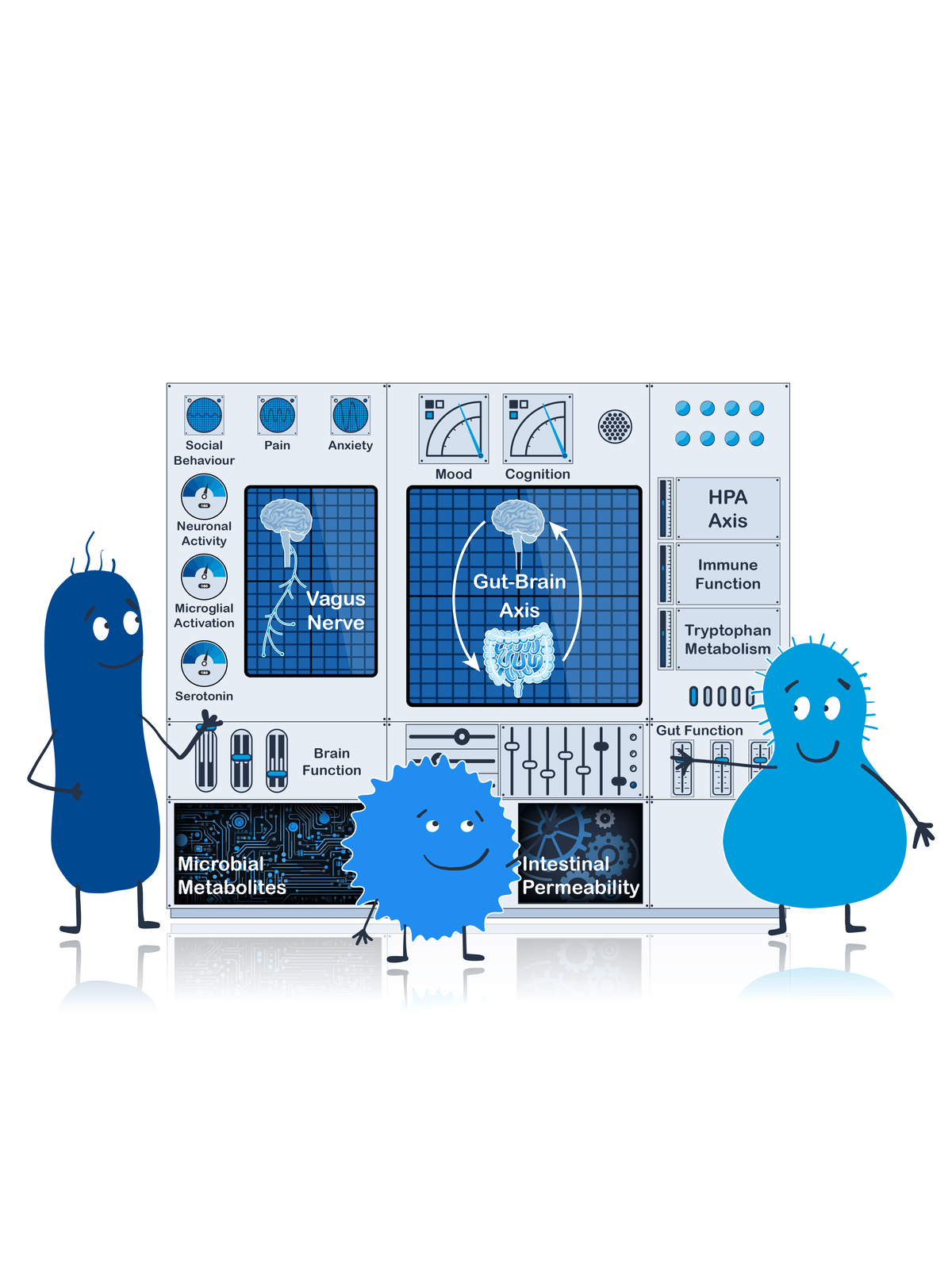
So how does this all work? Well, the gut-brain axis is the framework, through which microbes can influence brain function and behavior. And that's not new. That's been around for a long time. And there's a well-established framework that describes this bi-directional communication network, between, the gut and the brain. So there are very important pillars of the gut-brain axis. For example, the gastrointestinal tract is heavily innervated by the vagus nerve. That's a direct channel of communication between the gut and the brain. The immune system is a very important pillar of the gut-brain axis. And also your endocrine system, like the hypothalamic pituitary adrenal axis and the core stress hormones that are produced there, like corticosteroid in rodents and cortisol in humans, and we have to remember as well that our, microbes are like little mini factories. They're churning out these microbial metabolites, which can also function as important, communicators, within this gut-brain axis framework. Now, the gut brain axis controls fundamental aspects of gastrointestinal function like motility, secretion, permeability, and host immunity, as well as more complex functions, via its regulation at distal sites from the gut via the central nervous system in terms of visceral pain, hunger and satiety, mood and emotion, and cognition.
So this gives a pretty broad scope, through which our microbes can hijack the signaling pathways to influence multiple aspects at the level of the central nervous system. And I suppose really what we're saying is that the gut-brain axis gives our microbes a lot of buttons and levers, to press and pull. And when, they, activate these buttons and press and pull these levers, that allows signaling along multiple aspects, multiple pillars within the gut-brain axis, like fat metabolism or short chain fatty acids, regulation or immune function, or the HPA axis, which can then relay signals between the gut and the brain, to alter, and modify and control, how we, our thoughts and emotions and our behaviors.
Now, why this is so important, in early life, is that in utero, your gastrointestinal tract is essentially a blank canvas. So it's during the birthing process that the first kind of, microbial brushstrokes are applied, from your mother with subsequent postnatal colonization of the gut until maybe, about three years of age, when you approach something like an adult like complexity of your gut microbiota, and there are a lot of prenatal and postnatal factors that can influence, this seeding and assembly of the gut microbiota. What's important to understand is that, right as your microbiota is being seeded and right as it assembles, and then stabilizes, there are also important things going on, in the brain, which are fundamental aspects of neurodevelopment in terms of the wiring of the brain, like myelination, for example, and if gut-brain access signaling goes wrong, at these critical windows, early in life, then that can disrupt, as I said, the wiring of the brain. And while that may be initially clinically silent, it may manifest later in life and adulthood as alterations, across a range of different behaviors.
So the preclinical research, we've been involved in, in Cork has kind of illustrated just this scope of behaviors that are influenced by our gut microbes. And that extends to things like depression and anxiety, cognition, our social interactions. And then that's been pretty well, merged with what we see in clinical populations, where applying these different sequencing approaches tell us, indeed, that the gut microbiota is altered, in many clinical disorders that we might expect, based on what we've seen, from a behavioral perspective, in our preclinical models. So we see alterations in the microbiota and things like depression or anxiety or autism spectrum disorders or schizophrenia or irritable bowel syndrome. Now, a lot of those studies are cross-sectional in nature, so they don't tell us whether the microbiota alterations that were seen could have a causal role in symptom generation.
And to approach that the way the field has kind of, considered it as to look at these fecal microbiota transplantation studies. That's where you take a disease associated microbiota, transfer it into an animal model to see if it can recapitulate the important behavioral features of the clinical disorder that you're studying. That helps you establish if that particular microbiota configuration that's associated with a particular disease could have a causal role, in symptom generation or symptom exacerbation. And this is just one study from some time ago now where we're able to show the transfer of aspects of a depressive phenotype like Anhedonia, which is a core feature of depression.
Anxiety-like behaviors were transferred, which is very often, comorbidity expressed in depression. And we can see this right down to a biological level where alterations in tryptophan metabolism, are noted in at least a subset of individuals with depression. And when we transfer the microbiota from individuals with depression into our recipient animals, they also display alterations, in tryptophan metabolism.
And we've gone on to use this approach to show this is also relevant in the context of anxiety, where we noted alterations, using sequencing approaches in the gut microbiota in a particular type of anxiety disorder, social anxiety disorder, and also show the transfer of that, subset of anxiety disorders in the behaviors that emerged in our recipient animals.
Now, just to go back to how this all works, and I mentioned earlier on the concept of microbial factories. And the idea there, is that when you have your lunch, you're not just feeding yourselves, you're feeding your microbes as well. You're giving them the building blocks, the raw materials that they need, to produce the microbial metabolites that can interact with the whole. So these are fundamental, aspects of host microbe dialog. And once they produce these microbial metabolites, like short chain fatty acids or those derived from tryptophan, for example, that can be an important facet of host microbe dialog and have important implications for host physiology locally in the gut, but also at distal sites, like in the brain.
My lab is very interested in tryptophan, for example. So tryptophan is an essential amino acid. Once it's supplied in the diet, it's available then for processing a lot of host pathways. You may know tryptophan best as a precursor for serotonin. And serotonin, of course. Is the therapeutic target for many of the most successfully deployed and theoretical antidepressants in the treatment of, depression and anxiety in the clinic. But tryptophan is more than a precursor for serotonin. It's also processed, by microbes, along microbe specific pathways leading to the production of things like indoles, which we are also coming to recognize now are very important, for interacting with the host and potentially regulating gastrointestinal function, and also may be important for brain health.
Other important microbial metabolites include short chain fatty acids like acetate propionate butyrate. And we're coming to appreciate again that these microbial metabolites, these short chain fatty acids are very important signaling components, in the gut-brain axis, with implications for a range of different behaviors.
One recent example that we've been able to show is in the context of synaptic plasticity. And synaptic plasticity really refers to the ability of synapses to strengthen or weaken over time, in response to various stimuli. One of the stimuli that they will alter in response to a stress, we've shown here that the alteration, in acute stress, alterations in synaptic plasticity, are dependent on the capacity of microbes to produce butyrate. So butyrate is fundamental, in this, rewiring of the brain. I'm not going to talk too much about barriers today, but, Flavia will, we'll get into this a little bit more in her talk, I think, but it's important to point out, that often when we think about barriers, we think about the gut but actually there's a lot of similarities between a barrier function in the gut and the brain. And we think that these microbial metabolites, like short chain fatty acids and indoles, have an important regulatory role in ensuring the integrity of the barrier, both in the gut, but also in the brain, if they can reach the circulation, and distribute to sites, like, those in the central nervous system, which are important for, barrier function.
Now one of the things that might disrupt, the assembly, of the microbiota? I’m just giving you one example here in the context of cesarean section, so we know that if you're delivered by cesarean section, then the seeding and assembly of your microbiota is going to be different than if you were born pa vagina. Now, you'll catch up eventually, but still there will be a different trajectory there during these critical windows for gut-brain axis signaling during these critical windows, where the wiring of the brain, is been laid down.
There are other things that can cause cracks, in the foundations of gut-brain axis signaling during these early life periods. So, for example, our experience of stress, may have an important role. So stress, can signal down the way in the gut-brain axis to change the composition and function of gut microbes. This could happen prenatally and affect the way in which the maternal seeding of the infant microbiome occurs.
Or it could be in the postnatal period, disrupting the infant microbiome assembly and trajectory as well, to lead to alterations, in the gut-brain axis, with potential implications for behavior. One example of this is the maternal separation model that we use and our preclinical studies. So this is a model of early life stress. And what we find is that early life stress applied during critical times in early life, to our rodents leads in adulthood to a phenotype which is reminiscent of both depression and irritable bowel syndrome, and that these animals express depression like behaviors, but also they have visceral hypersensitivity, which underpins the abdominal pain, which is commonly noted in irritable bowel syndrome. Now this is, a slightly complex slide, but the main point I'm trying to get across here is that not all animals that experience distress respond in the same way. Some are resilient, some don't display any phenotype. Some display predominantly depression like behavior. Some display predominantly alterations in abdominal pain behaviors, whereas some express both phenotypes. So we really see this as a model, not just of depression, but a model of the psychiatric comorbidity in irritable bowel syndrome. But it's intriguing to us why the same stress exposure leads to such different consequences. And we're trying to understand the role of the microbes in that right now.
So, if the gut microbiota plays an important role in regulation of gut and brain health, then our perspective is that we should be able to mine for and target with psychobiotics. And psychobiotics is a pretty broad umbrella meant to describe a series of interventions to target the microbiota that can produce benefits for gut and brain health. And this could be prebiotics. It could be probiotics, it could be post biotics, or indeed, it could be whole diet. A psychobiotic diet type approach.
This is one example from our preclinical studies again using this maternal separation model. So as I said, the maternal separation model produces alterations both in brain function and gut function. And we were able to show or my colleague Siobhain O'Mahony was able to show, in this study that a prebiotic blend and milkfat globule membrane feeding from weaning was able to buffer against the consequences of stress such that in adulthood, the animals displayed reduced, visceral pain and also they had, blunted evidence of alterations in spatial learning and memory using the Morris water maze.
As I said, we're also interested in whole diet approaches. And we describe a psychobiotic diet, which is very much like, I suppose, a mediterranean diet, except that it promotes the increase intake of both fiber and fermented foods, using an educational soil intervention from a dietician. So we're able to show that this did indeed lead to the increase, in daily fiber intake. And then also was able to reduce perceived stress to which participants themselves reported and greater adherence to the diet, dietary intervention resulted in greater, reductions in stress. Is this something we think could be applied in the early life period? Well, we think so because, this is a pilot feasibility study with our colleagues, Felice Jacka in Australia, where she was able to show that a gut-focused, prenatal dietary intervention, was able to alter and improve the intake of fermented foods and prebiotics and probiotics, for example. And that led to alterations both in the maternal microbiome, and subsequently, in the infant microbiome. So that's a small initial study, but it does show the feasibility of this approach. And something we hope can be applied again in the future.
Now we've talked a lot about the first 1000 days of life. But I suppose it's also important, to appreciate that the microbiota gut-brain axis is important at other stages of life as well. And if we think about the microbiota, we have kind of stable periods in adulthood, but also more chaotic periods at each extreme of life.
So there's the early life period where there's a lot of chaos as the microbiome is seeded and assembles, and then also in aging, there are a lot of disruptions, to the microbiota, as we approach older age as well. And the microbiota gut-brain axis is important at both of these extremes, of course, and similar pathways may be recruited to lead to neurodevelopmental consequences, may also be recruited, to influence diseases associated with aging like Alzheimer's and Parkinson's.
And there's good evidence to say as well, that the microbiota has an important role to play in these different neurodegenerative disorders. And as the title of the paper says, we're talking more than just about numbers, because we've become very good at describing the global features of the microbiota in terms of diversity, for example, or alterations in relative abundance, but it's much more, than just who's there. It's also about what they're doing, as I've tried to give you some examples in terms of the microbial metabolites that are being produced, from the raw materials that we give our microbial colleagues.
Now, what can we do with this? Well, I suppose we have a lot of preclinical observations, and they're being matched now to the data coming back from clinical studies, where they meet I guess, is in the middle, and in our attempts to maybe, rationally design, or select, psychotics that can target specific pathways that we know are altered, in particular, disorders. So we can combine in silico in vitro and in vivo approaches to, more rationally select candidates like psychobiotics and subsequently can be evaluated, in our, clinical, scenarios based on the knowledge that we've now acquired about the extent of influence of our microbes, on brain function and behavior and the extent of knowledge that we've built up about the specific alterations that are occurring, in specific clinical conditions. And there is just one example of that where we can also incorporate simpler model organisms. I've talked to you a lot about our studies in rodents, but there are also opportunities to use simple, simpler organisms like zebrafish to gain better mechanistic insights. And frame the pipeline, with, next generation, psychobiotic opportunities.
So maybe as we come to the end, we can think about what are the things that we can do, right now, to support the optimal, infant microbiome. And although it's difficult right now to give specific recommendations about particular, psychiatric interventions that we can use, we do know that stress matters. So if we can reduce stress because stress will change the microbiome.
So if we can look after our stress levels, or try to manage them a bit better, that can support, the microbiome composition and function. We know that lifestyle factors like diet and exercise are very important factors, shaping the gut microbiome. So we can think then about the gold standard to nurture our gut microbes as they assemble during this early life period, including more judicious use of antibiotics and C-section, for example, promoting breastfeeding. So try and control the factors that we know, support the optimal assembly of the microbiome as we work towards getting better recommendations for specific, psychobiotic opportunities. And remember of course, that healthy aging may start early in life.
Just a further summary, I suppose, is that we know much more now about the microbial actors, particularly in terms of microbial metabolites and neurodevelopment. The research now is moving much more towards mechanisms and causality. As we try to figure out what's going on and how we can intervene, we see a key role for things like microbial metabolite, barrier function and immuno modulation. And as I said, the idea that we can more rationally select psychobiotics in the future, as we have accumulated and expanding range of therapeutic targets in our gastrointestinal microbiota. And remember, of course, that timing matters, as well.
So I'm going to finish up there with just two quick plugs. One is for an MSC in microbiome science that we're running in Cork starting in September. And also for the nueroGASTRO meeting, which is the flagship meeting of the European Society of Neuro Gastroenterology, and Motility, which will be held in September in London this year.
So, that'll be a really great opportunity. We'd love if you could join us to learn more about, gut-brain axis and science. So now I'm going to hand over to, my colleague, Flavia, who's going to take the stage, and she's finally dressed in green to show our support for Ireland in this symposium.
Dr Nitida Pastor:
Thank you so much. Yes, for all of you.
Let me say that there are some free spaces here. If somebody from the back want to get a seat. And also we have microphones through the room that we will use later on for the Q&A.
Thank you. Flavia.
Dr Flavia Indrio:
Thank you, thank you. Let me thank you, Mead Johnson, for this invitation. And also let me thank you, Nitida for the hard work you did behind this, but also because you called me in my favorite way, Doctor Flavia. It's so joyful. It's so Latin and Spanish. So thank you again. These are my disclosures. And as you can see, we will focus our talk on microbiome.
We had Gerard say how much is important our microbiome to our development. But this starts very early in our evolution. We did evolve with this microbiome together. If we are in this way in this very moment, it’s because our microbiome helped us to become what we are now, but again, not only from childhood to the elderly, but also during our history and evolution.
But, how do we acquire our microbiome? We know everyone in this room are very, very much in detail expert on this and we know how complex is this stepwise process, how complicated it is. I cannot say this in 20 minutes. For sure we can say that we have at least two kind of transmission, because what we want is just trying to change, try to intervene, and we will see why we want to change or intervene in our colonization.
One is the vertical transmission, and this is very well known, vagina fecal inoculum during birth, other modes of vertical transmission, breast milk. And this you can see in placenta I put a big question mark. And of course we have other horizontal also - from other humans, siblings, environmental parts, and other modes of horizontal. Again very complicated process. But where we can intervene?
So let's go focus on that question mark. Do we acquire the microbiome in utero? After maybe 5 to 6 years of debate, strong debate, all the scientific community just agree to say definitely not. So microbiome is acquired at birth, so they find some, but is not bacteria, some product of bacteria. So we do have colonization often at birth. And as you can see here, we have different colonization, also this concept is very well known among all of you that are listening to me. So vaginal birth baby as a totally different colonization with a different also geographical area, and also the cesarean section have a total disruption in the let's say healthy between brackets colonization. And this is related also for the use of antibiotics that these mother has because of cesarean section. So this is also something that we really, really know very well. So why do we care? Why is such important? Why are we so focused on this? Why are the health policies trying to avoid cesarean section, because this critical window of birth, one weeks from the baby's birth until we just go in the maturation of the immunity of the immune system, that everything is happening in this time, just because, as my friends in this order, John Cryan, Alessio Fasano and then I take this mind - intestine is not like Las Vegas.
Whatever happens in intestines goes out, because the statement says ‘whatever happens in Vegas, stays in Vegas’. Well, whatever is happening into the intestine, do not stay into the intestine and create a lot of problem. Why is this? Just let's go focus a little bit in this cartoon. As you can see here on the top is the intestine and the colonization when the baby is born, then we have the innate immunity. Then during these first seven days of life, there is the change. Whatever is changing in the colonization of the microbe, decides, which way these cells of the immunity is going to take, they start to educate it to behave or not behave. And this again is not staying into the intestine, but goes to all the bloodstream that is into the intestine. All these cells educated or not educated, that go very, very far away from the intestine and reach almost all the organs, first of all, reach the immune system, the general immune system. And then we have also, basically we reach the brain. And now this can reach the brain for one of the three, as we heard before by Gerard, one of the three pathways that intestine and brain communicate, and one is the immune activation. Because if we have some immune cells into the intestine that are activated, known properly by this biotic colonization, then we go and the signal goes to the brain. And you just imagine the window of the brain of the newborn. The first seven days is so crucial because even though the neurons are there, the same number synaptic minimization all start in this period. So we definitely decide the maturation and the functioning of the brain of the children. And all this is having a role in this famous first 1000 days. And this you can see here in this first thousand days just starting from the pregnancy, even though in the utero there is no colonization. We have some product of bacteria, and also the mother’s diet is also extremely important, also to set the mother intestine colonization that we will have a crucial way to colonize the baby.
So during this first 1000 day colonization and maturation of the immune system goes together, these have an effect later in life. Why is this? Because again, during this first 1000 day, there is, interplay between microbes, between nutrition and between our genes, with all the process of epigenome, because we have a huge amount of genes, we need to select a specific triplet in the DNA to produce this specific protein. And this is up on our microbe and our nutrition. So during this first 1000 day, the process is very well known as nutritional programing. So what that exactly means, refers to the ability of these highly potent molecules that are normally present in the diet to synthesize de novo in our organism, to modulate the early childhood development. So eating behaviors during pregnancy and early life change our lifestyle, change our healthy condition later in life.
So well, what is our goal, is to have our eubiotic microbiota. But as I show you before, we have disruption in the C-section, we have disruption if we eat not properly. And so we create this dysbiotic microbiota. But we want to achieve this [points at slide]. So what is in your hands to restore this dysbiotic, what we can do? We are clinician. We want to do something for our baby because everyone wants our baby healthy, not only our baby healthy, we want a healthy population. We want a healthy adult. So what we can do, one above the other is breastfeeding. This is not negotiable. Every one of us are agree, breastfeeding, we should never stop, and it should be always our first choice.
Then some intervention for the C-section. That was the story of vaginally seeding. That was very much debated. And then at the very end, the American College of Obstetricians and Gynecologists just state against. And then we have now this fecal microbiota transplantation. And what we use daily is this probiotic or biotherapeutics.
So let's go quickly on, what are the benefits we know, again breastfeeding. There are a lot of experts in this room also. But breastfeeding, breastfeeding is just assured to our exclusively breastfed infant. The early increase and the most abundant of the bifidobacteria. So now what we can do is not just a material number. We are not playing games.
We want our baby to have the bifidobacteria because the bifidobacteria are the taxa that just assure the good education. You remember the first slide, the education of our immune cells. They produce short chain fatty acid. They have a role in the colonization. They teach our cells in the intestine the good way to response, all the process of our immunity, overall tolerance, start in this very place, in this very moment with the bifidobacteria. Well, and this is something that all of us agree.
So what about fecal microbiota transplantation? All the community was very happy on this paper published in 2021 by Korpela and say this is a proof of concept. This is a very nice, interesting study. So the C-section babies that went from C-section were just, treated with fecal microbiota transplantation by the mother. And this was leading to a complete restoration of those baby, to like the vaginal baby born. But fecal microbiota transplantation is not that simple. We have a lot of problems in safety. There are specific guidelines that in clinical practice, and the specific protocol for donor.
Again this is not simple because we have the risk to have that fecal bacteria that are not good for the transplant. So legal, ethical and procedure again, this is not simple. And not every centre can handle the fecal microbiota transplantation. So again, what are we with probiotic or biotherapeutics supplementation. This is a very nice study done by Marie-Claire Arrieta in the Canadian group, that they just supplemented the premature baby, because as already we know, I just study this the premature baby as a total different colonization because of many reasons. So they supplemented this, a group of premature baby with the mixture of a multi strain probiotic. And they just showed that there was a Bifidobacterium colonization in most of the cases and also the stability of this colonization was even, more higher than that in the non-supplemented group. And also there was the definition of the new gut maturation in this baby.
Okay. But this is for the premature. So what about our baby that have problems with ADHD, autism spectrum disorder. This is a study that already Gerard showed to us, saying that there are a lot of studies, but in animal, showing that the main strain that is working in this window gap is the lactobacillus GG. And let me tell you, lactobacillus GG has been shown several years ago as acting on the opioid receptor.
So not only on the hyperactivity or autism spectrum disorder, but also on the reaction of sensitivity. But this again is an unknown, what is published in human, in children. This was a recent study published with this two strain of lactobacillus, where the baby affected by autism were supplemented with this combination, and there was no alteration of the colonization, but there was ameliorating the social behavior of these children. And this is for the gut brain.
But as I told you, in the intestine, there is also all the oral tolerance taking part. And this it's up on the microbiota colonization. Just let me show you this study done by Roberto Berni Canani, that is now in the room, and his group in Naples. It's a huge study and as you can see, it just enrolls two groups of children and he followed for 72 months. This is a long period. So he checked short term and long-term efficacy. He just supplemented these children with hydrolyzed formula supplemented by Lactobacillus GG, and he checked what were the results in, oral tolerance. And, not only in the short term about allergic march, but also in long term other autoimmune disorders. As you can see clearly here. So the children who received the extensive hydrolyzed formula supplemented with LGG reach this kind of tolerance, very, very, high number relative to the other group. So supplementation with LGG just create a good training, a good education. This here is the results of the progression of the allergic march.
So what are the take home messages. So that definitely the gut microbiome plays a dramatic and a crucial role in the changing on the immune development of the intestinal mucosa. So, the beneficial microbes support the immune function, regulate the barrier integrity. Dysbiosis can lead to disease. So microbiome interacts not only by themselves, but basically with their product, that are short chain fatty acid. And they regulate not only the immunity, but also the intestinal permeability and the response of the intestine. Gut-brain axis we had already. It's basically up on the microbiota colonization, and there is a lot of potential to use supplementation of probiotic in autism spectrum disorders and ADHD. So prebiotics, probiotics and any intervention of supplementation can be helpful. But please, follow the guidelines, follow the scientific evidence. Don't trust anyone, just follow the scientific evidence.
Go to the literature and see again LGG so important or any other strain. Just let me finish with this. This is a Nobel Prize in economics. He was not a doctor. He was not a pediatrician. He was an economist. And what he says is this, the idea first rate of return in early childhood development comes as early as possible, from birth until the age of five. But as early we start, as sadly we have no return. So best investment is not me. Is not a pediatrician. Is James Heckman Nobel Prize Economics. Let's invest on this time of the window of the children and especially on the colonization, of the good microbes. I thank you very much. I invite you to lecture 2026 Prebiotic, Probiotics, Postbiotics in Pediatrics. It will be a great meeting. Thank you very much.
Dr Nitida Pastor:
Thank you so much, Flavia. Thank you so much, Gerard. Now it's time for the moderation.
Dr Flavia Indrio:
I just transform myself. I take the moderation. Thank you for staying. If there is any person who would like to ask something to me, to Gerard, please go to the microphone, introduce yourself and just please say at which speaker is addressed the question.
Please go to the microphone, introduce yourself and say to whom you address the question.
Question 1: [Anonymized] Now you put up an interesting point about getting bacteria into the breast milk. Could you elaborate further because it's an area we're very interested.
Dr Flavia Indrio:
Thank you. Of course. I just had no time to go further in this. And breast-milked baby, they have a perfect colonization. They have. We don't need to restore that microbiota. So basically, we insure to them, it's like a life insurance. So you got bifidobacteria taxus. We got short chain fatty acid increased. And you have also, let's say a development of safe immunity and oral tolerance in the breastfed baby, that's why. No, maybe I didn't catch the question.
Question 1: [Anonymized] My apologies. My question wasn't clear enough. What is the potential mechanism for translocate in the bacteria from the mother small intestine into the breast milk?
Dr Flavia Indrio:
Oh, sorry. So I didn't catch your question. Sorry. Yes, this is a very interesting question. So sometimes is not just translocation, but just the bacterial product. And it's such important, more than translocation from the intestine. It depends on again, something related not to translocational bacteria. They don't go to the bloodstream, it’s generally related to the kind of nutrition the mother has, and they let grow different bacteria into the milk.
Please.
Question 2: [Anonymized] Thank you very much for these excellent talks. Really appreciate it. I have a question for Flavia. You mentioned especially the effects of the probiotics, in early life, which I highly appreciate, but I was wondering, it's also mentioned on this slide due to bacteria, actually, in some cases, need to be alive. Is there, you know, opportunity also for postbiotics?
Dr Flavia Indrio:
Thank you very much for this question. And as you know there are different kinds of approach. Also, there is a lot of literature on the supplementation of postbiotic. There are evidence not so big because supplementation of course, of postbiotic, just start recently. But we do have a lot of evidence also postbiotic. That's why I say probiotics and live biotics, Yes, you are right. Okay. Thanks.
Dr Gerard Clarke:
Yeah. I would just maybe add to that to say that some of the preclinical work that is coming out of Cork and other groups right now does show that, postbiotics also may have benefits for, for gut and brain health. So that's certainly an emerging area.
Question 3: [Anonymized] I was fascinated by the psychobiotec idea. How do they psycho I mean, do they cross blood brain barrier. Blood CSF barrier? Do any particles cross? What is it that does the psycho part of it?
Dr Gerard Clake:
Yes. There are a number of different mechanisms at play. One example being the vagus nerve. So for example, some of our preclinical studies showed that, a certain specific strain of bacteria had beneficial effects for regulation of the stress response and depression like behavior. But if you severed the vagus nerve, you abolished all the beneficial effects. So that's one route. It's not always the same route, though. The other metabolites that I mentioned, the microbial metabolites, like those produced from tryptophan, the indoles, for example, can distribute, to sites distal from the gut like the brain. They've been detected in important brain regions from memory and learning, like the hippocampus or in the amygdala, which is important for the regulation of anxiety. The immune pathways that Flavia elaborated on are also, very important. So there are a lot of, different signaling pathways that can be recruited, but I don't see it being the psychobiotics themselves distributing, where we're talking about probiotics or live biotherapeutics distributed to the brain. It's more the signaling pathways that they can harness, that we're interested in.
Question 4: [Anonymized] Good afternoon, doctors. Well, thank you for that wonderful presentation. I just want to know, you mentioned about a lot of factors that could probably contribute to the microbiota composition development early in life, but, we need your thoughts. What could be the most, or probably how can we maximize, nutritional support, especially for those who are CS born infants? Thank you.
Dr Flavia Indrio:
Yes, thank you for this question, which is extremely important. So generally speaking, as I say, I show a lot of factors that influence colonization. My point especially is nutrition. Can you imagine for how many times a day the baby eats, maybe five, six, seven times a day? So this is a continuous challenge to our interest, and it is a continuous challenge to colonization. So the most important point is nutrition. That's why breast milk, or any formula with possibly supplementation with evidence, could help a lot in this, because it's a continuous process. Colonization doesn’t start and stop, it just keeps going. And what is the best factor, nutrition that is continuously.
Thank you. Thank you.
Question 5: [Anonymized] I have a question for Gerald, how easy is it to transfer, or translate, the data from most of these, and even zebrafish that you mentioned, to human. Considering also the way the good signals, which may be similar, but then the amount of brain cells is, I think, a little bit different in terms of magnitude.
Dr Gerard Clarke:
Sure. You're right in that the gastrointestinal tract of a rodent is very different from the gastrointestinal tract of a human. And the same with the brain. Nevertheless, there are important conserved features. So I suppose the stress response is very similar between, humans and rodents, and that if you stress ourselves, we produce cortisol, or if you stress, rodents that they produce corticosterone. Many of the brain regions, that we're interested in, like the hippocampus, seem to fulfill similar functions, in rodents and humans. And I suppose you can take as evidence that it is relevant in the context of if you transfer the microbiota in, you can produce behavioral alterations that are reminiscent of the donor phenotypes. So we can focus on mechanisms with the simpler genetic models like the zebrafish. And that gives us a scope to go kind of a more high throughput evaluations and to really drill down into specific mechanistic pathways that are conserved, at that level.
The idea there is somewhat of a funnel, one where you move, from zebrafish, to rodents, and then by the time you've optimized the candidate that you're interested in or selected the candidate that you're interested in, it should be primed for hopefully, more successful translation in human interventions. But there's a lot of differences, for sure. We have to acknowledge that as well. Yeah.
Dr Flavia Indrio:
Any other question? If not, I have a question for you, Gerard. What is your idea about this? The peptidoglycan that can cross the placenta and goes directly to the brain, even in utero.
Dr Gerard Clarke:
Yes. There's a lot of work coming from Dr. Rochellys from Karolinska that has shown this, and this is a very interesting mechanism, it does have a lot of the data that Rochellys has shown is very convincing in that regard that there are, peptidoglycan fragments, and they can interact via possibly receptor based mechanisms and brain regions important for, anxiety, social interactions, for example, which is, probably the most studied area in the context of peptidoglycans. And so I think that's a very important, newer mechanism that we're investigating right now and that Dr. Rochellys has kind of championed in Karolinska.
Dr Flavia Indrio:
Thank you. Any other question, please go to the microphone.
Question 5: [Anonymized] We give a lot of probiotics to the premature children. But should we also give it to term babies that are born by cesarean, or have had a short or long course of antibiotics?
Dr Flavia Indrio:
Thank you for this question, that is almost the main question that arose. And, my answer is yes, but unfortunately I cannot say anything about strain and duration because so far there is not clear guidelines because the scientific studies are scattered. Sometimes claims for like a post biotic or a symbiotic or some probiotics, and the intervention is not yet clear. But yes, again, I cannot say duration and strain.
Question 6: [Anonymized] I wanted to ask almost the same for the baby, but also can we add for the mothers who are delivered by caesarean section, to the mother, will it help for the baby or not? And for how long? Goes for the mothers?
Dr Flavia Indrio:
Yes. Thank you again. If the study for the baby born C-section are, scattered and, not so big. For the mother, supplementation to the mother, are even less and are even unclear. So for sure, the mother will deliver C-section as some problem with the breastfeeding. So maybe supplementation of probiotic to the mother can help, the bio ecology of her intestine to help to produce milk, and also well-being of the mother. But again, also in this case study that it cannot sate the strain, neither the duration. I'm sorry. Scientifically speaking, there are two, one, three study different strain, different kind of intervention.
Any other question? Yes. Please go to the microphone. Introduce yourself.
Question 7: Good afternoon. So thank you for the wonderful presentation. So I would just like to ask that you said earlier that you intervened early on in life by giving continuous nutrition, but the patients who are exploring there seem to be at higher risk for all of the, non-communicable diseases early in life. But for example, you've already intervened in the first few years of life, especially in the first few years. Will there come a time that will be able to reverse it, or there will come a time that you're equalize with the patients who are sensibly breastfed with the same gut microbiota pattern.
Dr Flavia Indrio:
Yes. Thank you. This is a very interesting question. And there are a lot of studies that show that this, this biotic, this biotic approach, like cesarean section, baby, just, have that effect even until four years of age. So even though we start to change it, if we don't intervene quickly and earlier, as late we intervene as our, rate of success decrease. So we should intervene very quickly, very early, because the effect of this bias goes far away, like for four, five years of age. Yes. So we do have. But for sure, if we do nothing, we have no chance. If we do something, we increase our chance as early as we start.
Any other question? Okay. So please, Nitida.
Dr Nitida Pastor:
Thank you. Thank you so much. Flavia and Gerard, thank you so much to the attendees for we present for the right questions and very interesting discussions. In summary, we learned that, what we do in earliest stage has a long lasting effect on the healthy aging, start in the beginning. This is in your hands. You have the possibility to influence in this healthy aging, and you have the possibility to have an impact in families, in the quality of life, of the babies, but also in families.
I hope you have learned something that you can apply tomorrow, and I hope that all of these discussion, intriguing questions, and intriguing yourself on how to do the life of our people around us better and better.
Thank you so much.
.webp?width=1200&quality=75&auto=webp)