The power of MFGM and other key components of human milk: short term benefits unveiled
Discover the benefits of MFGM, a vital component of human milk and learn how MFGM is produced naturally in human milk and how it's obtained from bovine sources with this presentation. In it, renowned expert Dr. Fayez Ghishan, explores the complexity of human milk nutrients, including the functional role of MFGM components in supporting cognitive development, immune health, and potentially gut health. Understanding these vital nutrients is essential for optimizing health outcomes for all infants.
This presentation was delivered by Dr. Fayez Ghishan, Pediatric Gastroenterologist, University of Arizona.
Narrator:
Welcoming an internationally recognized pediatric gastroenterologist, expert in gastroenterology and related basic and clinical research, Doctor Fayez Ghishan. Doctor Ghishan has authored over 250 publications and acts as an associate editor for the textbook Physiology of the Gastrointestinal Tract. He has received two prestigious merit awards from the NIH, and was the first pediatric gastroenterologist to be awarded the Horace W Davenport Distinguished Lectureship in 2014.
He is currently working at the University of Arizona as a professor and head of the Department of Pediatrics, and director of the Steele Children's Research Center. Please welcome Doctor Ghishan.
Doctor Fayez Ghishan:
First, I want to thank all of you for attending this session, and I especially I would like to thank Teresa for inviting me to be with you today. So before I start, I want to tell you a little story. So I have an administrator. She is very protective of me. You know, because I've been chairman of pediatric at the University of Arizona for 28 years. Longest surviving chair of pediatric in the entire United States.
Thank you. So, she got a call from NASA, and she thought this was a robocall, so she slammed the phone down. Then they called back again and they said, this is NASA, we want to talk with Doctor Ghishan. She slammed the phone again. And because she didn’t think this is really right. And then the third time they called and she's like, maybe you should call them, maybe there's something that NASA wants from you. So I picked the phone up and I said, this, my name is Doctor Ghishan, can I help you? He said, well, we know all about your work, we have a favor to ask you. I said NASA asking Fayez Ghishan for a favor? What can I do for you? They said, look, in your backyard in Tucson, Arizona, there are two identical twins. One is named Scott Kelly and one is Mark Kelly. Both identical twins. Both are astronauts. And we want to know that Scott is going up in space while Mark - as you know, he's a senator in the United States representing the state of Arizona - he's staying home in the United States. And we want to know what happens when he goes up in space. And he got the microbiome of his identical twin. I said, look, I'd be happy to do it for free because I want to know what happens when you go up in space, what happens to your gut microbiome? Because I have a core facility for microbiome analysis for the entire University of Arizona. At any rate, the story is these two gentlemen, they look identical. They are bald. They are short and they are stocky. You cannot tell them from each other. So, they bring stool samples, but then they come from the back door because they don't want to show themselves coming with their stool samples to my lab. So, I generate, we do analysis, and it was published in Science and my lab was credited for analysis. The end of the story is this. Of course, when he went up in space, he changed microbiome, because [his]diet has changed. However, three months later, after he came back to Earth, we really checked them and then microbiome came back. So my message to you, all of you, if you are in a special diet, don't interrupt that diet and go back to fast food, because your gut microbiome is going to change whatever you do in life. My plea to you, be persistent, because diet and lifestyle dominate over genetic in shaping your future.
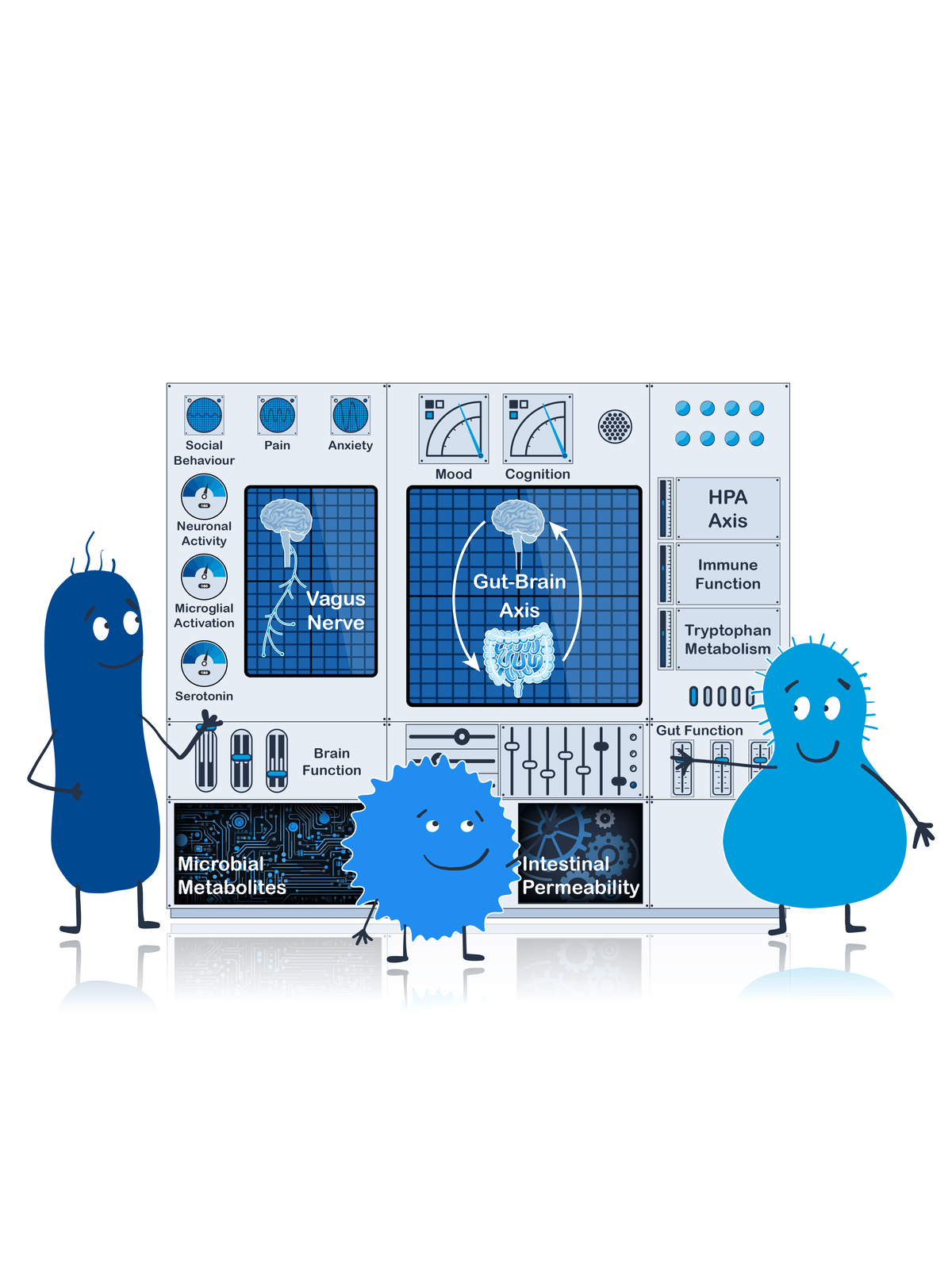
Okay, so now I'm going to take on and tell you about milk fat globulin membrane because really the introduction was fabulous with the pictures, with the video you have seen and with Teresa as well. And my colleague, Doctor Deoni, he's going to be following me to talk specifically about the myelination story with his MRI tools. And we are really talking together to really try to see whether we can tie everything together with the brain and the gut, because there’s a brain gut interaction. Okay. So let's start by telling you what we're going to talk about. Okay, of course I'm going to tell you about milk fat globule membrane and how it is made and the human lactose.
I want to emphasize two points here. First thing I want to tell you about: prolactin is the hormone which initiate the milk production in the mammary gland. Next, oxytocin: that’s the second hormone which allow basically the contraction of the lobules to bring the milk out to the baby. Okay. Second, I'm going to describe the functional role of the lipids and the functional role of the proteins. And I'm going to summarize for you at the end how these two are involved in neurodevelopment as well as in the gut health as well. Okay.
Okay. But the reason why we've been talking hard here, the first 1000 days. The first 1000 days absolutely are important. And I can prove to you tomorrow in my lecture on microbiome in animal models, what does that mean? Because look, I know in animal models there is a critical window. In humans the critical window is the first 1000 days. In animal models it’s the first month of life. Only first month. If you adjust the microbiome early in life, you will have a longer effect and I will show you this data later on, but nonetheless.
So the first 1000 days. Look what happens. Your body weight goes up, the brain goes up, for example, innate and adaptive immunity. But however, remember, though, the microbiome of the gut is the signalling hub for the immune system to develop. Animals who have no bacteria whatsoever - we call it gnotobiotic mouse – [a] mouse which has absolutely no bacteria. They are immunodeficient. So it is clear that the signalling hub for our immune system come from the gut, from the microbe in the gut. Okay.
So, milk, as you know, basically has an energy component and then [a] bioactive component. The energy component is lactose, for example, fat, animal protein, in the milk. And you heard this talk. We talked about that lactose, every mammalian milk created by God, has lactose. And the concentration exactly the same: 5.5 to 7%. The difference between mammalian milks are the protein. You heard Maria talk about the protein content in babies is 1g only per deciliter. Why? Because the babies double their weight in six months. What about cows milk? 3.5% the protein. Double their weight in cows in three months. What about little mouse? You know the little mouse in three days, they double their weight. Do you know what's the protein concentration? It’s 12g per deciliter, 12 times more than the human. So there is a doubling of the weight and relationship to the protein content okay. And next is the fat. And the fat is unique. And that's what we're going to be talking about, how the mom makes basically the best fat ever for their babies. So, however, what we're talking about now is not the energy component, but we're talking about the proactive component that is not because milk fat globule membrane have tons of calories, no, it is because of its bioactivity. As we will discuss.
Okay. So look, this is what happened in science. Basically, we started here for example with whey:casein ratio being changed to 60:40. Remember, the human milk has 80% basically alpha lactalbumin as well as lactoferrin okay. 80:20, so cow's milk is the reverse. So what does infant manufactures going to do. Because of science, advances in science, they changed the composition of the protein in the milk to 60:40 okay. Just to resemble what happens in humans. Okay. Then you have heard the story about the fat blend that we have really made closer fatty acids to the profile of the milk. Then, DHA and ARA, major advances made, and then the addition of prebiotics. Okay. I'm going to teach you something today. Every cell in your body uses glucose for energy except your colon. What does your column use for energy. It does not use glucose. I did this experiment. I know this experiment because I did it myself. It uses butyrate. What do you get butyrate from? Butyrate is short chain fatty acid. Butyrate is the end product of fermentation of fiber by the bacteria in your gut. Prebiotics is a substrate for the bacteria to make basically short chain fatty acid. What do you think the concentration of butyrate in your GI tract, in the colon? 200 millimoles, 200 millimoles? Oral intake is not going to be enough because oral intake will never reach the level of 200. Remember when we resect the colon for example, resect the intestine, and you have basically colon is divert the content from the colon. They get diversion colitis. Diversion colitis simply is because [of] the lack of short chain fatty acid. You give them by mouth butyrate, it doesn't work because it never reaches 200 millimoles. So you have to give them enema or your help them back again. So every cell in your body uses glucose for energy. That's the reason why all of you need to eat fruit and fiber every day, 5 to 6 to 7 every day, because that will be your substrate for your colon to function. Why are kids constipated? You give them Miralax. Don't give them Miralax give them fruit and fiber. Miralax is polyethylene glycol. What the hell is this? That doesn't work. You give them fruit and fibers so that you can make the colon function. Colon is not going to function just simply by giving them Miralax, so that the drug water comes out on the stools. That's not going to work okay. If you want to give them something, give them magnesium, magnesium oxide, magnesium is ion you need for your bone anyhow.
Okay. So the important thing now we're going to talk about milk fat globule membrane. Remember that the new addition for our armamentarium okay. So what's the milk fat globule membrane? Okay. Questions. Good. So the first question is, what are the component of milk fat globule membrane? A. phospholipids B. sphingomyelin C. mucin-1 or D. all of the above. Okay let's see. 85%. That's unbelievable. Great work. That's the correct answer. Yes. Very good. Okay. Okay. So let's talk about this. So this is the lobules, also the alveoli. And basically in these epithelial cells as shown here - this is an epithelial cell - again secondary to prolactin, it’s going to make basically the mammary glands secrete make milk fat globule membrane. Okay. So this is a triglyceride molecule. It's been made in the endoplasmic reticulum. It goes through the Golgi apparatus and then it gets excreted out. But when it pops out of the epithelial cells, basically it takes with it the epithelial layer of the alveoli. So basically what milk fat globule membrane it’s this basically barrier, the epithelial barrier, which is taken up when the epithelial cells, you know pops up and you have the triglyceride molecule here. Remember triglycerides is now packed with this tri layer of milk fat globule membrane, which is truly a fascinating thing. But this is not unique for lactobacillus bacteria. Absolutely. I work on matrix vesicles. For example, human matrix vesicles pop out of the osteoblasts, go to the basically collagen and make bone. It's a unique phenomena, but not unique only for the breast.
Okay. So look, this is electron microscopy picture of this popping up. The triglyceride molecule popping up. Okay. So what we’re going to talk about now is a milk fat globule membrane is a complex structure of lipid tri layer consisting of bioactive lipids and proteins.
So you may ask me the question, why did until today we have not added milk fat globule membrane in 1960s? Well, because the technology to really harvest milk fat globule membrane have only resulted from the discovery of ultracentrifugation technique in which you take the whey protein which contain this, and then run it through here. And basically, you get the lactose and minerals out, you get the whey protein out, and you get basically the milk fat globule membrane basically resulting only. 150kg would result in one kilogram only of milk fat globule membrane. So it's very expensive, and it takes time to try to prepare it.
Okay. So as you have seen in the video, the lipid components are made of phospholipids, essential for membranes, sphingomyelin, essential for myelination, gangliosides, which supports synaptic transmission as well as myelination. And then some functional protein which we will discuss in a minute. Okay. So our next question now. How many new synapses are formed every second in early childhood, in the first two years of life, the first 1000 days? A. half a million, B. 1 million, C. 1.5 million, D. 2 million. Okay, let's see.
Wow. 20% 1 million. So you underestimate the power of synapses. First 1000 days of a human life are the most important days of all your life. If your mom had given you breast milk, you must be having beautiful brain at this stage. Okay, so this is the synapses I've talked about on in the video I showed you that this is neurons without myelination. This is the speed upon which it goes=, is very slow. Then the neuronal transmissions with myelin, it's incredible. And these are the basically synapses as well. Okay, okay. So let's talk about all these things okay. So, now this is the functional component of what we're talking about here is the proteins, mucin-1. Remember your body has 17 different mucins okay. And the mucins are vital for many things as antibacterial, okay. Like lactadherin for example, Xanthine oxidase, butyrophilin. All these moderate antibacterial, antiviral and modulation of your immune system okay. Okay.
Last slide last question okay. So myelination is associated with which of the following brain processes? A. multi-tasking, B. processing speed, C. social development, D. declarative learning. Okay. Okay. Fantastic. 62%. Very good. Okay, great. Okay. So now we're going to talk about basically some of these studies to prove to you that milk fat globule membrane has a role in neural development as well as in brain-gut. Okay. All I'm going to show you now, you're going to need to remember this fact. So breast milk always as a control, and then standard formula without MFGM, and then formula, experimental formula with MFGM.
And then they look at cognitive function for example at Bailey third edition okay. So look at this. This is breast fed. And this is study formula, which is with milk fat globule membrane. Exactly the same. So standard formula is lower four points. So it's clear that in neurodevelopment at one year of age having milk fat globule membrane is very relevant.
Next study. This study basically is almost in 2021 again the same issues. Formula with milk fat globule membrane. And then here look at cognitive scores at six months and 12 months with the Bailey third edition. Okay. Look at this here. Social emotional, general adaptive short term memory, all the time there is increase, for example, you could see it here, significantly statistically significant increase in all these from basically things that looked at. Okay. So now this is an early one, in 2012. This is actually from here. From Indonesia. This study was done in Indonesia. You should be proud that you have done this original study before anyone else. Okay. Formula with complex milk lipids, standard formula, breastfeeding 24 weeks. All these generally do start at 2 to 8 weeks of gestation, and at 24 weeks change in the different, Griffiths, called Griffiths, basically development. Look at this. Lipids. Performance score, hand-eye coordination higher than their lipids for example. Again here, total scores higher. Always significantly higher when you add milk fat globule membrane. So, all these studies I'm going to show you. Basically this is for example in preemies okay. Very low birth weight infants. Even very low weight birth infant standard formula versus sphingomyelin fortified formula.
And they looked at a number of parameters. Primary outcome. Look at this always always always positive okay. Now sustained attention I want to make sure you understand this. That sustained attention is lower. It means this is a better outcome actually, because the kids can recognize when you give them toys. Recognize that right away. So shorter is better in this this situation.
Okay. So this is a recent one. But this one they use basically two things milk fat globule membrane as well as lactoferrin. Remember lactoferrin is highly expressed in breast milk, 17% of the protein of breast milk is lactoferrin. Lactoferrin is scavenger for iron so that the bacteria cannot use it to grow, and it will enhance iron absorption in the GI tract.
So it has nothing to do with the milk lipids. Okay, in this situation, basically when they looked at all these, look at this, cognitive language, motor words processing. Well words produced is the same. However, sentence complexity is significantly higher and those are all significantly higher. So everything I'm going to show you. So just that it is definitely better to have milk fat globule membrane in regard to the neural development as shown in number of studies I mentioned to you. Okay. So now the question is what happens in the milk fat globule membrane in regard to basically incidence of infections for example. And this is the same study otitis media. Look at the standard formula, nine kids for example, at 12 months of age they develop that. Standard formula only 1%, 89% reduction in otitis media and breast milk of course is zero.
So why is that? Well this is the oral microbiome okay. So remember you have microbiome in your eyes, in your mouth, in your GI tract, in your sinuses, in every place in your body. But the highest concentration is in the GI tract. Look at this here, Moraxella catarrhalis that's been associated with otitis media in infants. That's almost gone when you give a formula which has milk fat globule membrane, that's because of the bioactive protein component. That's the reason why this is the same. Okay. Now the last slide is show you something about the microbiome. I will detail to you tomorrow the last studies about the microbiome from my own lab. But today I'm going to show you a study on milk fat globule membrane for example looking at - this is a heat map - looking at component of phospholipids, for example sialic acid which is part component of the gangliosides and lactadherin which I showed you is the bioactive component. Look at the Bifidobacterium. This red color, you see the positive red color here, you have more Bifidobacterium when you feed these infants a milk fat globule membrane. So the microbiome is changing to make it resembling a breast milk. Because remember, breastfed babies they have Bifidobacterium dominate, bifidobacterium dominate, okay. Now that's a healthy bacteria to have. So what I showed you in these studies is the following. One, milk fat globule membrane is associated with improved cognitive, motor and language development in term infant as well as in preterm infants. I showed you also that studies show a lasting effect of milk fat globule membrane, which my colleague Stephen Wu they're going to talk about this.
And then lastly milk fat globule membrane are associated with improved clinical outcome, including reduced otitis media, diarrhea, as well as the use of antibiotics. Okay. So at the end of the day, the addition of milk fat globule membrane is definitely something very important for milk formulas because it clearly become, milk formulas become closer to breast milk which contain milk fat globule membrane.
Thank you.
.webp?width=1200&quality=75&auto=webp)