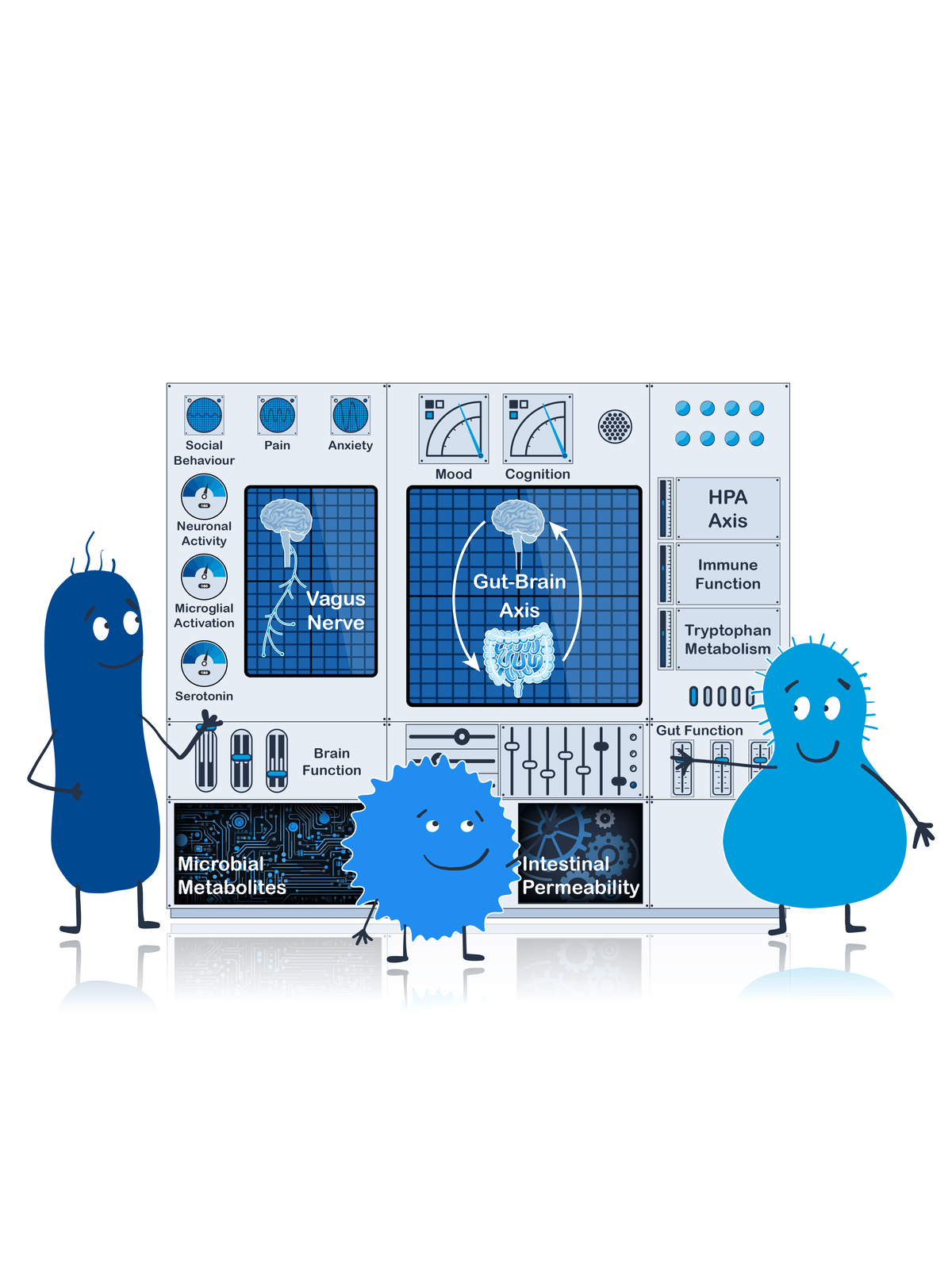
Explore the foundational role of early-life nutrition in shaping the gut microbiome and its lifelong impact on health. Gain insights into how maternal diets, breastfeeding, complementary feeding, and childhood diet influence microbial colonization, which in turn can support immune function, metabolism, and brain development.
This presentation is by Dr. Maria Carmen Collado, Full Research Professor and Leader of MAINBiotics Lab, Spain.

Narrator:
Doctor Maria Carmen Collado is a full research professor and leader of Main Biotics Lab, Valencia, Spain. She has led multiple research projects and chaired key international conferences including International Human Microbiome Consortium, International Society for Research in Human Milk and Lactation, and European Federation of Food Science and Technology. Doctor Collado has received prestigious awards including the European Society for Pediatric Gastroenterology, Hepatology and Nutrition, Young Researcher Award and Scientific Young Research and Nutrition 2021 from Foundation Jesus Serra. Her research focuses on the critical role of diet, microbiota and biotics in health during pregnancy and early life. With over 300 papers published in indexed journals, 26 book chapter’s coauthored, and more than 100 keynote talks given. Doctor Collado has led national and European research projects while supervising multiple theses. Please welcome Doctor Collado.
Dr Maria Carmen Collado:
Welcome. Good afternoon. Buenas tardes a todas. Well, we are going to start this presentation asking us, are we really humans? What do you think? We know that humans have millions and millions of microorganisms living in different parts in our body, and these organisms are playing a key role in our physiology, in our metabolism, in our immune system. And this is happening during all our life and all in all the moments. Then I would like to ask you a question. And for this, please take your mobile phones because when do you think that the human microbiome has the greatest long-term impact on health. Before birth? During the infancy? Childhood? Adulthood? Or you are not sure because all these stages are influencing.
Please take your mobile phones and give me an answer to follow my presentation. Okay, thank you very much. Yes, you are right infancy as Professor Panote mentioned is the critical period during our life where the foundation of our health is happening. Let's move on to the next to the next step. Okay. We know that microbiota evolution and expression happens at birth, and it's evolving during the first years of life according to different prenatal factors. Breastfeeding, environment etc. Today, we know that different or alterations during this time are exerting a key impact in in infant health at short and long term, not just in the microbiome and composition or functionality. Also, it's playing a role in our nail development, in our metabolism, in our immune system, in our risk of cardiovascular disease, etc. Then this is important to understand how we can modulate this microbiota period, this critical window of opportunity.
We know that Bifidobacterium are the main bacteria that characterize the infant, healthy microbiota. And also, it's characterized by a low diversity. But this is changing the process of microbial evolution during this critical period of life change every day. And it's moving towards a higher complexity, higher diversity, and higher quantity of microbes. Moving to this other type microbiota, then this is the important thing to understand that this initial basis in the microbiota is going to connect with our life and our health at short and long term. We know that a healthy kid is going to be a healthy adult, and we have to take care of this critical window of opportunity. What is the main factor that shapes the microbiota? Nutrition. Diet is feeding as well over microbes, and with the diet we can modulate and drive over microbiota promoting our health. Thus, we are going to move how this microbiota diet interactions are happening? Microbiota is directly influenced by different nutrients. It's a connection. Micros and foods are interlinked. And we know that this equilibrium is providing health outcomes during our life with no lifespan. We know that gut microbiota and diet influence gastrointestinal diseases. The risk of liver diseases, obesity, diabetes, a high range of non-communicable diseases that we know that are increasing a lot in our society, mainly in infants. We know as well that the specific dietary patterns, like Mediterranean diet, is also shaping specific microbes, reducing their inflammatory bacteria, and also modulating the production of short chain fatty acids that we know that modulates and unfit our intestinal cells. However, we know that other and balanced diet like is. There were some diets, for example Western diet are also promoting the prevalence of inflammatory bacteria like internal bacteria that through LPs lipopolysaccharide induce, inflammation in the body signaling for the NF-κB Pathway. Then all these things are important. And also, we know that a specific diet, for example, high carbohydrate, high fat diet and high protein diet are also influencing the specific microbes in the gut. And even more, we know that this thing protein base are influencing bacteria in the gut, for example, Bifidobacterium and Lactobacillus, but not just the composition also influence the activity. The production of a specific short chain fatty acids or specific metabolites that are not going to exert a good, effect in our body. And most important thing is how the body responds. Not all of us are responding to the diet in a similar way. And this is a new topic. The responders and non-responders that are now being research.
There are some studies that, for example, this one that show how people depending on the diet are going to respond in a different way, changing the microbiota and the activity profile in a distinct manner. And also other studies are showing how diversity in our diet is going to promote as well and to induce a genetic diversity in our microbes. For example, if we are always eating carrots, yes, the microbiota that can use carrots will be in our gut. But if we are eating carrots, cherries, watermelon, etc, all the diversity will increase. And also the tools that our bacteria can play in our physiology, metabolism, immune system, etc. at the end in our health then this is quite important for all of us to understand the diet and different nutrients and diversity in our diet is going to influence our health. We are moving to dip a little bit more in the specific links between diet and microbiome in early life.
Thanks to preclinical models, animal models, we know the mechanisms linked diet, microbiota and health. And I love to show you this study because represents how using this preclinical model, they analyze how maternal diet using mainly high intake of fiber influence the maternal gut microbiota towards an increase in short chain fatty acid producers that increase the quantity of short chain fatty acids like acetate propionate and butyrate. And these metabolites are going to signal specific receptors in the fetus. And when this fetus will be exposed to obviously changing diet, they will be protected. Wow. This is amazing! But you know, this type of studies cannot be done in humans. How we can check this is, how we can analyze fetal tissues for example? Trying to understand these links in our team we develop, or we organize a birth cohort trying to identify the links between maternal diet and infant diet in the microbiome. And interestingly, the first question that we get is that the maternal microbiota was divided in 2 different clusters.
And we say, come on, what is this? Then we check the diet, and we found that these 2 clusters of the microbes were linked with a distinct dietary profiles. As it was not an intervention study, it was just an observational study. But we found that one cluster was associated with a high diversity and richness and specific bacteria and linked with higher intake of fatty acids. The other cluster was associated with lower diversity and richness is specific bacteria that we know that they are producing short chain fatty acids and also it was linked to higher intake of fiber, omega 3 and some polyphenols. The most interesting part of this is that also we found that the nutrients specific nutrients like fat were associated to a higher permeability in the maternal gut. These clusters were also linked to a distinct immunological profile in the core block that we analyzed of the babies. We found that babies born from mothers who were eating more vegetables and more fiber, etc had a really good cytokine profile and immunological profile compared to the babies born from the other moms. And this was also reflected in the first pass microbiota profile that we identify. I know that the heat map is quite complicated, but you can see this thing, maternal nutrients, how they were associated with infant microbiota, and importantly, these nutrients and the higher maternal permeability was linked with another type microbiota in the kids. And as you remember, I mentioned that microbiota of the babies are characterized by Bifidobacterium but also low diversity, while other type microbiota is characterized by higher diversity and a different microbiotas different organisms that are there. Then finding adult-like microbiota early in life is not a good thing. And different studies are showing that this is linked with higher risk of developing non-communicable diseases later in life. And this makes me question more things. And I would like to ask you one question. Do you think that microbiome targeted nutrition should be routinely considered in the infant care?
Please take your mobile phones and answer this question to follow the presentation. Okay, great. I wanted to see this this answer. Yes, definitely. It's really nice. I think the future is in your hands and knowing that you are clinicians and you are able to use the microbiome as a part of the routine is a plus for everything. Thank you very much. Then we are going to follow. Let's move to the next to the next part. What do you think about this? What this represents for human. Breast feeding breast milk the gold standard for infant nutrition. And it's more than nutrition because it contains a wide diversity of bioactive compounds that target health, infant health. And among these, bioactive compounds, we have as well microbes. Yes. Breast milk contains microbes that are considered a constant source of specific microbes that are going also to colonize and influence the infant health. There are many, many studies showing this, but I love to show you this is a recent study where they analyzed in a really big cohort, how breast feeding and the duration of the breastfeeding guys not just got the microbiota also, nasopharyngeal gut microbiota development. And they also link with the health outcomes. They found that higher duration and breastfeeding practices were linked with a protection or low risk of developing asthma. And this was all the modulating specific microbes that you can see in the in the slide. Ruminococcus known by short and fatty acids producer Bifidobacterium and other microorganisms.
We know as well that maternal diet influence the breast milk composition. We know that fat intake modulates the fat composition of the milk, but we move a little bit beyond. And we wanted to know if maternal diet influenced the bioactive profile in human milk. And we found that yes maternal microbiota modulates the milk microbiome. Maternal diet modulates the milk microbiota. In this study. If you remember when I show you in our work, these 2 clusters of a maternal microbiota and diet, we found that also were linked with the specific microbes in human milk and not just influence the microbiota profile. We also found that oligosaccharide profile in human milk was influenced by maternal diet. Good diet more fiber, more vegetable increase the quantity and the diversity of human milk, oligosaccharide is present in human milk. And also, we found impact in metabolite profile and in lipid profile. But other point that is quite important. And it's not research at all is the impact of the stop of the breastfeeding practices, the weaning. We know, as you can see in this slide that there is a weaning reaction when the research is stopped on the breastfeeding practices, there is an immunity reaction, immune reaction, but also a microbiome change in the gut of our babies is a really complex, as you can see in this slide is really, really complex.
We found one drop of human milk contains different compounds and these interact with the gut microbes. But also beyond the petalia it interacts with our immune cells and links as well with our brain. And when food and complementary food introduction is been introduced in our kids, also, depending on how and when they are introduced is going to influence the gut microbiota composition and also the function of them. And alterations as well in this process are going to influence in a failure of the maturation, the normal maturation process of the gut, the microbial composition, and also the immune system. There are some studies showing this impact, but this still we need more, more evidence because this period of life, this, complementary food introduction and weaning is less the study. And we need evidence then in this sense, all this take this all this area. I would like to provide you like specific home messages.
First one, early life nutrition plays a critical role in shaping gut microbiome, laying the foundation of health outcomes not just at short or middle term, but also long term. A balanced microbiome supports immunity, metabolism, and also brain development, helping to prevent or to reduce the risk of non-communicable diseases. Lifelong health starts with microbiome friendly habits beginning or starting with the practices and later with a balanced and diverse diet during complementary food introduction period. But we have more things. There are different biotics that can be used to help this evolution. We know that there are in science. We are also working with this live biotherapeutics. There are some restoration, restoration activities trying to modulate the microbiota, mainly in C-section babies, because we know that C-section babies, and lack of breastfeeding are risk factors to develop problems later in life. We have to introduce this personalized response of the products or of the from the diet, that we are eating. And we think that machine learning and artificial intelligence are going to help us to understand big data sets and to try to identify biomarkers, trying to provide with, help or trying to provide insights to develop new strategies or even new foods or new products to modulate and to promote health during our life. And in this scenario, I would like to ask you the final question, how confident are you in explaining the role of the microbiome to patients and families? I think this is going to be a really nice idea about what do you think about this area.
And please, if you can take your phones and answer this question. Okay.
Thank you very much. I love to see that 70% of you are so confident to explain, the microbiome to patients and families because you are playing a key role, trying to bridge the knowledge that scientists, as me, are doing in the lab to the clinical practice and to the families, because all of us are connected and to promoting and health, we need to be all together.
Thank you very much, and let’s move to the final thing, and thank you very much to all of you.
.webp?width=1200&quality=75&auto=webp)