Explore the impact and long-term health implications of caesarean section (C-section) births on the infant gut microbiota. This presentation highlights how C-section delivery alters microbial colonization, potentially increasing the risk of conditions such as obesity, allergies, and neurodevelopmental disorders, and presents strategies to restore microbiota balance, emphasizing breastfeeding as the most effective intervention.
This presentation is by Dr. Juan José Díaz Martín, Professor of Pediatrics at the University of Oviedo, Section of Pediatric Gastroenterology & Nutrition, Central University Hospital of Asturias, Spain.

Narrator:
Doctor Juan Jose Diaz Martin is a professor of pediatrics at the School of Medicine, Oviedo University, and consultant in the Pediatric Gastroenterology and Nutrition section of the Asturias Central University Hospital. He is a full member of the European Society of Pediatric Gastroenterology, Hepatology and Nutrition, and coordinator of the Gastrointestinal Allergy Working Group of the Spanish Society of Pediatric Gastroenterology, Hepatology and Nutrition.
Professor Diaz Martin is a member of the Spanish Society of Microbiota, Probiotics and Prebiotics, and president of the Scientific Executive Committee of Congresses of the Spanish Association of Pediatrics. He has authored over 125 papers in national and international scientific journals and book chapters, and has been an invited speaker at numerous congresses and specialty meetings. Additionally, he has presented more than 200 communications at national and international conferences. Please welcome Doctor Dr. Martin.
Dr. Juan José Díaz Martín:
This second lecture will go deeper into some of the topics that I cover in the first, in my first lecture. This is the outline of my talk. We are 100% human while we are a fetus, and we are at the womb of our mother. All of our cells are from human origin.
This is true. We don't know exactly. We don't know for sure. What we know for sure is that at birth, we get colonized by bacteria. And these bacteria come from our mom, and it it's depending on where we came out from. From the vagina or from the womb directly, by other ways. This paradigm has been questioned in the latest years.
The sterile womb, or the colonized in utero hypothesis. This means that maybe we are not 100% human before birth. There were data on this topic; there were conflicting results, and what I can tell you now, it's possibly we are 100% human before birth. This is what we can say now, there are conflicting results, we're not 100% sure about that — but maybe the most likely possibility is that we are 100% human before birth.
So, at the moment of birth, we get colonized. First, bacteria from the gut, Proteobacteria, Enterobacteriaceae appears. They come from the intestine of our mothers. These bacteria consume oxygen, and then anaerobes appear. In the first 12 months of life, there are huge changes in the composition of the microbiota.
And if I have to choose 2 important features of this development, I have to choose these ones. The first one is the peak of Bifidobacteria that appears early, just after the presence of the Proteobacteria, and the second one appears after the diversification of the diet, it is the bloom of clustering. These 2 features of the development of the gut microbiota are really important in the development of the immune system of the gut, as it was told, previously.
And Professor Berni Canani, in his wonderful lecture, talk about the insults that could happen to promote food allergy in a given infant. And this is what I can share with you. The preterm birth, the intrapartum antibiotics, type of delivery, exposure to a NICU, early life antibiotics, formula feeding, or exposure or not to pets are possible insults to the microbiota composition that could change the composition and the evolution of this microbiota.
If I have to say, what will be the gold standard for healthy microbiota in an infant, that would be the microbiota of an infant that is vaginally born, who receives exclusive breastfeeding for the first 6 months of life and receives no antibiotics in the first months of life.
This would be, the composition of this theoretic infant, will be the perfect microbiota. This balanced microbiota is called dysbiosis and is related to health outcomes. And if there is an imbalance of this composition, this is what is called dysbiosis, and this will be related to inflammation and alterations of the immune system composition.
And we know for sure that this dysbiosis is related to multiple diseases later in life, not even in the infant period. It’s related to non-communicable diseases, it is related to allergic diseases, it is related to metabolic diseases, to neurological diseases, and even to cancer conditions. So, it's really important that we get a balanced composition of our infant gut microbiota. And one of the main insults that may happen has been told is C-section.
C-section is a lifesaving procedure, for sure. It's necessary sometimes, and it could save the life of the mom and of the baby. But it's calculated to be necessary in 10 to 15% of the pregnancies. But as you can see here in this picture, the rate of increase throughout the world is alarming. But it's even more alarming in some parts of the world.
For example, in Eastern Asia, it's reaching the 50% rate of C-section. In Latin America and Brazil, for example, it's close to 40 to 50%. But even in Europe, we are over 20%, even throughout the world, the rates are over 20% by the median. So, the prevalence of C-section, it's too high.
We need to lower this type of procedure, only when it's necessary. And what happens when a baby is born by C-section? As I told you, the inoculation of the microbial population, it happens at birth. So, in this beautiful study, very elegant study, you can see really simple.
Each dot is a complete microbiota, and here there is a comparison of mom's microbiota from the mouth, from the vagina, and from the skin. These green ones are the mucosa microbiota, red ones mucosa from the vagina, dark blue ones mucosa from mom’s skin. And the other dots are gut microbiota of infants. Those vaginally born, they display a microbiota that is really close to mom's vagina; those that are C-section born, they display a microbiota that is really close to the skin of the mom.
And in the right side of the panel, you can see here with more detail, the composition: the baby vaginally born, it’s really similar to the mom’s vagina, the baby C-section born is really similar to the skin of the mom, to the microbiota of the mom.
I'm going to challenge you with another question, and this time, you don't know the answer. So, the answer will be given later. But let's see if you can answer with me. Which one is a characteristic of the gut microbiota of C-section born babies? High bifidobacteria, low Klebsiella to bifidobacteria ratio, high Klebsiella, and maybe all of the above.
As I told you, I didn't answer this question in this previous slide, so let's see if you have any opinion on this, any thoughts. Okay, good, let’s see. Let's see, in the next slide this will be answered. In this study that I'm showing you here, you can see that it's a comparison of the gut microbiota composition of baby born vaginally or by C-section.
As you can see here, in the first days, those C-section, babies have a really low number of bifidobacteria. Those born vaginally have high bifidobacteria, high E. coli, high level of Bacteroides. And these also appear up to the first month of life. On the other hand, those C-section born babies have low Bifidobacteria, and have high Enterococcus, high streptococcus, high Klebsiella counts.
And as you can see here, by 21, it's really similar, by 21 days of life it is really similar. The evolution of the composition of the microbiota of these infants changed, but it’s really always observed, is the Proteobacteria that, for example, klebsiella is a Proteobacteria that’s from the Enterobacteriaceae family.
They are higher in C-section born babies, while bifidobacteria is always higher in vaginally born babies. You can see that in C-sections, the Proteobacteria develop later and in lower amounts than the vaginally born babies. Most of the differences disappear in the first months of life, but in a recent study, differences in the gut microbiota composition of babies could be detected even at 4 years of life. There were no big differences, but some differences could be still observed in the gut microbiota composition by the 4 years of life in these children.
In these children, of course, there are more features that happen in a C-section, more than the inoculation of bacteria. And the C-section is related to lower breastfeeding rates, delayed breastfeeding, lower skin to skin contact. Of course, sometimes, maybe is needed, antibiotics in C-section. There's a higher obesity rate of moms that are going through this procedure.
And of course there are differences in gestational age. There are more C-sections in preterm babies. But, there are some data that that could differentiate the impact of the antibiotic using in C-section, for example, in this really nice study, you can see that the infants that were included in the study were those that the antibiotic use was delayed after the baby was cut out of the womb and the umbilical cord was clipped, so these infants didn't receive the antibiotics that were prescribed to the mother and so there are no influence of antibiotic use.
So, as you can see, those vaginally born there are higher bifidobacteria, higher E.coli and lower Klebsiella. Those C-section born have higher Klebsiella counts. So, there is a higher, if we take a ratio from Klebsiella to bifidobacteria, those children born by C-section have a high Klebsiella to Bifidobacteria ratio and as you can see here, these differences disappear after 2 months of life.
There are no more differences. You can see here with a family picture, there are differences that are really significant in the first months of life: higher bifidobacteria in the vaginal delivery children, higher Klebsiella in the C-section. And after 2 months, no differences.
But it's not only microbial changes that happens in the C-section. Once the delivery is started, there is a stress response by the mother, and this stress response, it's important for the adaptation of the immune system. So, if there is no stress response in the C-section, for example, this will impact on the immune system.
Also, of course, the bacterial colonization, and also the epigenetic regulation, will also impact the immune system. And these changes could be observed in children born by C-section. There is an increase in T and T-helper cells, lower natural killer cells important for immunotolerance, there are decreasing Foxp3 and dendritic cells and so on.
So, if this is important for the immune system, we expect to see that this is related to the immune system and could be increased somehow, in these children born by C-section. And this important meta-analysis shows you that those children that were born by C-section display a higher prevalence of respiratory tract infections. Higher prevalence of asthma, higher prevalence of obesity, no difference in diabetes mellitus type 1.
And if we go specifically to what Professor Berni Canani talked about in his previous lecture, what happens to food allergy, in this recent publication you can see that there is a significant increase, 40% increase, in the prevalence of food allergy in those children that were born by C-section. So, this is important. I told you that C-section infants displayed a higher Klebsiella to bifidobacteria ratio.
And in this study, they analyzed what happened with this type of bacterial ratio. So, when they compared those infants with a higher median Klebsiella to bifidobacteria ratio, they observed that this infants had 6 times more risk of developing food allergy by 18 months of life and nine-fold, 9 times higher risk of developing food allergy by 33 years of life. So, it's really important.
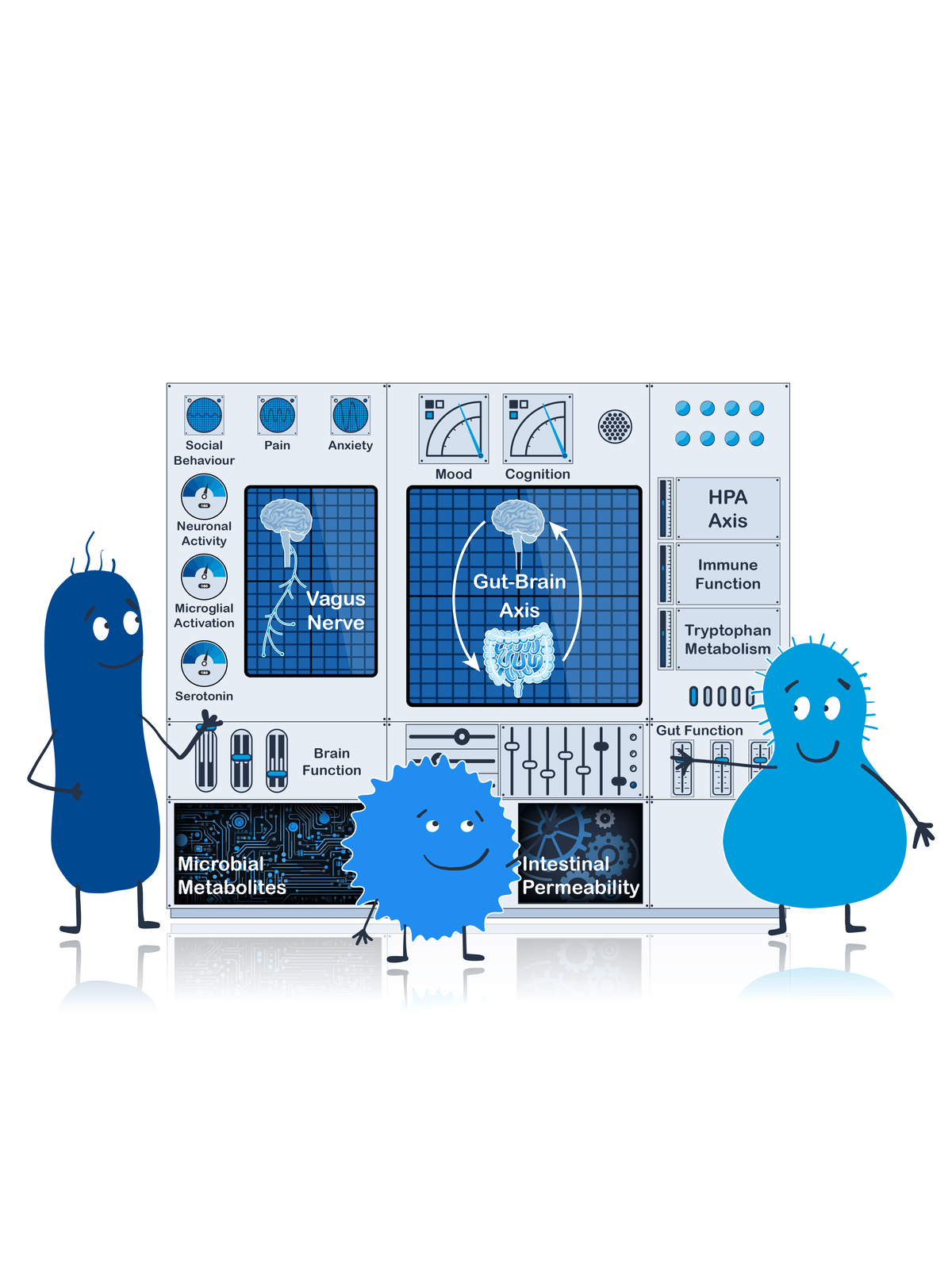
You heard about this yesterday. I'm not going to talk to you about that, just to mention that there is an important network of connections between the gut microbiota and the brain, and it's called the gut microbiome axis. So, it's important for the development of both relationships and what we are going to see. So, maybe disturbances in the gut microbiome of the infant born by a C-section could impact on the neurological development of these infants.
So, I'm going to give you some data on this. This is a huge study, it's a huge meta-analysis, including 61 studies, more than 20 million deliveries analyzed. And as you can see here, these infants born by C-section had a higher risk of developing autism spectrum disorders and also a significant higher risk of attention deficit hyperactivity disorder.
So, important risk associated to C-section. This is a study from Mexico, it's an elegant study from a big cohort from Mexico. And as you can see here, those children born by C-section display lower results on motor scores, lower results on language scores; no difference in cognitive scores.
But this huge study from Mexico, it's a longitudinal study and really important data. Can we do something, can we lower the prevalence of C-section? Of course, it is not on our duty, we are not gynecologists, but can we do something to restore this microbiota of these children? Of course, we can do some of these mechanisms, undergo some of these options, and I will show you some data on this.
The first one is vaginal seeding. This is, it's really elegant to do this and it comes even to the lay press. What happens if we can give the microbes from the vagina to the children that are born by C-section? The implications are somehow like this.
If the child is born vaginally and has a healthy microbiome and is baseline risk of immune disorders, the C-section born baby has a disturbed microbiota and it's a higher risk of immune and inflammatory diseases — so, well, let's give these microbes so we can lower the risk to baseline. No? It's really simple.
And there are data that show us that if we give these infants these microbes from moms vagina, they take a gauze and they put it on the mouth of the infant and they follow what happens to these infants. You can see that the microbiota development of these children, the green line is closer to those born vaginally and different from the ones that are born by C-section, those are the blue ones.
And if we go to the fecal microbiota, the composition of the microbiota is closer to those that received the vaginal transfer, to those born by C-sections and receive no transfer. Okay. We can demonstrate that there is a change in the microbes by giving this vaginal seeding procedure.
But that didn't have any effect on the infants. Until recently, we didn't have so many data on that. But we have this impressive study, they studied 68 C-section mothers, and they randomized them to receive no bacteria with a sterile saline gauze, or they received the other vaginal microbiota transfer. They compared both cohorts, as you can see here, there were no difference in the adverse events in both cohorts.
There were striking differences in gut microbiome composition. Those that received the vaginal microbiota transfer were really close to the vaginally delivered babies, and of course different to those that didn't receive the vaginal gauze. And regarding maturity, the maturity of the microbiota was greater in those that received the microbiota transfer and in the composition, higher bifidobacteria, lower Klebsiella in those that the received the vaginal microbiome transfer.
And then they studied the neurocognitive development of these children with these tests. And as you can see here, both at 3 and 6 months of life, the total score that was compound by communication (cross motor, fine-motor, problem-solving and social skills) was significantly higher in those that received the vaginal transfer. And only at, this was at 6 months, 3 months, and then also at 3 months there were effects on the communication part of the situation.
Anyway, these are studies, but today it's not procedure that is recommended because it's related to risk, even significant risk of potential harmful infection. So, the gynecologists do not recommend as a routine procedure only for clinical studies. Another option is not only the vaginal transmission, is the fecal transmission, because some of the microbes the baby receives when he is born vaginally come from mom’s gut, from the intestine.
So, this also has been tested. This is a small study, only in 70 infants that received diluted fecal samples from the mothers taken 3 weeks prior to delivery. And here they only compare the composition, and as you can see here graphically, the composition of the microbiota of those vaginally born was really close to those children with C-section that received the fecal material transplant.
And of course, different to those C-section born but with no fecal transplantation. We can use another member of the biotics family, we can use probiotics, prebiotics, synbiotics, but you have plenty of data. It could be another lecture only to talk about this, so I'm not giving you any data on this, but the last slide presentation will be on what is another option that we can choose, which is breastfeeding.
Breastfeeding, Human milk, has, as I told you before, has microbes, has prebiotics, and it's really important in this in this type of situation. The microbes that are present in the human milk come from different sources of the mom. They come from the gut from the mom, that are captured by dendritic cells and sent to the mammary glands through the blood.
They also come from the breast skin, areola, and from the infants own mouth, these microbes appear in the milk, and of course, has prebiotics, human milk has oligosaccharides that will help to develop healthier microbes in the gut. And it's important in any child, but it's more important in these C-section born babies.
In this study, it was demonstrated that, the thing that I'm going to show you, close to 60% of the combined microbiota of an infant comes from the mom, from different mom’s microbiota sources. In those that are born vaginally, the main determinants of the gut microbiota of the infants are the mom's feces and the mom's vagina. And important, but not so much, is the microbiota from breast milk.
On the other hand, those that are born by C-section, breast milk is the main determinant of the gut microbiota of these infants. The impact is much higher than in vaginally born babies. So, just to finish, the neonatal period is key for the development of a healthy microbiota with a heavy impact on future health status. C-section is a lifesaving procedure, sometimes excessively indicated, that induces important changes in gut microbiota composition (low beneficial and elevated potentially pathogenic bacteria) with important implications in future health (obesity, allergy, infections, neurodevelopment) and of course, there are several options to improve microbiota composition.
But to date, encouragement of breastfeeding in C-section born infants is by far the best approach. And just the last thought, it's never too late to be who you might have been. Thank you so much.
.webp?width=1200&quality=75&auto=webp)