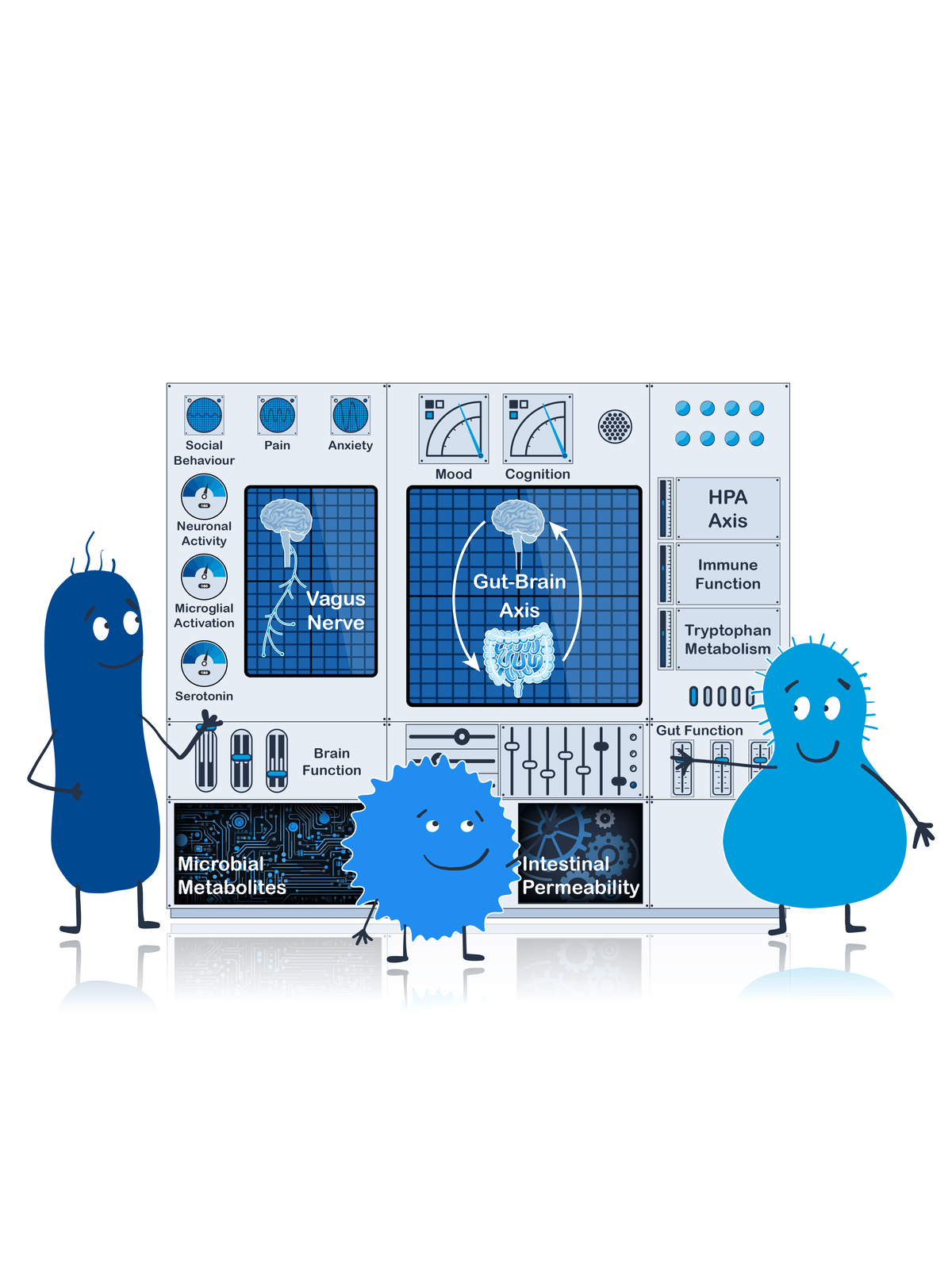
Delve into the evolving science of complementary feeding and its impact on immune development in early life. Explore how the timing, type, and environment of food introduction influence the gut microbiome and may help manage allergic and autoimmune conditions. Learn how dysbiosis, allergy progression, and the allergic march are reshaping public health concerns - and uncover the cultural and systemic barriers that affect feeding practices, especially when breastfeeding isn’t possible.
This presentation is by Dr. Benajamin Gold, Attending Physician, Pediatric Gastroenterology, Hepatology and Nutrition, Children’s Center for Digestive Health Care, GI Care for Kids, Atlanta, Georgia, USA.

GNS US 2025: Effective Strategies for Complementary Feeding and Allergy Prevention
Benjamin Gold, MD
Narrator
Introducing Dr. Benjamin Gold, a highly regarded pediatric gastroenterologist. Prior to joining Children's Center for Digestive Health Care, LLC in 2009, he held esteemed positions at Emory University School of Medicine, including the Marcus Chair of Pediatric Gastroenterology, with over 175 peer reviewed manuscripts, 45 book chapters, and numerous educational materials to his name. Dr. Gold is internationally recognized for his expertise in pediatric esophageal diseases, Helicobacter pylori infection, and gut microbial interactions.
He founded the Aerodigestive Center and Program at Children's Healthcare of Atlanta in 2005, and has served NASPGHAN in various leadership roles, including as immediate past president. Please welcome Dr. Gold.
Dr. Gold
First of all, thank you so much for having me here. Thank you to Prem. To Mead Johnson. It's a thrill to be here, and an honor. It's also, just as a PSA public service announcement, based on what you said, this is one of the few venues that you can actually see people from lots of different disciplines.
There's speech language pathologists here. Shout out to you guys. There's dietitians, lactation specialists, GI, neo, dermatologists. And you get a bunch of people who are thinking about the same problems from different disciplines in the same venue, at the same time, and provide a platform with education that's non-biased, evidence based. And you start having these networking discussions and there's no other venue really that can do this.
We can't do this at the AP meetings. There's just way too many things going on. And I can tell you that at each of the different ones that at least I participate in, this is one of the few platforms. So, Prem, thank you. And I think this is one of those things that really, this is an opportunity to network and think about these sort of stuff.
All right. So, my strategy after coming after Jon, and to give you a little bit of context of age here, I met Jon when I was a fellow at SickKids in Toronto, and he came up as a visiting professor, and I had the thrill of being able to show the omnipotent, famous Doctor Vanderhoof around Toronto.
So that was our, you know, and people who know me, I'm kind of like the Energizer bunny and I don't shut up, so my wife feels that she's brought my dog Kobe's training collar around me to keep me to task. You know, you can jack up the volume when you want me to, you know, really pay attention.
So we spent a lovely time, enjoying Toronto and getting to know Jon. And I've also got a chance to get to know him more over the years. So he's also a hard act to follow in addition to Doctor Song's cheerleading. So I'm going to talk about strategies for complementary feeding and allergy prevention and highlight some of the talk, that Jon had in, in a complimentary way.
And then, Ruchi Gupta could not make it because of personal reasons. So what I have done is try to incorporate her talk into mine and in order to give her, because she worked very hard on her talk. I have attributions. So I've actually put in her color framework in, in the slides that are hers so that you'll be able to see, what she said.
Alright, faculty disclosures. I'm not going to talk about commercial products and services. I'll try to use the other names. No FDA or non-FDA approved off label uses. Like Jon, I do have some significant financial relationships. I truly, that's why I really liked the comment that was made after Doctor Song’s. I think industry and academia need to support one another because that's where there's educational interchange.
And none of these relationships had anything to do with the kind of his, presentation. My wife, after I texted her this morning after Neil's talk, said I should also get the disclosure that my brain is still at the toddler stage. Because I'm still like, that, squirrel. Where to go? And then my ADD gets the best of me.
My objectives to really highlight complimentary feeding introduction from the standpoint of what the World Health Organization defines it and why it's so important and how to think about it in the context of an allergic or at risk child. I'll talk about the public health and importance of food allergies, this social media, which we cannot get away from, and how we need to turn around and exploit to have the right information out there and use it.
And I'm going to give a shout out to one of my mentees who's at Phoenix Children's Dr. Paul Tran, who I've known since he was a teaching and tomorrow resident. He's at elementary. Doc, who really has made it his passion to use social media platforms to educate everybody from medical school on up through, the elderly.
I'm going to talk about systemic, cultural and socioeconomic challenges to complementary food introduction. It's important that we take the introspection glasses on and look at our own implicit biases when we're dealing with our patients and understand that there are certain barriers that prevent people, whether it's access, whether it's the dollars in the pocket to be able to get complementary foods introduced and how we need to think about that in the framework of when to introduce them and then offer some solutions at the end.
So first the definition, WHO complementary food definition. And I'll read this because I think it's important to understand. It’s the process starting when breast milk alone or infant formula alone is no longer sufficient to meet the nutritional requirements of infants, and therefore other foods and liquids are needed along with breast milk or breast milk substitute. My problem with what the WHO definition came about is they also have to think about it in all of the information you've heard from Melissa’s wonderful lecture in the beginning and this increasing incidence – incidence, for those of you who forgot it in medical school, by the way, is a frequency of a condition over time.
Prevalence is the frequency of that condition at one point in time. Okay. So there's your statistics and epidemiology lesson of the day. It's a lot harder to do incidence studies than it is to do prevalence studies. So, the incidence and prevalence of allergic and autoimmune diseases is rising. And we have to think about that in the context of who gets complementary foods.
So what are the issues? It's one of the most important critical times in human life. And the timing and approaches of the introduction of these foods are critical window, in which the microbiome gets influenced and an opportunity to intervene, but can have a positive or negative result, that has important epigenetic effects in terms of outcome. Parents and caregivers and pediatricians must address this tradition and innovations, and sometimes misleading beliefs, when approaching complementary foods.
And we as healthcare professionals, whatever your discipline, need to look at our own beliefs and how we were raised and how our friends were raised, when we're thinking about the kids that we're providing care for and the advice that we give them. Despite public health policies around the world to increase parental adherence to recommendations, a high proportion of parents don't follow nutritional guidelines during complementary feeding introduction period.
And something that I learned, ‘cause I still have a cross appointment at CDC in the foodborne and diarrheal diseases branch. And we did these things called KAPS studies Knowledge Attitudes and Practice Style Surveys where we would look at, say, for example, the H. pylori guidelines, which we just published this past year, and whether or not they actually are being read and or more importantly, used, and even more importantly, whether it was influencing outcomes and improving the care of patients.
So when they did KAPS studies looking at public health interventions that are adapted, and they found some serious problems. And so we need to consider all of the factors that go into influencing when and why people do or don't introduce complementary foods. So what are those challenges? This is just one study. And I highlighted sort of four main areas that influence how people introduce foods.
And there's some neat examples. Really, really well done study just published a couple of years ago. Mental health. We don't take into account the fact that when you've got a mom who has postpartum depression, and my wife had that after our first child, and we're up in Toronto and I'm in the hospital all the time as a fellow.
And I had to actually thank God my son wasn't the Exorcist baby. My daughter was. That was child number two. But she had to deal with the whole issue of postpartum depression. Being alone, not having any friends or support system, and introducing foods to get to somebody who wasn't eating very well and had allergies. So there are other things that come into effect.
And then sharing the load, is there somebody else that's at home that's helping, or is there a support system that can provide those foods? A lot of discussion today about breastfeeding, which is absolutely important, and we're not doing it very well here in the United States. This is data from the CDC. And I've got the most recent report in just a second.
But this shows the percentage of infants who are breastfed at any time up to six months of age. And you can see yellow is 38-55%. The blue are 65-74%. So you can see the left coast, I mean sorry, the west coast does a little bit better than, we do in the dirty south, so to speak.
This is exclusive breastfeeding. Even worse. And then this is and I highlighted, since we're in Utah and Georgia, in terms of this. And then the most recent report is coming out next year. So the bottom line is something's not going right. And we as a global society are not doing it well.
So what can we do better? Shout out to our lactation folks in here, to support and promote breastfeeding, so that people think of it as the first thing that they need to do for infants once they're born. Food allergies and the impact of social media, it ain't going away. So here's a paper from 2023 a couple of years ago.
Food allergy is when your child's body has a bad immune reaction to a certain food. From the Quad AI, the constantly evolving story of food allergies. For parents of kids with food allergies, social media can bring support and stress. And how many of you all have parents who come in with their downloads from Dr. Google, Nurse Wikipedia and Medical TikTok telling you what's wrong with their child and what they need to do.
And we have to, I spend the first half of the visit dispelling all this stuff that they've had before we actually get to what are the symptoms of your child, and then what we can do to help feed you. So be aware of these things that they're coming with that are providing now a plethora of information that's not all appropriate or good.
And how we, as a society of providers, can start developing techniques and methodologies to be able to better educate our providers. This is from Dr. Gupta. Same thing on the adult side. Food allergies in adults. Doctors surprised by the scope of adult onset food allergies. More than 1 in 10 US adults has a food allergy, study finds.
You realize far many more in a recent survey of the United States, people fake that their child has a food allergy than actually do have a true food allergy, and that also runs into problems in teaching. Convincing food allergy, I put this definition up for Dr. Gupta because the next couple of slides are her epidemiology studies that she has done and a consortium of Allergists have done and I thought it was important. So convincing food allergy is a person's medical history,. physical symptoms and diagnostic tests strongly indicate an immune system mediated reaction to a specific food. The reaction is consistent and occurs predictably after eating the food and requires clear and careful interpretation. So this is her data on child allergy prevalence in the United States.
And you can see, ranging from peanuts to sesame, which, by the way, wasn't on the list 15 years ago in terms of a prevalent food antigen. And you can see convincing food allergy, physician-diagnosed food allergy and patient reported typically tend to be higher. To other childhood food allergy severity again, from Dr. Gupta's work, 42.3% of food allergic children reported a history of one or more severe reactions.
And again, peanuts, are the highest. Interestingly enough, a recent report published by the British Association of Allergy showed that cow’s milk has now overtaken peanuts as the number one cause of anaphylaxis. Pediatric atopic morbidities gets this back to, the comments that Jon made in his talk about these atopic manifestations not being seen 20 years ago.
We couldn't spell it Yogi in 1995. And if you remember, 1982, even before then, a dear friend of ours, Dr. Harland Winter, called the eosinophil, the GERD Barrow stat. So if you did an endoscopy in a child with reflux symptoms, and you found eosinophils in the biopsies, that patient had GERD, so were we missing EoE back at that time or did it really not exist.
And so there are a host of things. The number one cause of median impactions showing up in the ER between 11 to 20 year olds last year in the United States by the Annals of Emergency Medicine was EoE food impaction. And then this looks at racial and ethnic differences and I think it's important again, this is using our, sort of, taking the self introspection and implicit bias in how we do research studies.
It's important to do these studies in diverse populations so you get true estimates of prevalence. Because there's a study that just got published looking at EoE, which up until now was essentially a white Caucasian European descent disease and we're now seeing it increasing dramatically in African-Americans, Hispanic AAPI populations and so on. Same with inflammatory bowel disease. When it was first described by Dr. Crohn's in 1932, now seen in populations across the board.
And this looks at, her data, Dr. Gupta's data. White on the far left, black, Asian, Hispanic and multiple. And the blue bars are reported food allergy, the orange bars are convincing food allergy, and the green bars are physician confirmed food allergy. Allergy is a growing impact on families. If you look at this particular data.
So the Y axis is percent. The X axis looks at year cohorts up to 2018. There's a 70.3% of atopic dermatitis or eczema and 91.2% increase of respiratory and other allergies. And if you look at longitudinal studies, this published just last year, allergic diseases affected 40% of school aged children and one third had multiple allergic diagnoses and this is, challenge can turn, challenge confirm prevalence remained high. 45% of infants with food allergy had persistent disease to ten years. And that's going to introduce one of the concepts I want to get across to you, which we need to start thinking about how we're going to prevent it, which is the allergic march. So Jon sort of highlighted some of these in the, in his talk and without actually even knowing until last night or this morning what he was going to say, I'd actually put this schematic in to really highlight the differences between what happens with the allergic response.
So on your right is the microbiome. You have your antigens, food that comes in, the intestinal epithelial cells, APCs, the antigen presenting cell. And you have this ability for our immune system in the mucosa to differentiate into either Th2 or Th1 response. And Th2 responses, IgE mediated allergy. Whereas Th1 response is non-IgE mediated allergy or inflammatory.
And if you think about it, now you see an ad on television every 10 or 15 minutes for the biologics that people are using for atopic dermatitis, eosinophilic asthma and now EoE and all of the biologics that I mean, every week there's a new one for inflammatory bowel disease. They're all targeting steps in this pathway. Maybe we need to be thinking about where we can interrupt this pathway early on and drive the response to a healthy way.
There's a reason why there have been, and if you look at clinicaltrials.gov, you can find it, studies looking at feeding parasites, which drive a predominantly Th2 response to people who have inflammatory bowel disease, who have a Th1 predominant response. Now we won’t talk about the disease of the parasites. They're using T. suis, which is a pig whipworm, which supposedly you don't get disease with.
But the biologic studies that they're doing and the outcome studies are showing that you actually can improve inflammation. And when you add probiotics to the mix in addition to complementary foods, or you change the type of food allergies that patients are getting, that Jon went through very elegantly in his slides. They start driving, upregulating those T reg cells and driving the response away, downregulating the inflammatory or the autoimmune response.
And this highlights what Jon already had pointed out, the difference between food allergy and why it's so much harder to diagnose non-IG or mixed, because there aren't any diagnostic tests. So the things that you order from the lab, the Quest or Labcorp, ImmunoCAP, food allergy panel, those are IgE based. The skin prick testing that our allergists do,
the patch testing, are all IgE based. We don't have tests to look for non-IG, but yet when we did the clinical trials and I know Dr. Wechsler was involved in these, the single food elimination diet which was dairy in patients with EoE showed a dramatic response both in symptoms and in microscopic disease. And if you look at the food antigens that are attributed to non-IgE mediated allergies, it's different than the nine that the FDA and the AAP now label for IgE mediated allergy.
If you have IgE mediated food, milk, cow’s milk protein allergy, you can drink soy. There's a less percentage that you're having a cross-reactivity, where if you have a non-IgE mediated response then there's a higher rate of cross-reactivity. You can see rice and oats also a higher rate of cross-reactivity. And you know Jon, we’re GI, so we have to have endoscopic pictures. So up here on the far left you see a normal esophagus, the esophageal rings, that's not a trachea for the neonatologists in the audience. And then, showing the furrows of the EoE, the small intestine, and at least, maybe it was because I was trained in Toronto, that is inflammation.
So in Toronto has a huge influence from Europe. So maybe that's why we say that. And then the little calcium or protein allergy diaper and the figure in the middle on the your lower right. That was done, not with a flexible sigmoidoscope with my otoscope and a large speculum so I could actually see. Yes you can do that right in the office while you’re examining patients.
And I see ulcers through cow’s milk protein allergy. Now, what is this thing called the atopic march? And by definition, it is basically children, infants with allergy early on in life are at greater risk to have allergic or atopic manifestations later on. And this figure shows that if you look at the Y axis, which is incidence, so new cases of atopy, and the X axis is age in years, and you can see the differences between eczema or atopic dermatitis, which is higher in the infant group.
And then later on development of allergic rhinoconjunctivitis and allergic asthma. And if you think about it in another way, early cow’s milk protein allergy puts infants at risk two and a half times more likely to continue that through older childhood and adolescence, three and a half times respiratory allergy risk and four times asthma risk.
And the risk is even greater when you have multiple foods that they're allergic to. A large European study, which looked, it's called the SOL project, a unique study of more than 30,000 individuals. So as an epidemiologist, I think the number is kind of high to get, or good, to get a good cohort size to get statistical significance.
And what they found essentially was 30,800 individuals, 27 countries, on five continents. And you could see that of the 3,000 that had atopic disease in childhood, atopic dermatitis, it persisted through adulthood. So clearly this is something that can be lifelong. And if we can interrupt that early on in life, we may be able to change outcomes.
So what are some of the strategies? And remember, and I think, Jon, you pointed this out really well. And Alessio pointed out in his talk, there's lots of barriers. The skin, the GI tract, respiratory tract, in which antigens get into our immune system, interact with it and then come up in the microbiome that's in there. So gut barrier, and I'm going to highlight the two most important areas early on, breastfeeding and probiotics, and skin barrier, breastfeeding and probiotics. And the respiratory tract barrier, breastfeeding and probiotics. And why is this important when I was assigned the topic of talking about complementary foods? Well, we've changed over the last two decades in terms of how we look at when you should introduce foods early.
And these are the AAPs recommendations in 2003, 2008, then the LEAP study, which I'm going to tell you about in just a second, 2015. And then this is their recommendations in 2019. Now, for those of you who didn't realize this was based on actually just really good observation, there were a group of researchers that observed that the Ashkenazi Jewish population in Israel were fed a peanut containing compound early on in life, and the same genetically similar population in New York who were fed peanuts much, much later had a much higher rate of atopic dermatitis and peanut allergy than did those in Israel.
Simple thing to study, right? Just throw them up in the air and randomize them and give one a group early introduction of peanuts. Give the other group later introduction of peanuts, and what do you find? The people who got the peanuts early, less likely to develop allergies, the peanuts, and particularly peanut allergy based on actually challenge. And then this is from Dr. Gupta.
So you can see the change over time in 2021, the release of the consensus approach to primary prevention of food allergy. And then at present time and these are three of the big studies that came after the LEAP study. You can see, so Y axis is prevalence, so that's the frequency of allergy in the population. Avoidance
so that means they get peanuts later, and consumption early, and you can see it didn't matter with the treatment group with the LEAP, that's at 60 months. LEAP-On, which is 72 and LEAP Trio, which followed them out to 144 months. And then this published by AAP News last June. You can see that regular and early consumption of peanuts achieved durable tolerance.
That means they could tolerate peanut antigens even later. So clearly doing something early, introduction of complementary foods, and this has been now shown for a number of different food antigens, will help later on in life. These are the guidelines, this comes from Dr. Gupta, the addendum for the prevention of peanut allergy, United States reported the National Institute of Allergy and Infectious Disease.
And again, this looks at risk level, based on their risk for allergies. And just for your definition an at risk infant means that mom or dad or a sibling has definitive food allergy. and then that infant becomes at risk. And then the consensus approach to primary prevention of food allergy through nutrition. And again, this gets at in those infants feeding the food early on in life actually has the ability to prevent.
So if you think about it, forget it, to getting to the point where you need to give them a biologic. If we can start early on with how they're fed, how they're born, and then what we introduce early on, we'd be able to prevent. So and then screening before introduction is not required. But there are some families that actually ask for this to be done.
We talked about messaging. That was a big point, take home point, that I got from Claire Song's talk. And this is the AAP’s messaging. No evidence that waiting to introduce baby safe soft allergy causing foods, eggs, dairy, soy, peanuts or fish beyond 4 to 6 months of age prevents food allergy. And if mom eats it, you also get the introduction.
Again, the point and, Jon, this may have been the point you were making without making it with your daughter taking lactobacillus GG during pregnancy to potentially prevent. And so there may be even a way, because there are some data to suggest that the foundation species that we see in the bacterial species in the GI tract somewhere start seeding between 16 to 20 weeks gestation.
So even in pregnancy, we may be able to start introducing and changing outcomes and making that, those introductions and the interventions with informed decision making. I'm not going to go through this for sake of time, because it's already been done far more eloquently than I can. But I have this data to say that it doesn't stop after 1,000 days, and there's still opportunity to intervene.
And this is a longitudinal study, from multiple centers, published in 2020 that showed that the microbiota may develop more slowly in some children, the ones that aren't doing pike’s nurseries, playing in the dirt and don't have a dog or cat at home, which, by the way, are becoming surrogates for the playing in the dirt.
If I could do, there's an ad and I can't remember. It's for a cleaning product. There's a dad. Of course. You know, we get messy with our toddlers when we feed them. Feeding a toddler, and there's a camera shot to a sliding glass door window, and there's a doodle looking dog that's sitting over there. And then the dad hears the mom coming home.
And the kid, of course, is like full of food. And he's like, oh, I got to go. You know, clean the kid up before the mom comes in and sees and he leaves and he comes back in the room. Kid is spotless and the camera shot is over to the dog. Dog's licking, licking his lips. And it's sort of like, that's where we share our microbiome.
And the animals in the house may actually, and so I always ask now with my patients, do you have a pet? And if you do, I get their names because they love it when they come back for the second visit, and I go “how’s Pot doing?” And they like that. But this shows that you can actually intervene later on.
And then finally, one of the things that John mentioned is this concept, one of the take home points of dysbiosis, that every single body compartment, there's even research looking at, for those of you who are contact wearers, and particularly the ones who tend to fall asleep with their contacts on, the microbiome on the cornea is very disbiotic.
Let me tell you, and puts you at big risk for corneal abrasions. So they're now looking at potentially the use of probiotic eyedrops and changing the microflora for those of you who are chronic contact, ooh, yeah, I see. So maybe that's something we need to do. But you can name a body part or a body organ system, and it has a normal microbiome and a dysbiotic microbiome.
And you can name a GI disease ranging from neck to obesity and to allergy, where you have a decreased diversity. So diversity is good for people, for pets and for a microbiome, in terms of propagating health. And then finally, these are some of the data that Jon alluded to. So this is Cananistudy. Y axis is incidence of atopic or allergic manifestations and they looked at eczema, urticaria, asthma and rhinoconjunctivitis. And then you have the extensively hydrolyzed casein group, that's the blue. And then extensively hydrolyzed casein plus LGG. And out to three years, so this is a durable effect that you're seeing on the ability to tolerate food. This looks at it in another way, comparing it to extensively hydrolyzed casein, a formula alone, rice based formula, soy formula and amino acid based formula.
And you can see that the extensively hydrolyzed casein, plus the probiotics had the best effect in terms of reducing risk for development of new atopic manifestations. Allergic manifestations in this particular study was reduced by 50% in those kids that were fed, the change in the composition of the protein that they get, plus probiotics. And secondary outcome, again, same thing.
They were able to actually tolerate dairy if they were fed the extensively hydrolyzed casein plus LGG. And then again, a consortium of studies, a group of studies. And one of the things I thought, and that's why I highlighted on here, that the study that I highlighted shows us, that even a small amount of intact dairy over time, ten milliliters daily in the first couple of months of age may decrease risk of allergy.
And then finally, just a couple words on the fact that one of the things we've been talking a lot about is, the nutritionally replete, and there's a lot of issue when it comes to introducing complementary foods in those who, for many reasons are having hunger. And I highlight this because this is a global crisis continuing.
And it's important to recognize that when you think about factors that that affect introduction of complementary foods, hunger is a big issue. And this highlights different countries, and the main factors associated with either very early or later introduction of complementary foods. Again, the references will be provided for you. But for sake of time, I won't go through all of these.
This one looks at timing of introduction and rationale for why people did or didn't. And again, social media and misinformation about food allergies and whether to not or to introduce complementary foods affected a lot of this participants. Quad AI has actually come out with a wonderful set of action items in terms of addressing this whole issue of healthcare disparities in food allergy and how different cultures in different populations who may or may not have access or the means to afford complementary foods, can, affectively decrease incidence of food allergy.
So to summarize and I'm on time. Didn't even need to send the hook. Jon, this sort of schematic, and I put this in last night, not knowing what your talk was going to be like, but where we need to be thinking about it. So the environment, how you were delivered, whether you got antibiotics, and I should add PPIs or H2 blockers, genetics that modulates the gut microbiome when you introduce complementary foods, and that we need to stop the pathway from the dysbiotic and then the increase in allergic and autoimmune disease and send it more towards eubiosis, a diverse microbiome, and overall immune health.
We need to take recommendations into the consideration of specific nutrition intake, to avoid unhealthy growth trajectories because the other side of introducing complementary and alternative foods, the downside when you do it with the wrong types of foods is this whole epidemic of obesity. In the absence of strong evidence, the decision to breastfeed into the second year of life should be left to the mother and infant, and continued breastfeeding during the second year of life could be a desirable goal for some families, depending upon individual factors, personal choices and the environment, and it may be the only way that they can get the complementary foods and alternative, to introduce those proteins in an alternative way, into their children.
Animal milk should be considered safe and can be used alongside other strategies, I’m not promoting camel's milk, and promotion of a healthy and varied diet. Young child, even though they are different, they're not great, they're browsers, they're not grazers. Young child formulas or fortified milk are not clinically necessary in children age 1 to 3.
And then the recommendations also need to account that early introduction of common food allergies aimed at reducing the health and burden for countries with high prevalence of food allergy, avoiding the food allergic march. And in populations who are affected by food allergy, complementary foods with high allergenic potential, so not waiting to introduce them, but introducing them when complementary food is commenced at any time from four months on.
And I talked to, when the parent brings in the fussy infant, who is having some mucus, and they got their cold blood by the pediatrician, and so they're worried about calcium protein allergy, and we talk about when to introduce and starting at four months. Public health measures must be instituted, particularly in resource poor areas, to facilitate healthy, evidence based closed groups, culturally sensitive approaches to complementary food introduction.
And I think there needs to be more multidisciplinary collaboration and research involving breastfeeding and breastfeeding mothers, and looking at ways to introduce these complementary foods and evidence based medical education, particularly when we use nontraditional methods like social media. Alright. These are two of Dr. Gupta's questions, and then we'll conclude and Jon will come up and we'll have a Q&A. When starting solid foods, it is currently recommended to start one new food every few days, so that you can see if the reaction occurs to that food, false or true.
Uh oh. Alright. I gotta come back and reeducate. Okay. Alright. I'll come back to that answer in just a second. Alright. Next question. And you can introduce, by the way the answer is false. You get to use multiple foods. And there's now data to show that. And that's in the recommendations from the AAP. According to a recent study by Dr. Gupta and her colleagues, what percent of pediatricians in the US reported full implementation of the 2017 Addendum Guidelines for Prevention of Peanut Allergy. Oops. 10%, 17%, 29%, 62%, or 90%, greater than 90%. The answer’s B. Alright. I think that should be it.
Thank you so much for your kind attention. And I'm going to turn it back over to Sergio and have our panel. Thank you so very much.

.webp?width=1200&quality=75&auto=webp)