Puntos Clave
How does nutrition impact digestion in babies?
Clinical evidence plays a pivotal role in guiding tailored nutritional recommendations for optimal infant development. Recent research sheds further light on the critical interplay between nutrition and digestive function in infants, highlighting its impact on overall growth and development.
Clinical evidence on digestive discomfort reduction
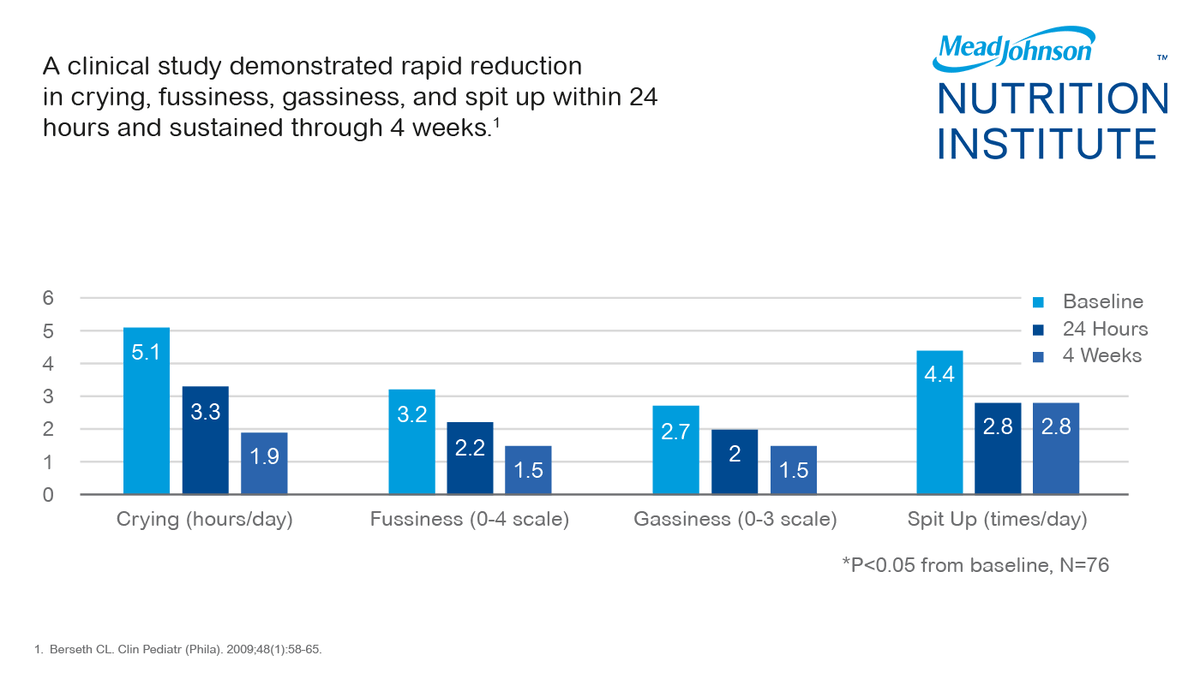
Research has shown that infant formula with partially hydrolyzed proteins and reduced levels of lactose can rapidly and effectively reduce digestive discomfort in infants. In a clinical study, rapid and effective reduction in crying, fussiness, gassiness, and spit up within 24 hours was demonstrated, with sustained improvements through 4 weeks.1
Effects of PDX and GOS in infant formula
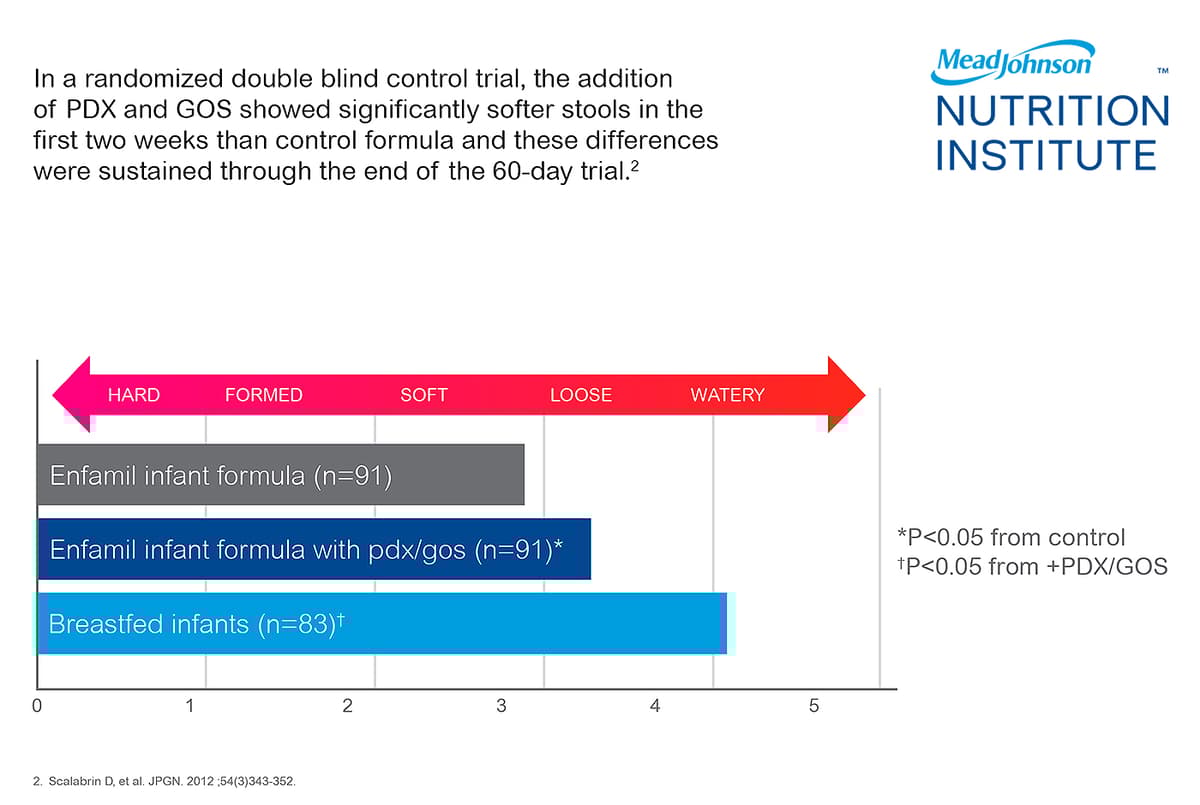
The addition of PDX and GOS in infant formula has been shown to significantly support softer stools in the first two weeks compared to control formula, with sustained effects through the end of a 60-day trial.2
Importance of prebiotics in gut health
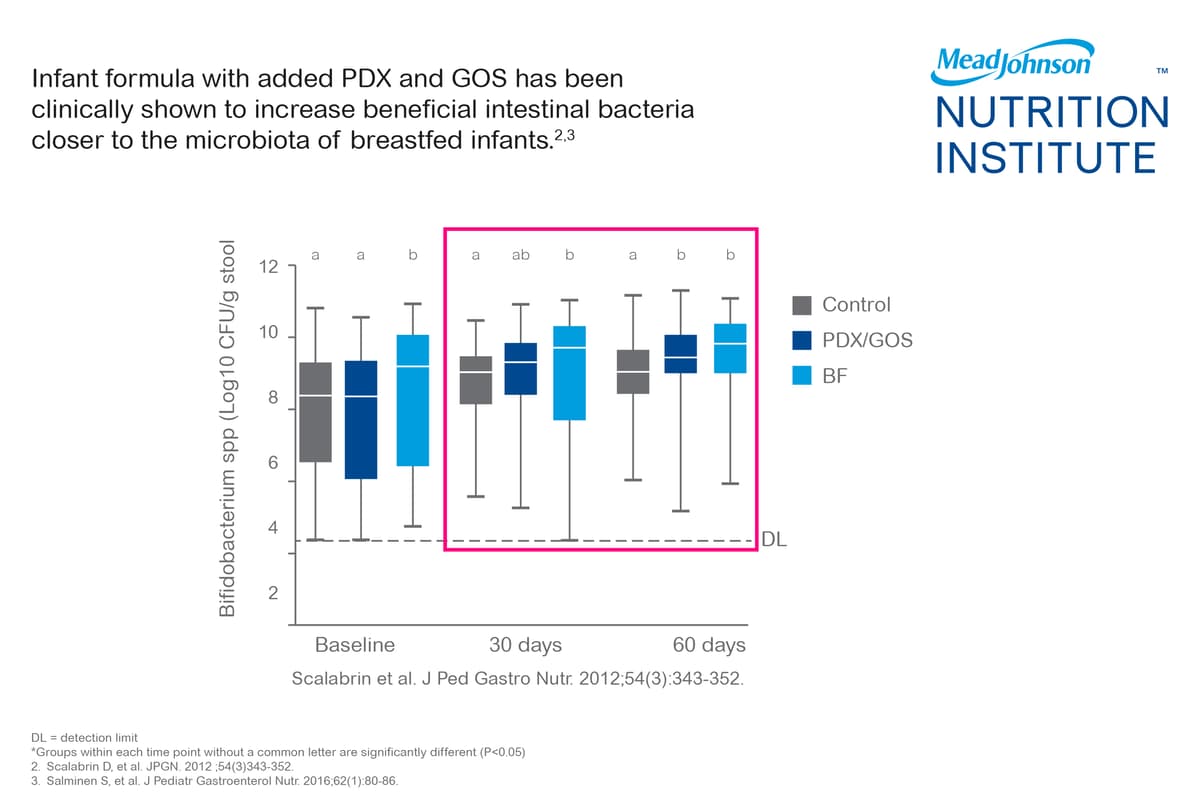
This data has also highlighted the importance of prebiotics, PDX and GOS, in supporting gut health. Infant formula with added PDX and GOS has been clinically shown to increase the number of beneficial intestinal bacteria closer to the microbiota of breastfed infants.2,3
Potential benefits of MFGM supplementation
Emerging evidence suggests that MFGM supplementation may be positively correlated to beneficial gut bacteria, promising further insights and potential benefits in infant nutrition.4,5

.webp?width=1200&quality=75&auto=webp)