
Puntos Clave
¿Cómo pueden influir los cambios nutricionales en la función digestiva adecuada?
El tracto digestivo de un bebé sigue desarrollándose durante los primeros 1000 días de vida.1 Durante este periodo fisiológico, la digestión, las enzimas, la motilidad y la microbiota siguen madurando. Esta adaptación y desarrollo del tracto digestivo puede provocar molestias que pueden manifestarse en forma de llanto, irritabilidad, gases y cambio en el patrón de las evacuaciones.2-5
El problema
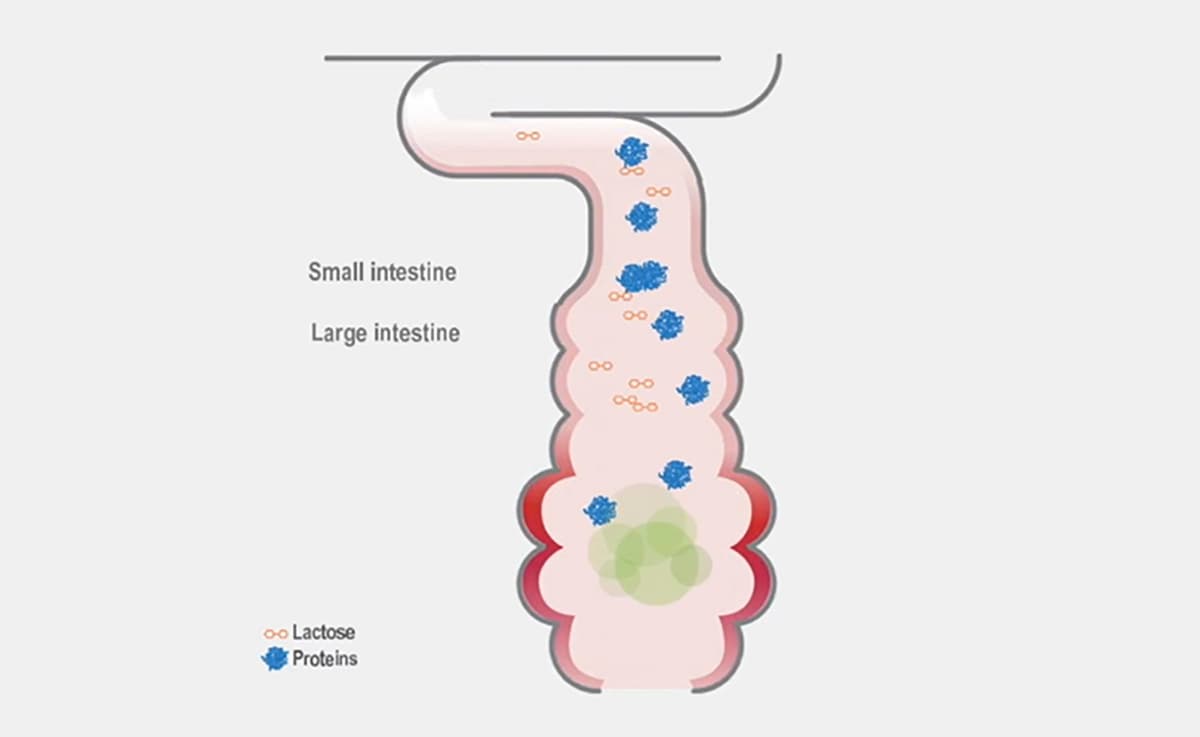
El problema: Los bebés pueden experimentar molestias digestivas debido al desarrollo y adaptación de su tracto digestivo.
Aunque esta adaptación y desarrollo pueden provocar molestias en los bebés, una nutrición especializada puede ayudarles y favorecer la salud intestinal. Las fórmulas infantiles especializadas que utilizan proteínas parcialmente hidrolizadas pueden reducir la carga sobre el sistema digestivo, ya que son más fáciles de digerir que las proteínas intactas de la leche de vaca, especialmente cuando se combinan con una reducción de la lactosa.6-11 Además, los prebióticos como los galactooligosacáridos (GOS) y la polidextrosa (PDX) nutren a las bacterias intestinales beneficiosas. Los GOS alimentan las bacterias beneficiosas en el intestino grueso proximal. La PDX es un carbohidrato más complejo con una velocidad de fermentación más lenta, y alimenta las bacterias a lo largo de todo el intestino grueso.9,12-15
La solución
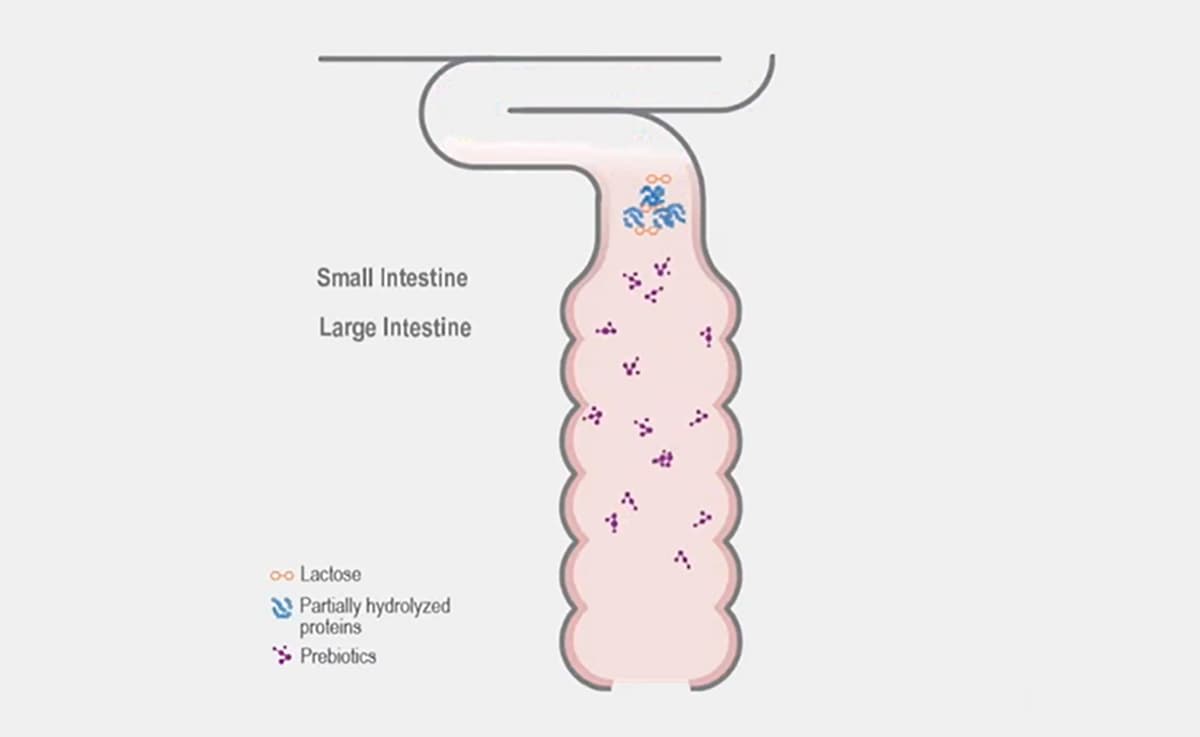
La solución: La fórmula infantil se puede adaptar para aliviar las molestias y favorecer el desarrollo.
Apoye a sus pacientes más jóvenes con soluciones nutricionales prácticas y basadas en la evidencia. Para obtener más información, vea nuestro último vídeo y descubra cómo influir positivamente en la salud digestiva de los bebés.
- Henderson C. The science behind infant digestion. Verywell Family. Updated July 14, 2021. Accessed June 19, 2024. https://www.verywellfamily.com/infant-digestion-431681
- MJNI. Data on File. Quality of Life Study Ph TH US MX 2109.
- Iacono G, et al. Dig Liver Dis. 2005;37(6):432-438.
- Vandenplas Y, et al. Pediatr Gastroenterol Hepatol Nutr. 2019;22(3):207-216.
- Bellaiche M, et al. Acta Paediatr. 2018;107(7):1276-1282.
- Berseth CL. Clin Pediatr (Phila). 2009;48(1):58-65.
- Fawley R, et al. Lactose Intolerance. American College of Gastroenterology website. Updated 2021. Accessed June 19, 2024. https://gi.org/topics/lactose-intolerance-in-children/
- Indrio F, et al. Nutrients. 2022;14(7):1405.
- Fabrizio V, et al. Front Pediatr. 2022;10:894626.
- Heyman MB. Pediatrics. 2006;118(3):1279-1286.
- Walsh J, et al. Br J Gen Pract. 2016;66(649):e609-e611.
- Cool R, et al. Nutrients. 2023;15(8):1942.
- Vandenplas Y. Gut Microbes. 2014;5(6):681-687.
- Scalabrin D, et al. JPGN. 2012;54(3):343-352.
- Salminen S, et al. J Pediatr Gastroenterol Nutr. 2016;62(1):80-86.

.webp?width=1200&quality=75&auto=webp)