Explore how infant nutrition guidelines are developed, why they vary globally, and the challenges in applying them. This session focuses on breastfeeding, allergy management, and the gap between evidence and practice - emphasizing the importance of judgement and subsequent action.
This presentation is by Dr. Hania Szajewska, Professor and Chair of the Department of Paediatrics, Medical University of Warsaw, Poland.
Narrator:
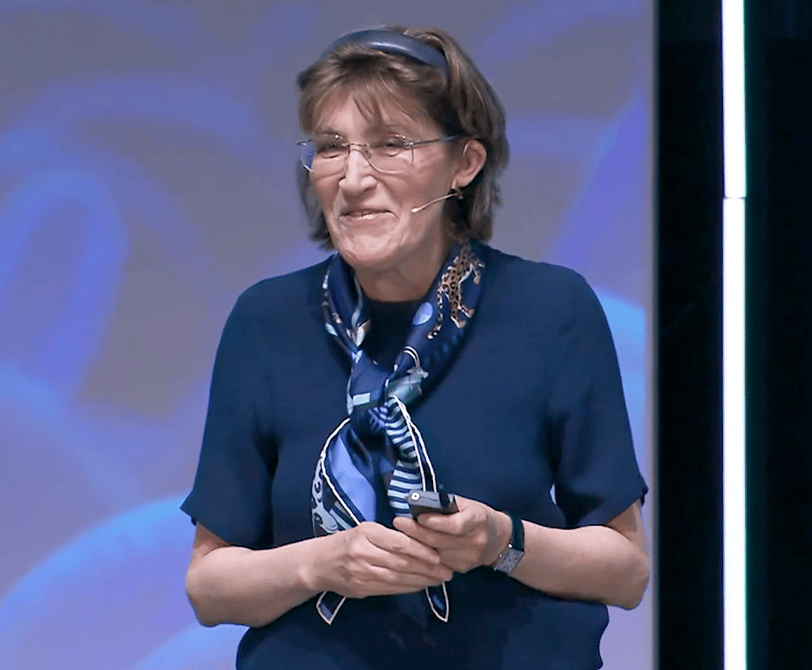
Introducing Hania Szajewska Professor and Chair of the Department of Pediatrics at the Medical University of Warsaw, Poland, and a member of the Board of Directors of the International Scientific Association for Probiotics and Prebiotics. She previously served as editor in chief of the Journal of Pediatric Gastroenterology and Nutrition, General Secretary of the European Society for Pediatric Gastroenterology, Hepatology and Nutrition (ESPGHAN), Secretary of the ESPGHAN Committee and co-chair of the ESPGHAN Special Interest Group on Gut Microbiota and Modifications.
Her research interests include gut microbiota modulation through various biotics, pediatric nutrition, and the long-term impact of early nutritional interventions. She is actively involved in EU funded research projects and is a strong advocate for evidence-based medicine and the responsible integration of AI in healthcare. With over 400 PubMed publications and more than 30 book chapters, professor Szajewsja is ranked among the world's top 2% of most cited researchers. Please welcome Professor Szajewsja.
Dr. Hania Szajewska:
Hello. Good afternoon. It's so impressive. From here, I can tell you. So, thanks a lot. Thank you very much. It's always a pleasure to be invited, but this auditorium is absolutely amazing. I was asked to talk about guidelines. Guidelines on infant nutrition, who reads them, who follows them and which ones matter. And I would like here on my disclosures.
And as a matter of fact, I want to start. It's not a poll. I would like you to raise your hands, and I have a question to you — who reads the guidelines? Raise your hands if you read the guidelines. Well, I can see quite many, many hands up. Then I have another question to you all — who follows the guidelines?
Please raise your hands. Some of you. And there is another question which you can ask. Which guidelines? And the reason I am asking this question, or you may ask this question, is that there are so many guidelines developed by various societies, by various organizations, and you know very well that every now and then guidelines developed by various organizations, they do not agree. And what to do.
I would like to give you just very briefly comment on 3 guidelines, 3 topics that were addressed in guidelines. The first one, which will be also covered in the next presentation, is on complimentary feeding. The society, which is very close to my heart, ESPGHAN, European Society for Pediatric Gastroenterology, Hepatology and Nutrition, published a few years ago.
The document on complementary feeding and very recently, like a year ago, WHO also published a document also on complementary feeding and the dispute started, because not everything that was in the ESPGHAN guidelines or other guidelines was in line with what is in WHO guidelines and the discussion, as it happens very often in various scientific meetings, but not only also in the journal.
Started among, there was response from 11 societies, including ESPGHAN, and there was of course a response from WHO. and then other societies reply. This is an infographic which was done by ESPGHAN. So you can [look] and I will briefly summarize what is going on when it comes to the discussion.
So first of all, the recommendation have the potential to cause confusion and potential unintended harm. This is a position of 11 societies. And what are the sources of concern and 2 major sources of concern — developmental process. So, lack of stakeholder engagement and public consultation, meaning opportunity for wider input was missed and factual inaccuracies persist. Public consultation is something that is now more and more common.
And as you know, [For this document] This was something which was really, truly missing, an important concern. And the other one, a context specificity attempt to make, there was attempt to make global recommendation with little mention of different contexts and health needs in low-, middle- and high-income countries. It is not that all of us have the exact same needs, and some differences should be made.
And in detail, what are the differences and what are the proposal of those 11 societies? So, breastfeeding should continue up to 2 years or beyond. This is WHO guideline and 11 societies and multi society proposal Is the decision to breastfeeding beyond 2 years is context dependent and should be left to mother and infant. The second which is really important for infants 6 to 12 months not fed breast milk, milk formula or animal milk can be fed. For young children 12 to 23 months and not fed breast milk, Animal milk not follow-up milk should be fed and the response of proposal from 11 societies is recommendations on animal milk and formula milk should be context specific and dependent on availability, affordability and nutrition levels.
For many countries, there are high quality formulas which can be safely given to children and are much better than, cow's milk for example, in our ESPGHAN guidelines, we are clearly stating that the animal milk such as cow’s milk should be given only after 12 months, and finally infants should be introduced to complementary feeding at 6 months while continuing breastfeeding and multi society propose is that introduction to complementary feeding must also consider development readiness and the appropriate age for introducing allergenic foods such as, for example, eggs or peanuts, which was just discussed in effective population, and which may be introduced in age-appropriate form when complementary feeding is recommended any time from 4 months.
There are differences between countries. There are some countries in which deaths from infection is a problem, but there are other countries where food allergies is a major problem and those should be addressed differently. So, this was one example. The second example which was just discussed is cosmic allergies are generally food allergy prevention and management of food allergy. And again, there are many guidelines.
I had a privilege to contribute to those 3 documents. And some of the speakers of today's presentation and people in the audience also contributed to those 3 documents. And you may ask why there are 3 documents, why is there not one. That's a very good question, because there should be more or less published at the same time.
But as you know, it's not very easy always to come to the agreement between different societies. But what I want to say there are 3 documents published, more or less at the same time, and if you look at those guidelines and I will not go into details, but that would just say that there is consensus. A consensus exists on core principles when it comes to management of cow’s milk allergy or food allergy in general.
But some differences remain based on the same, evidence. And you can just see like the first choice, depending on the society, there are different recommendations. And finally, something that was discussed this morning in the earlier session, that microbiota and modification. And again, there are many, many guidelines from different societies, including those developed by American Gastroenterology Association and again as (ESPGHAN) European Society for Pediatric Gastroenterology, Hepatology and Nutrition.
And here I am presenting those guidelines. Again. I will not go into details, but I will just summarize that both were based on systematic reviews. Still, the conclusions differ. So these were just 3 examples of how all of us have to deal with different guidelines. And then the question is why do clinical guidelines developed by various societies, sometimes at the same time, they do differ.
And there are many reasons and I’ve summarized some of those reasons here, like methodology, interpretation of evidence, target population, house priorities, values, preferences. There are many reasons. But in summary, what we can say is that not all guidelines are created equal. Some are based mostly on experts opinion. Others follow a structured, transparent process, and development measures affect the quality, trustworthiness and consistency of recommendations.
So the first take home message is, always look at how guidelines are developed and the next 1 or 2 slides what I will show you. I'll just remind you what are the standard for the development of evidence-based guidelines and again, different organizations, they develop, they own standards, but they are some standards which are common for all of them.
And here are these common standards across guideline development frameworks. And I will just comment, comment very briefly, on each one of those standards, starting with transparency. So establishing transparency is important. The process by which a clinical practice guideline is developed and funded should be described transparently. So each one of us as a reader should know as a document, should clearly document funding sources, processes and decision-making criteria and disclose panel member contributions and responsibilities.
The second item, which creates a lot of discussion as you are probably very well aware, is management of conflicts of interest. As this very famous quote says from the famous American economist Milton Friedman, there is no such thing as a free lunch. And there is a lot of discussion about conflict of interest when we are developing guidelines.
But first, what is a conflict of interest? And this comes from the document developed by Institute of Medicine. One of the definitions, but very commonly used is a set of circumstances that creates a risk that professional judgment or actions regarding a primary interest will be under influence by a secondary interest. Why it matters. Why it matters so much because it can introduce bias.
Managing this conflict of interest, of course, ensures trust. And what are the types of conflict of interest? There are many. Financial which everyone will understand more or less, but also there are no financial conflicts of interest such as personal beliefs, professional advancement interests, prior research positions, personal experiences, lifestyle habits and relationships with other professional which are equally important, even if usually when we are talking about conflicts of interest, we are focusing on financial conflicts of interest, which is important.
By the way, this is an old publication, but important 71% of chairs of clinical policy committees and more than 90% of cultures had financial conflicts an old paper but I think it's something that we can see, and there is a lot of discussion as I said about conflict of interest, and here are just 2 recent publication.
And what is a summary from this discussion? Disclosure, some people are saying it's not enough, even if nowadays you can always see the disclosure. And because disclosure as such alone does not remove bias, many people voting or advocating for risk-based approach which should match action to risk levels. And depending on this level there is certain action. So for example, if there is high risk, such a person should not participate either in discussion at all or at least in taking decisions about the recommendation.
Medium risk to restrict roles and low risk allow for participation. And as you know, there are different approaches in different guideline development groups. One important question, important issue. Guideline development group composition as representative as possible, is now more and more common that patient organizations or in our case parents of the patients organizations are part of the of the guideline development group.
Systematic review something which is very close to my scientific heart. I will not go into too many details, but these are essential to the process of the development of guidelines. And there is emerging literature always to involve artificial intelligence again, something which is very close to my heart. And of course they are standards for systematic reviews. Cochrane collaboration is probably the one which is used for most of us or followed by most of us who are doing systematic reviews.
And they must meet the methodological standards. We all know that there are time consuming and costly, and therefore there is this question whether or not AI will be helpful or not. I am very much following what is Cochrane Collaboration doing when it comes to the use of AI? When it's comes to developing systematic reviews and meta-analysis and I’ve just summarized what is the situation at the moment.
So you can see for systematic searching, it's still at least as of July 2025, cannot replace information specialist. It may change in the months, but not yet for screening large language models could assist, but there are concerns including hallucination bias and lack of transparency. So it's still mainly done or it should be done I mean, using other tools.
For data extraction we are just working on a systematic review. And I can tell you, well, it cannot really replace us. The human oversight is essential. And for the risk of bias assessment, as of today, it's not recommended, but it may change. And Cochrane collaboration is really working very hard on developing standards for how to use AI for developing systematic reviews.
Rating of evidence and recommendation. And that is another step. Usually, we use a structured approach like grade to assess evidence quality and recommendation strengths. And you are probably very familiar with certainty of evidence. Nowadays we are not saying quality of evidence, but certainty of evidence which may be high, moderate, low or very low, and strengths of recommendations which may be strong or weak or conditional.
These are the typical terms which are being used. What does it mean? I summarize on this slide, it’s very easy to understand. What does it mean. Strong for. Strong against. But look at those too, weak for and weak against. They are different recommendation. But what does it mean in practice? It means exactly the same. there are some recommendations.
I was mentioning recommendations by AGA, American Gastroenterology Association and ESPGAN and for one society it's weak for and for another it’s weak against. But the interpretation is the same. Different choices will be appropriate for different people. Clinicians could help each person make a decision consistent with their preferences. So what does it mean in practice?
What is a meaning of the recommendation is extremely important. Articulation of recommendation. So, when presenting recommendations clarity is crucial. So usually in the document you will see that upfront there is a decision how certain recommendation which will be the wording which will be used. External reviewers are extremely important. Yes, they are important, and they should come from a full spectrum of all relevant stakeholders, including scientific and clinical experts, organizations, agencies, patients and the representatives of the public.
And it's really important. And I already mentioned it when I was speaking about WHO recommendation, how important public consultations is, that the document is for a certain time is available for public consultation and everyone can comment. And then the guideline development group can response to those comments. Updating, nowadays, the rule is that the guidelines are usually updated every 3 to 5 years.
But there are also guidelines which are which are constantly being updated because their evidence comes very rapidly nowadays. Okay. I use ChatGPT to summarize why guidelines differ. I showed you what are the standards of the developing wide guidelines differ. So once again the panel composition, guideline objectives, feasibility resources, external influences, something which is important in the interpretation of evidence.
Let me stop here. First of all, the evidence may be very limited, like one randomized controlled trials. And then there is a moment that the interpretation of this evidence by different group of experts may differ. This is why eventually you end up with the recommended guidelines develop almost at the same time. But still the formulation is different because there is such a limited amount or inconsistent evidence.
Target population is important. Health priorities, values, preferences, timing of review. Some guidelines reflect older evidence. Other include newer trials or systematic reviews. So there are many reasons why guidelines may differ. There is another important question which people often ask. Guidelines differ, but is it always a problem that they differ? Is it always a problem? And as a matter of differences in guidelines, are inevitable and not inherently a flaw because they reflect the complexity of translating evidence into practice and as a matter of fact, it might be that certain guidelines are more applicable to my population, to my setting. So it's really important to read the guidelines very carefully and choose them. Choose them wisely.
However, of course they can be confusing for clinicians or caregiver, especially when authoritative bodies disagree. There is a lot of discussion. What should clinicians do when faced with conflicting recommendations? And it is not the discussions that started only nowadays. This is a paper published in 2008, in British Medical Journal, and the answer is still the same nothing has changed, and there are 3 or 4 important questions to be asked.
Were the clinical questions different? Always look at what is the clinical questions the guidelines are trying to answer. Because they might be minimal changes, but they will result in different guidelines. Were different studies considered? So was a systematic review behind it. And watch how it was done. Which database were searched? And this may explain the differences.
Were the results combined and analyzed differently? Some guidelines are using poor results, some are not using. So this may contribute to those differences and was the quality of the evidence assess differently? The quality versus the old language because now, as I said, we are using certainty of evidence. This is a proper wording and eventually you may end up that you will find the best guide, like the ideal guidelines.
It will never happen. But let's imagine. But even if the best guideline is vague, please remember it does not automatically lead to improved health outcomes. This is a slide which I often show to our medical students, to our residents, but also to our physicians and I really like this slide because it shows how many steps there are, how many barriers there are between guidelines and clinical outcome.
And there is a role for a physician who has to be aware of the evidence of the guidelines and has to accept it. They use the guidelines, the evidence has to be applicable. The physicians should be able to have the ability to act on these evidence and guidelines. And there is also the role for patient.
The patients have to agree to guidelines or in our situation parents of patients. And last but not least, they have to adhere so many barriers between evidence, between guidelines and the clinical outcome barriers which extend from awareness to adherence. And let me finish my presentation with a final slide which says make sure you have finished speaking before your audience have finished listening. I did my best. Thank you very much for your attention.