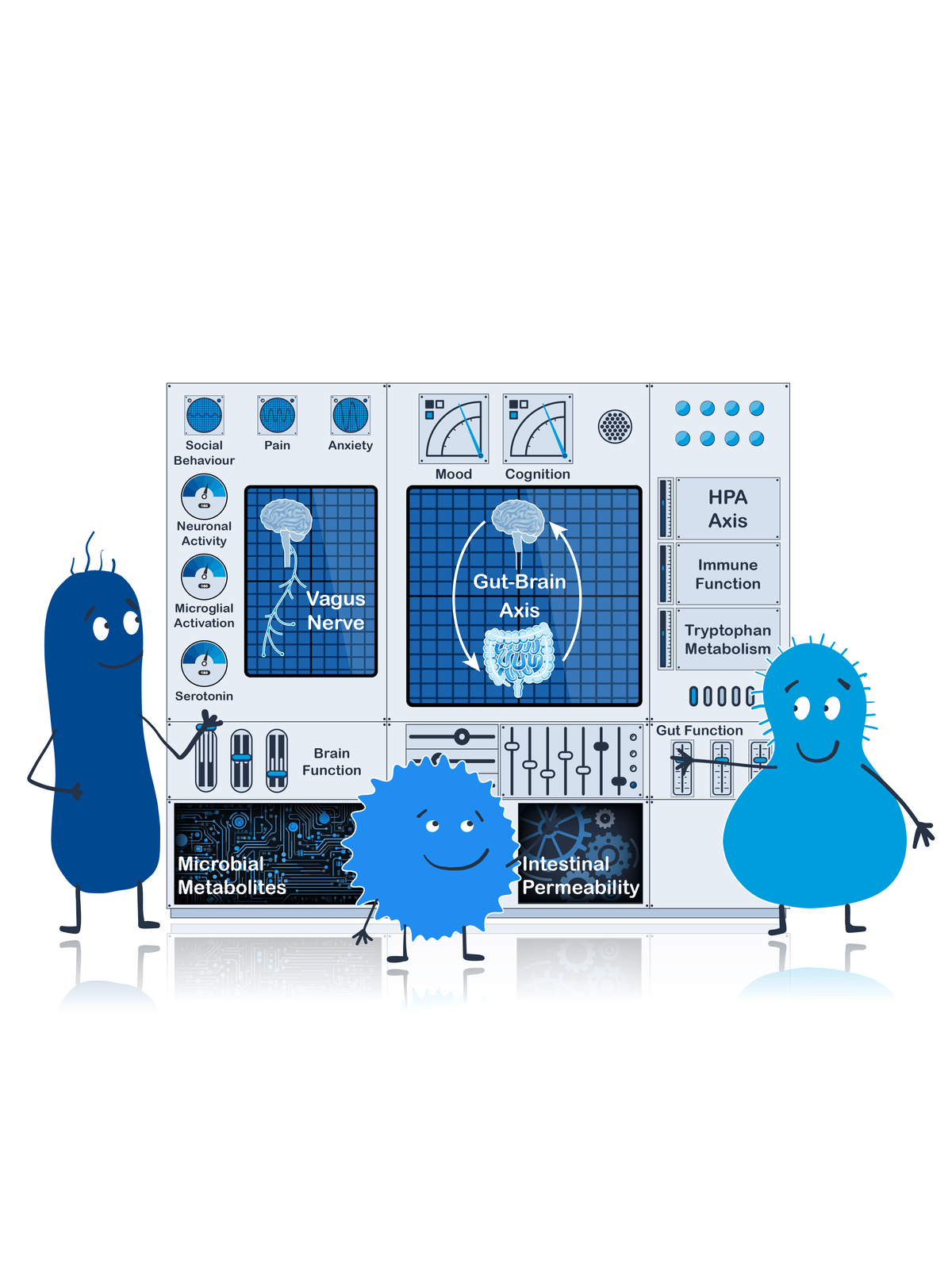
Understand the long-term consequences of cow’s milk protein allergy (CMPA) and its role in the broader context. This presentation highlights the need for interventions that target immune tolerance and gut health to alter the trajectory of CMPA and its associated risks.
This presentation is by Dr. Roberto Berni Canani, Head, Pediatric Allergy Program; Head, ImmunoNutritionLab, CEINGE Advanced Biotechnologies, Italy.
Narrator:
Introducing Professor Roberto Berni Canani, a consultant in pediatric allergy and internationally recognized researcher in the areas of pediatric gastroenterology, food induced diseases and nutrition. He is the chair of the Pediatric Gastroenterology, Allergy and Nutrition Program of the ImmunoNutritionLab at CEINGE Advanced Biotechnologies Research Center and the NutriTechLab at the University of Naples Federico II, where he also leads the master's degree course in Human Nutrition.
He previously served as a member of the European Food Safety Authority Panel on Nutrition, Novel Foods and Food Allergens, MDA, and is actively involved in European Union funded research projects. Professor Berni Canani has authored over 450 publications, including scientific papers and international journals, chapters of books and reviews. He is ranked among the world's top 2% most cited researchers. Please welcome Professor Berni Canani.
Dr. Roberto Berni Canani:
Hello. Good morning. Super happy to be here. I would like to thank the organizer, in particular, the Mead Johnson team, to be here for these 2 days of science and friendship. I guess you cannot imagine how much inspired the discussion to get to yesterday during the beautiful dinner. And also, this morning is very important to me to get inspiration to counteract one of the most common pediatric chronic conditions.
Cow milk protein allergy as you know, this is the most common, food allergy in the pediatric age group and also the most important cause of food-induced anaphylaxis, 40% of Italian babies are presenting every day at our hospitals because cow milk protein allergy induced food anaphylaxis. Unfortunately, during the last 2 decades, we observed an increased incidence, prevalence and severity of the clinical manifestation of this condition.
And don't forget the fact that this is one of the most expensive allergic diseases. Because the cost of the special formulas, and this is very important, we are impacting for the families as well as the for the healthcare system. For this reason, options to limit disease burden, options to stimulate the immune tolerance.
Options to limit the disease duration to influence the naturalists of this condition are very welcome by the families and health care system. Another important point when you are facing a little infant in your office affected by cow milk protein allergies, is that this baby is an increased risk to develop allergic march, more so more than 50% of IgE-mediated cow milk allergy infants will present later in their life, allergic rhinitis, ocular rhinitis, asthma. And this leads to increased costs for the families for health care system. In other words, we are facing everyday this kind of scenario at our centers. In the vast majority of cases, the infants came at our observation because of a non-IgE-mediated cow milk protein allergy.
Then unfortunately, during the last year we are observing an increasing number of babies shifting to IgE-mediated food allergy, atopic dermatitis, eosinophilic esophagitis. This another important point. If I have a baby today in my office affected a cow milk protein allergy, these be present 8 times more risk to develop EoE later in the life, then ocular rhinitis and asthma.
This is our last paper published on BMJ on a large population of infants affected by non-IgE-mediated cow milk protein allergy with the 4 main phenotypes: proctocolitis, FPIS, enteropathy and motility disorders. And as you can see here, having male sex, and for every month of diagnostic delay, this increases the risk to develop multiple food allergies. And another important point that after 2 years of follow up, only 50% of them acquired immune tolerance.
So, the persistence is a problem also for non-IgE-mediated children, and the chance to develop or to acquire immune tolerance after 2 years of exclusion. Diet are influenced by the positive family history for allergy and for the presence of multiple food allergy. In other words, if I have an infant affected by cow milk protein and the diagnosis is achieved in delay, this increase to develop a multiple food allergy.
And this influences the discourse because these babies are more prone for a more prolonged diseases and more prone to develop atopic march. And we are investigating from many years the pathogenesis of atopic march. We know now a lot of genes around 10, 100 genes that are involved in the development of atopic march. In the vast majority of cases, these genes are implicated in the structure and function of the gut barrier
And of course, in immune tolerance mechanism. And many of these genes, many of these polymorphisms could influence other function of, for example, if I have a defect in filaggrin, this is a very important in the permeability of the skin in permeability in the gut. This could influence the expression of other genes, such as the receptor for IL-4 for this is a detrimental action at the end of the day for a baby affected by cow milk allergy, so gut barrier is important.
I need a healthy gut barrier structure with a healthy gut microbiome, because at this point that these are a reproduction of metabolites, such a short chain fatty acid that are able to be recognized by dendritic cells that are able to catch this information. This beneficial information is to deliver this information to dense mesenteric lymph nodes. At this points there is the activation of T-reg and T-reg where I that I activate that are able to produce anti-allergic and anti-inflammatory cytokines such as IL-10.
Then at this point the baby will be able to tolerate the foods, to tolerate the food antigens. On the contrary, if I have an alteration in the gut microbiome structure and function. I can have an alteration of the gut barrier permeability. There is an abnormal exposure to antigenic peptide to the immune system. There is an abnormal activation of the immune system to Th2 mediated response and at this point there is an increased production of allergic cytokines such as IL-4, IL-5, IL-9 and IL-13.
And unfortunately, at this point the baby will present the common signs and symptoms that you know very well in children affected by this kind of disorder, so gut microbiome is important. We are investigating from many years the structure of the gut microbiome. We know now exactly which are the bacteria that are absent or present in children affected by cow milk protein allergy.
We know that the importance of the evolution, the gut microbiome because unfortunately, in the first 2, 3 years of life, there is a very dynamic evolution of the structure and function the gut microbiome. For this reason, we stratify the gut microbiome features according to the age of the patient. As you can see, we know exactly which are the players that are involved in detrimental activation of the immune system.
And for this reason, we start many years ago in designing the food allergy pyramid. To me, this is better to say. This could be the natural history of an infant affected by cow milk allergy that we are facing today for example, in our office. This baby is presenting with, an alteration in gut microbiome dysbiosis. This led to an alteration in the permeability.
Increased permeability, abnormal activation in immune system, food allergy. At this point that these are now dysregulation of the immune system that is able to facilitate the occurrence of atopic manifestation, as previously say, including EoE, but adding an alteration of immune tolerance mechanism. This also able to facilitate the occurrence of other immune mediated disorders at the GI tract.
In fact, we know that the babies are affected by cow milk protein allergy present and increasingly develop also IBD and also celiac disease. But the immune system is able to talk with the neurons, and we know that this baby will present an increased risk to develop G.I tract dysfunction, increase visceral pain perception, dysmotility and this facilitates the occurrence of functional gastrointestinal disorders.
Don't forget the fact that the baby affected by cow milk protein will present an increased risk to develop functional gastrointestinal disorders later in the life. Around 30-40% of this baby will present by the age of 6 years, functional gastrointestinal disorders. Another important point, the neurons in the gut are able to talk with the neurons in the brain.
And we know now that infants are presented with cow milk protein allergy present an increased risk to develop autism. The prevalence of cow milk protein allergy in autism babies are 6 more higher. This is the evolution, or this is the importance. It's not stupid, common patients in my office today. I need to understand that this could be the natural history, but now we can target, step by step this evolution because we are now able to modify environmental factors.
If I can be able to modify the environmental factor, I can change the exposure to this experimental factor. I don't care about the genetic background. I don't care about the fact that the mother, the father, the daughter is affected by other allergic condition. I can modulate the epigenetically. The expression of the gene is super powerful. As a pediatrician, as a nutrition, I can change the evolution.
I can change the natural history of cow milk protein allergy. And which are the most important environmental factor we know very well, which are now the very most important environmental factor. There are, unfortunately, some environmental factor that is impossible to change is, so you start to change the gestational age, the type of delivery. But we can start to discuss about the type of feeding, the use of antibiotics, the smoking exposure or the use of PPI, and most importantly the diet.
The diet is extremely important. Look at the different type of diet, the effect of different bacteria species that at the end of the day could facilitate or could be able to protect the babies against the occurrence of cow milk protein allergy. And we are now living in the modern world. We are observing a huge increase in the exposure to ultra-processed foods.
You know, in Naples there are babies receiving more than 60% of their caloric intake by from ultra processed foods. There are babies living in Naples that are unable to recognize a pear over kiwi. I never seen. They like just only ultra processed foods, ultra processed food are able to exert a detrimental action on the structure of the gut microbiome, the activation.
They decrease the mucus thickness. They activate the increase production of the inflammatory lipopolysaccharides. At the end of the day, these subjects are more prone to develop immune mediated diseases or metabolic diseases such as obesity and overweight. Now, in the EoE population, 40% of patients are affected by obesity. This is a huge overlap between this type of condition, but this data are mainly from observational studies in adults.
We are investigating what's up in the gut microbiome of babies. We have this beautiful technology, artificial gut microbiome system. We can collect stool samples from healthy infants, and we can stimulate the gut microbiome every day with the ultra-processed foods. And what we are observing with this more than 3 portion per week are able to destroy more than 1400 healthy bacteria species.
And what's the consequence? A huge decrease in a short chain fatty acids, indole and glyoxalase. So, this is important. This is our last document from EAACI, European Academy of Allergy and Clinical Immunology. When we define ultra processed foods are one of the most relevant environmental factors in facilitating the occurrence of pediatric allergic diseases first of all. We know very well, which are the compound in particular important they advance on application and products that are more abundant in this type of foods.
This this product are recognized by the receptor RAGE that is located everywhere in our body. And this led to an activation of inflammation, TH2 response, alteration to the gut barrier, alteration in the gut microbiome. We are using many types of formula to treat babies affected by cow milk protein allergy. And by definition, the formula are produced by industry by processing of foods, and which is the content of advance glycation end-products. The most detrimental compound in ultra processed foods in different formula. Amino acids-based formula extensively hydrolyzed whey formula extensively hydrolyzed casing formula, soy or rice. Plant based formula are the presence of advanced glycation products is 5 times more higher in plant-based formula. And this could be important when I need to select a dietary strategy in a child affected by food allergy.
Because by definition, if these compounds are able to facilitate the occurrence of food allergy is better to avoid an excessive exposure to these detrimental compounds. And this is the typical situation in managing children affected by cow milk allergy. This is the only case when I need to select the dietary strategy, because in the other type of food allergy, the only strategy is the elimination diet.
In this case, I need to provide in non-breastfed infants a special formula and we use to select the special formula according to the age of the patients, the immune mechanism, the severity of clinical manifestation, the presence of multiple single food allergy and the formulas available on the market are different, mainly regarding the protein fraction. Of course, regarding the source of the protein fraction, cow milk, soy, rice and also the degree of hydrolysis.
And until years, 10 years ago, 15 years ago, the special formula were considered mostly for the dietary management, something that to be able to protect the babies against the occurrence of signs and symptoms of food allergy, anaphylaxis, for example. But we know now that this strategy, this dietary strategy could be also helpful in modulating the natural history of this teaching.
Many years ago, we started the when, for the first time, the formula supplement with the most study probiotic at the worldwide level, in particular in the pediatric age, in particular in pediatric allergy, LGG became available. We start the investigation like this to see whether it is possible to stimulate the immune tolerance. It is possible to modulate the disease.
Course it's impossible to provide to the babies an active dietary therapy for the first time. And we get you go to this type of research to look at the rate of immune tolerance after 1 year exclusion diet in a large population of children affected by cow milk protein allergy, non-IgE-mediated or IgE-mediated, it was clear that using this new strategy, we can increase the chance to stimulate immune tolerance.
After this study, other studies have been published with a total population of more than 2000 patients and in all the studies, the results were exactly the same. Going back to our last paper on non-IgE-mediated food allergy. Also, in this case we demonstrated that children affected by non-IgE-mediated cow milk protein allergy treated with this new strategy inform and supplemented with LGG are more prone to develop the immune tolerance of 2 years exclusion than if compared to patients treated with other formulas and also the allergic march.
These babies were protected against the occurrence of allergic march. Looks at the rate of children presenting allergic march after 2 years of follow up in in, children are receiving this strategy if compared to the other formulas and this has been confirmed on non-IgE-mediated but also in IgE-mediated. This is our first trial.
More than 360 non-breast infants affected by IgE-mediated cow milk protein allergy followed for 3 years. This is the rate of atopic march incidence as you can see are only 20% of this baby presented atopic march defined by the presence of at least one additional atopic manifestation during the follow-up.
The rate was significantly lower if compared to rice, soy, an extensively hydrolyzed whey formula, or a best-case scenario patients treated with the amino acid-based formula. And this is the data. This is a relevant for our clinical practice. Have today one baby affected by IgE-mediated cow milk protein allergy. Maybe I would like to start with rice, I need to know that this could increase the risk to develop atopic march to 2.3 more.
I would like to use extensively hydrolyzed whey formula. Oh, I would like to use an amino acid-based formula. This means that I'm increasing the risk to develop atopic march if compared to the other studies. This is important for our clinical practice but is also important considering that in the same study we clearly confirm the fact that children treated with this strategy are more prone to develop immune tolerance.
During the follow up, as you can see here, much better the performance if compared to the other formula. Also, in this case, the worst-case scenario was observed in children treated with the amino acid-based formula. The same population they follow up with the same population was continued up to the age of after 6 years of follow up.
As you can see, are also, in this case, a larger number of patients, more than 300 well balanced between the among the 5 groups of intervention. And also in this case, after 6 years of follow-up, we observed that children receiving this strategy were more protected against the occurrence of other atopic manifestations in their life. Its huge.
I'm using this strategy to treat a cow milk protein allergy only just for 1 year or 2 years, and the soon after the baby continue to be protected. Later in the life against the occurrence of other atopic manifestation. And also in this case, this is other the important number that you can influence your decision in selecting this strategy versus for example, amino acid or whey or soy.
Look at the increased risk to develop other atopic manifestation if compared to this strategy. So is really relevant is impacting for our clinical practice. And also, in this study we confirm that the children treated with extensively hydrolyzed casein supplement of the LGG are, we can increase the chance to develop immune tolerance. Look at this data more than 90% of them quire immune tolerance during the follow-up period. Much better if compared to the amino acids formula.
Of course, with this beautiful data in our hands, this beautiful evidence from our group, but also by from other side of other groups around the globe, we are now deeply involved in the research about the mechanism of action, and the mechanism of action are mainly derived by the huge combination of bioactive protein fraction from casein hydrolysis, and from the activity of different biotic LGG
At the end of the day, the combination of these 2 mechanisms of action lead to a faster acquisition, immune tolerance, and an effective protection against allergic march. How is possible? We perform a study like this. We analyzed the protein fraction of casein, whey, rice, soy, amino acids-based formula. We can purify the protein fraction. We can digest the formula in our artificial gut system to simulate what's happening in the infant gut.
And then we can incubate immune cells from babies affected by cow milk protein allergy and human enterocytes with these peptides. Look at this data. Of course, in it only there if they incubated the cells with the antigenic peptide, in this case the beta-lactoglobulin, we can increase the production of inflammatory cytokines. But only if I can stimulate the immune cells of babies affected by cow milk allergy with the peptides from casein, I can observe an increase in interferon gamma and IL-10.
And then do you know which is the role interferon gamma. Interferon gamma is the most important inhibitory role in production of IgE. If I increase interferon gamma no chance to produce IgE is huge because I can protect the babies against a systemic response or stimulation of Tregs. Tregs is the most important cell type able to modulate the immune tolerance.
Also, in this case, only the peptides from casein were able to stimulate the activation of Tregs through an epigenetic mechanism. Demethylation of the promoter region toxicity. What does it mean? Increased production and this effect could be sustainable by one generation of cells to the next. The explanation of the long-lasting effect in using this kind of formula early in the life. And effect on the gut barrier.
As previously said, the gut barrier is important. Stimulation of MUC5AC only by the action of peptides deriving from beta casein. Stimulation of Occludin and ZO-1, the 2 most important adjunct protein, modulation of gut barrier protection against the normal exposure to antigenic peptides. And we know very well that these peptides are deriving only from the hydrolysis of beta casein.
And these peptides are recognized by our cells. And we know very well this peptide structure and if I remember the beautiful slides previously showed by the previous, speaker, these peptides are very similar to the beta casein peptide that’s present in breast milk.
But LGG is also able to modulate the gut the microbiome, which we clearly demonstrated that the using LGG in the formula. This leads to a more beneficial modulation in this structure of the gut microbiome with the increased abundance of particular bacterial strains, such as the Faecalibacterium prausnitzil that are really important for our health. Why this? Because these are the most relevant producer of butyrate.
In fact, when you measure the butyrate content in the stool samples. So, babies receiving for just 6 months the formula supplement with the LGG all in these babies we observe the huge increase in butyrate production. But we are now completely sure that the LGG is able also to exert a beneficial action on our immune system, also, through our direct interaction with our cells.
These are the results of that has been included in our paper that is that will be published very soon. These are the arms of dendritic cells. The dendritic cells are filling, are catching the information from LGG postbiotic, it kills LGG and are activated. So, what's the consequence. There is an activation of FoxP3 the compounds deriving from LGG are able to interact directly with that all cells stimulating activation of Tregs.
Consider the fact that these are cells from babies affected by cow milk protein allergy, and in the presence of this compound from LGG, these cells are able to activate Tregs and are able to increase the production of IL-10 is huge. After 24 hours of incubation, we can achieve these beautiful results and if the cells are incubated with the antigenic peptides, of course, these are cells from a baby affected by allergy
There is an increase in allergic cytokines, but nothing absolutely nothing in the presence of LGG. In fact, we are observing that children are treated with extensively hydrolyzed casein supplemented with LGG, the incidence of accidental allergic reaction. The baby is not living in the in the perfect world, the baby is in contact with other babies. It's possible to have an accidental contact with these are more protected is very rare that the baby treated with this kind of strategy goes to the hospital because of anaphylactic shock.
And one of the most relevant compound within the structure of LGG is a particular sequence of DNA. This is specific for this, but there are no other bacteria that are able to produce this DNA sequence called ID35, ID35 as you can see, is able to inhibit the production of IL-4 through an epigenetic mechanism, again it is possible to modulate the expression of IL-4, the engine force of the allergic response by the action of these compounds of LGG specific compounds from LGG, And we know very well which is the pathway. This part of the structure of LGG is recognized by toll-like receptor 9.
At this point, there is an activation of methylation of the promoter region of IL-4, at the end of the day is impossible for these cells to produce IL-4, is impossible for these cells to produce an allergic reaction. And this has been demonstrated in vitro. But this is our result in vivo. This is a trial. The EPICMA trial where we compare children affected by IgE-mediated cow milk allergy
According to the common guideline in this baby, if the babies are aged more than 6 months, I can use a soy formula or I can use extensively hydrolyzed casein formula. In this case we can. You will use extensively hydrolyzed casein formula supplemented with LGG, and we follow the epigenetic evolution of the babies from the baseline. And after 6 months of that, an intervention is after 1 year.
And the look at the methylation or range of FoxP3, 2 completely different patients. One the methylation rate is very low, then this means that is not upregulation of FoxP3. Similar under clinical point of view, but 2 completely different point of view. And this is them I feel is very strong evidence supporting the fact that I can induce a long-lasting modification in the immune system of this baby.
I can induce a long-lasting protective action against the occurrence of other atopic manifestation. So, using this strategy we can provide an active diet therapy. And this active diet therapy is mediated by at least 2 different mechanisms of action. The action of these specific peptides derived from casein hydrolysis, and the action of LGG on the gut microbiome structure and function, and directly on our cells, human internal sites, immune cells, and these effects are mediated by an epigenetic mechanism.
This means that I'm not modifying the activity of one cell. Enterocytes live 3 days; 3 days. I would like to target a long-term effect, in this case through epigenetic. I can induce a long-term effect on the immune system of these babies. And this is the only strategy that could stimulate the immune tolerance that could influence the natural history of this, of these patients protecting against the occurrence of atopic march or so later in their life, starting from all this condition.
This is our everyday clinical approach. We are now center of excellence according to the WAO, if I have a patient today in my office, I start in all cases with this strategy for at least 1 year. After this is no chance to acquire immune tolerance. We continue this strategy, but you start, we start to make milk products, then we start the milk ladder
In the worst-case scenario, by the age of 3, 4 years we start immunotherapy or adjunctive. But in all patients our definition of nutrition, they care about the new nutritional strategy. Let's take, Mediterranean diet, fibres, vitamin D, DHA, let's avoid ultra processed foods every day, every day, every day, every delay, let's say limit to the environmental factor able to influence negatively the immune system.
And thanks to this integrated approach, we can get 60% immune tolerance acquisition of 1 year 80% thanks to this strategy. Plus, baked milk and 86% tolerance rate with immunotherapies. There is no other, rate of tolerance, around the globe. So, but this is extremely important. This is this is important because we need to, we need to understand that this is the not only the most one of the most common allergy but is also one of the most common non-communicable diseases in the pediatric age.
The prevalence of the incident severity is increasing, and that this condition shares a common mechanism with other non-communicable diseases such as inflammation, immune system dysregulation, gut microbiome dysbiosis. And that a healthy diet starting from the mother during pregnancy in particular in the first period of life, could facilitate the occurrence. And this is of course. Cow milk protein allergy as well as other non-communicable disease.
For this reason, I feel that we are looking in the worse direction. We are looking at the biologics, steroids, new drugs, very expensive with a huge and big elephant in our room. The big elephant is nutrition. We need to target the nutrition we need to provide for all children an integrated approach limiting unhealthy foods, providing the best formula selection with the aim to stimulate immune tolerance acquisition and to protect the babies against the occurrence of other allergic condition.
Because this is the only way that we can have to limit the disease burden, to help the families against one of the most important, relevant, non-communicable chronic diseases in the pediatric age. I would like to thank my team for this type of research we look at. We like to work together, the clinic unit, nutrition unit, a research unit with the aim to provide the best for the families, the best preventive therapeutic strategies for children affected by acute as well as chronic non-communicable diseases.
Thank you very much for your attention.

.webp?width=1200&quality=75&auto=webp)