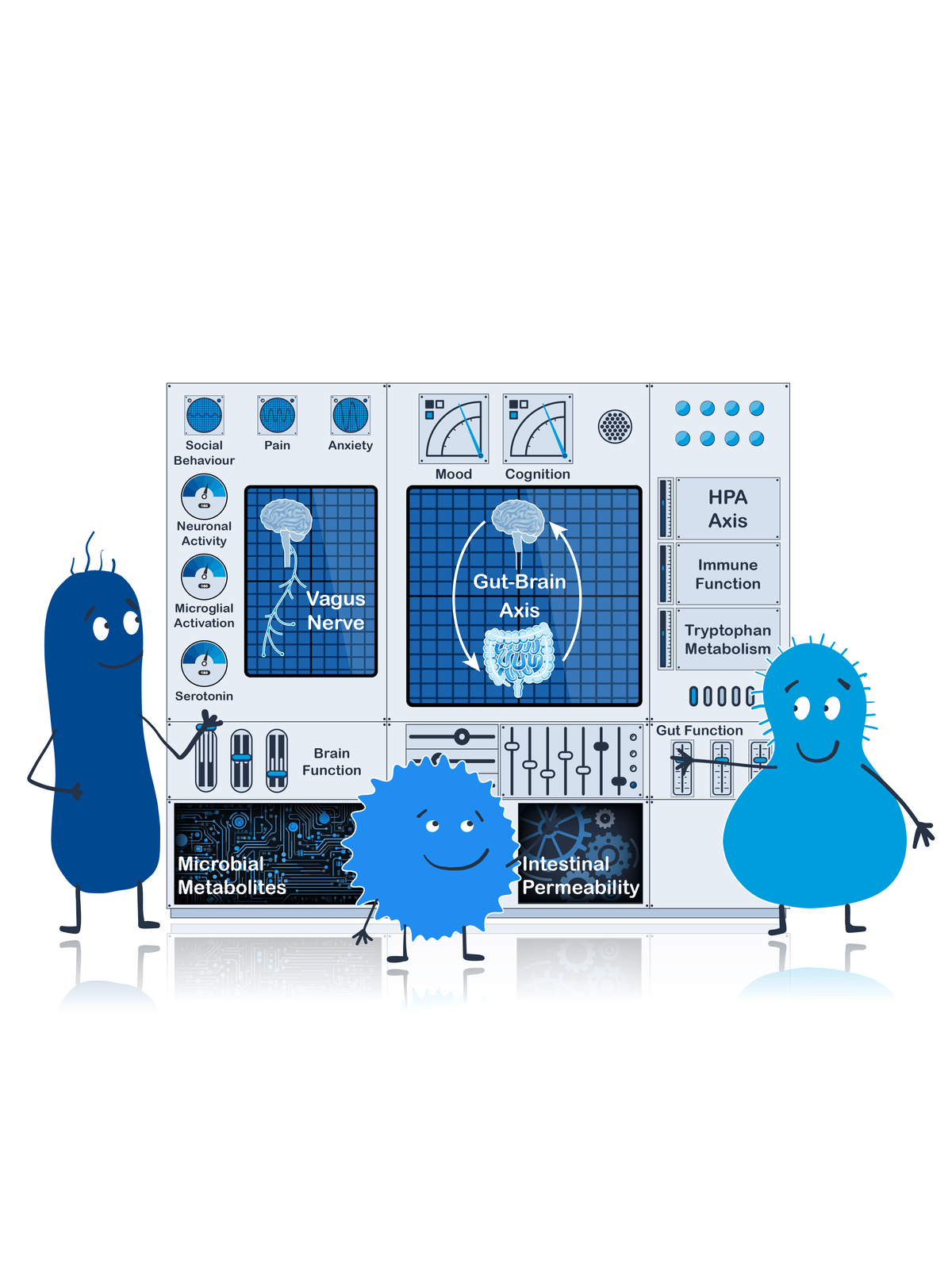
Delve into the complex process of gut maturation in newborns and strategies that support healthy development. This session explores the maturation of the digestive tract in infants, the role of human milk in microbiota and enzyme activity, the intestinal barrier, and how “comfort formulas” may help manage common challenges like colic and regurgitation.
This presentation is by Dr. Juan José Díaz Martín, Professor of Pediatrics at the University of Oviedo, Section of Pediatric Gastroenterology & Nutrition, Central University Hospital of Asturias, Spain.

Narrator:
Doctor Juan José Díaz Martín is a professor of pediatrics at the School of Medicine, Oviedo University, and consultant in the Pediatric Gastroenterology and Nutrition section of the Asturias Central University Hospital. He is a full member of the European Society of Pediatric Gastroenterology, Hepatology and Nutrition, and coordinator of the Gastrointestinal Allergy Working Group of the Spanish Society of Pediatric Gastroenterology, Hepatology and Nutrition.
Professor Díaz Martín is a member of the Spanish Society of Microbiota, Probiotics and Prebiotics, and president of the Scientific Executive Committee of Congresses of the Spanish Association of Pediatrics. He has authored over 125 papers in national and international scientific journals and book chapters and has been an invited speaker at numerous congresses and specialty meetings. Additionally, he has presented more than 200 communications at national and international conferences.
Dr. Juan José Díaz Martín:
Good morning. Buenos días a todos. Desafortunadamente no voy a dar la charla en Español. Seria mas fácil para me y probablemente para muchos de los asistentes, pero voy a pasar al Ingles. [Good morning everyone. Unfortunately, I won't be giving the talk in Spanish. It would be easier for me and probably many of the attendees, but I'll switch to English.] Thank you, Nitida, thank you Mead Johnson for having me here. It's a great honor, this big audience. I'm going to try to keep you connected to my lecture in the next minutes. So, I will start talking about gut maturity.
We're all pediatricians, and we know that pediatrics is all about development. It's all about growth. It's all about maturation. We say this to our residents and to our students. We say that a child is not a small adult, and it's a human being that is evolving. An infant is nothing to do, a neonate is different from an infant.
An infant is different to a toddler, a toddler is completely different to an adolescent, and that's our specialty. That's what we are doing every day. And we know that the different organs of the body evolve and mature differently. In the first years, the neurocognitive system, it's really increasing the immune system. But for example, the genital system develops in the second decade of life.
And this is no big news for all of you. If we go to the gut, because is what we are going to talk about. It's fully formed at birth, but it has to mature. And just to give you some figures, just if we measure in length, it almost triples from close to 2 meters at birth to 6 meters in the adult.
But we go to absorptive surface, it increases by 100-fold. It comes from 0.2 to 0.3 to more than 30 to 40 square meters. So, it's a big change in size, but it's also in function what is going to change, and in the next minutes we're going to go over these different aspects of the GI tract.
The first, I'm going to share with you is really important. It's the intestinal epithelial barrier. And when we talk about this it's crucial for the functioning of the gut, the intestinal epithelial barrier. If we go through anatomy, you can see here that there are different parts. First of all, there's some mucus layer with 2 parts the outer mucus.
That is where the microbiota is located. An inner mucus that is in contact with epithelial cells. A single layer of epithelial cells, and then the submucosa where it's located, the immune system. So, this is anatomically, but if we go into function, we can say that we have at least 4 different barriers in the gut.
The first one is the biological barrier. That's the microbiota, and is the compounds that the microbiota produce, they are trying to impair the overgrowth of pathogens in the gut. The second barrier is a mechanical barrier. It's by the mucus layer and a single layer of epithelial cells that are really bound together by the tight junctions. These tight junctions prevent from leakage of macromolecules from the inner body to the lumen of the gut.
The third one is a chemical barrier. This is compound by the digestive juices, and, for example, the antimicrobial peptides that are produced by the Paneth cells of the intestine. And lastly is the immune barrier that is located mainly in the sub mucosa is the gut associated lymphoid tissue that produces cytokines and also produces secretory IgA. That is the main immunoglobulin for the gut mucosa.
So, all these systems have to be connected. The connections in this interaction are key to the development. To have an immune system that works properly is because the gut microbiota, it's training this immune system adequately, and in the in the next 2 sessions we are going to talk about that professor Berni Canani and in my second presentation will go through this deeper.
To support this, to support the maturation and the interaction of the gut microbiota and the immune system, the human being has the human milk, and human milk provides all the nutrients that are needed for the infant, but also provides multiple components that are there in the milk, not because of their nutritional effect, but because of their bioactive functions.
There are plenty of compounds that have immune functions in the in the human milk. These components are multiple oligosaccharides, prebiotics that are inducing the development of a healthy microbiota that will produce a fermentation of fiber and produce short chain fatty acids that will have important effects on the immune system, different proteins, lactoferrin, lysozyme, osteopontin, proteins that have immune effects.
Whey proteins are rich in tryptophan, and this tryptophan will be fermented by the microbiota to produce indoles, and these indoles will have important effects on the immune system also. And fat components, proteins of the membrane of the of the fat globule also have important effects on the immune system. And of course, vitamins, immunoglobulins, all of these compounds are really important to make this connection between the gut microbiota and the immune system.
If we consider the milk as a biotic product, milk will be a symbiotic, right? It has prebiotics like HMOs, but it will also have probiotics will have a lot of bacteria. These bacteria are really important for the health of the baby. And as you see here, these bugs that are present in the in the human milk will help to develop a healthy infant gut microbiota.
And this balanced microbiota will be related to a healthy status in the infant and later on. And if this microbiota doesn't develop rapidly, if it develops in the wrong way to this dysbiosis state, this will be related to non-communicable diseases, to allergic disorders, obesity and even, malignant diseases. So, let's see if you are connected with me.
Let's get the first question. This is a simple one if you have been following me. Which component of the human milk has effects on the immune system of a baby? LCPUFA and proteins of the fat global membrane, human milk microbiota, lactoferrin, or maybe all of the above. This is a simple one, even for 9 am in the morning.
Thank you so much. Yeah. Great. All of the above. Yeah. All of them have been just mentioned. Thank you for being connected with me. So, we'll be following to the next presentation, just to show you this, because I'm going to go through this in detail in my next presentation. But one of the components of the gut is, the gut microbiota.
And gut microbiota develops in the first year of life. It's really important. So, we will go into detail in this slide and in my next presentation. So, let's move to the latest part of the maturation of the gut I'm going to go through. It's the digestive ability of the digestive enzymes that we have in our gut. When at birth, as I told you before, the gut is fully formed, but it's not completely functional.
There are some enzymes, for example, gastric lipase, is 100% functioning at birth. But we have other enzymes that are peptidases, that are trained to digest proteins, for example, enterokinase, elastase, carboxypeptidase, chymotrypsin, they are really at low figures at birth. They have to develop and get fully functioning later on, maybe in the next months after birth. If we go to, carbohydrate digestion, also amylase, it's low levels at birth.
It has to increase in the following months. And this is important and maybe because of this lack of peptidases in the infants gut. In human milk there are peptides not only protein but small peptides because in the milk of the mother there are some enzymes present. And this enzyme act to, they digest the proteins that are present in the human milk and produce peptides.
The main protein that these peptides come from is beta casein, but also, we can find from alpha casein, from osteopontin, or other types of casein. But beta casein is the origin of the majority of these peptides that are produced by these enzymes present in milk. And these peptides don't have only a nutritional effect.
They have bioactive functions, important functions. Some of them, for example, and this is all the peptides that are presenting milk derived from beta casein. And as you can see here, they have effects on blood pressure, antioxidant, anticancer opioid. But the most important are the immunomodulatory effects and the antimicrobial effects. And there are other peptides from other proteins in human milk that have this anti-microbial effect.
As you can see here, these are the sequence of the peptides as you can see are small peptides from 9 to 15 amino acids. But these have important effects, bioactive effects. So, let's move to the last part of the session, because we have talked about what's the immaturity and directly connected to the gut immaturity of the infants is the presence of some symptoms that are really bothersome and appear only in this period of life.
We all have, we see functional gastrointestinal diseases in our day-to-day practice, and we know that they are present throughout the childhood, but some of them are only present in the first months of life. Infant regurgitation, Colic, Dyschezia, they are only present in the first 12 months of life, not later on.
Functional constipation appears early in life but could also be present throughout childhood. But this type of functional disorders related to the infant, they are really related to these gut immaturity. They are really prevalent from birth to 6 months of age. At least 1 in 2 infants will develop some of these disorders.
And these are data from our recent publication in JPGN. And as you can see here in this study, a big study, in the first 12 months of life, there are close to 30%, 1 in each 3 of these babies will develop some of these functional gastrointestinal disorders, being the most important ones, infant colic, regurgitation and functional constipation.
Moving to infant colic, we suffer this functional disorder in our clinic, in our day-to-day practice. These are really important for this. Infants are healthy, but this disease makes people come to our office and to ask multiple consultations because of the of the colic.
I'm not going through the pathogenesis of the colic, you all know about this, but I just want to show you one of the gastrointestinal pathogenic mechanisms that could be related colic. One of them is excessive intestinal gas. Could be important. And this also is related to gut immaturity, because although disaccharidases, lactase is present since 34 week of gestation.
In the neonates, up to 20% of the dietary lactose could reach and digest the colon. And when lactose reaches the colon and digest it, it will undergo bacterial fermentation, and this fermentation will produce gas, will produce acid. And this excessive gas could be responsible for abdominal distention and crying and symptoms and colic.
And this gas can be detected. It's not easy to conduct and breath test in an infant or a neonate, but it has been done, it could be done somehow. And we all know that primary lactose intolerance is really rare in infants, we don't see primary intolerance in our babies.
We see a lot of secondary intolerance, to gastroenteritis for example. But we don't see a baby that is intolerant to lactose at birth and it’s really rare. But what we see a lot and what is present is what is called the development lactase deficiency. So, these are infants, that in the first months of life they don't digest lactose sufficiently.
And as you can see here in the slide, this occurs, and it can be measured by a breath test. They get low hydrogen levels over 20 parts per million, that is a positive lactose test, and this disappear after the second month of life. So, in the first 2 months of life, this lactase activity is somehow impaired in several children.
And this could be responsible for some of the symptoms that these infants develop. And if we go to colic in this study, you can see that studied the allergens present in these infants, and when compared to normal infants, those with colic at 6 week and 3 months of life, they show higher prevalence of positive hydrogen test.
So, somehow this could be not the main cause but could be related to the production of colic. So, we have seen that digestive ability of the proteins is impaired in the neonatal gut and lactose digestion could be also impaired. So, we can try to put these infants on formulas that are somehow modified, for example, with a lower lactose content and with a partially hydrolyzed protein content, and see if this would help somehow in the development of the symptoms that these infants display.
So, they are the so-called confounder comfort formulas. And these formulas that are characterized by low lactose content and partially digested proteins. So, I'm going to show you some evidence on this. Not so many data, but some data. This is an observational study in more than 600 infants that with infant colic and regurgitation, and they were put on this type of formula.
And as you can see here in the picture, the number of regurgitation and the number of colic episodes decreased significantly, even in the first to second day of being fed this type of formula. This is a randomized control trial, more than 100 infants were fed for 14 days with a local low lactose, partially hydrolyzed formula.
And as you can see here, there is a significant decrease in the number of colic episodes in the first 7 days, and even higher in the second week of treatment. This is another randomized controlled trial, but in this case, there are 2 formulas compared not against placebo.
They are both therapeutic formulas that is partially hydrolyzed formula and a soy formula. And these are infants and so-called fussy infants, who were not, they did not fulfill all the diagnostic Rome IV criteria for colic, but they were fussy infants. And as you can see here, both formulas, even in the first day, they get a significant decrease in the fussiness, in the gas production, in spitting and in the crying of the infant.
So, both formulas were efficient in managing this type of symptoms. Another study I want to share with you again, this is a randomized controlled trial, 14 days of treatment, 100 infants. The one is a control formula, a regular infant formula, and a partially hydrolyzed formula with low lactose level.
And in this study, they assessed the stool consistency and the stool frequency of the infants. And as you can see here at baseline, there were no significant differences between 2 formulas. And at the end of the 14 days of treatment, those with a partially hydrolyzed formula. So, significant softer stools and a significant increase in stool frequency compared to those that were receiving the control regular infant formula.
Last year it came out this important position paper from the ESPGHAN nutrition committee, talking about this type of infant formulas for functional gastrointestinal disorders. And I have to be honest with you, regarding to this type of formula in colic, they say that there is insufficient evidence for formula with low lactose, partially hydrolyzed proteins and extensively hydrolyzed protein for a treatment of colic.
Insufficient evidence does not mean no evidence. Right. This is something I want to point out. So, these are my take home message for this lecture. Healthy term newborns have a fully functional gut at birth, but it's not fully mature. The epithelial intestinal barrier composed by the gut microbiota, the mucus layer, the epithelial cells on the immune system, and several digestive enzymes are important in the maturation of the infant’s gut.
And this partially hydrolyzed low lactose formulas, also known as comfort formulas, are designed for infants with immature gut and are helpful in controlling these symptoms of functional gastrointestinal diseases. And just one thought I want to share with you from Reinhold Niebuhr, maturity is achieving the serenity to accept what cannot be changed, the courage to change what can be changed, and the wisdom to know the difference.
Thank you so much.

.webp?width=1200&quality=75&auto=webp)