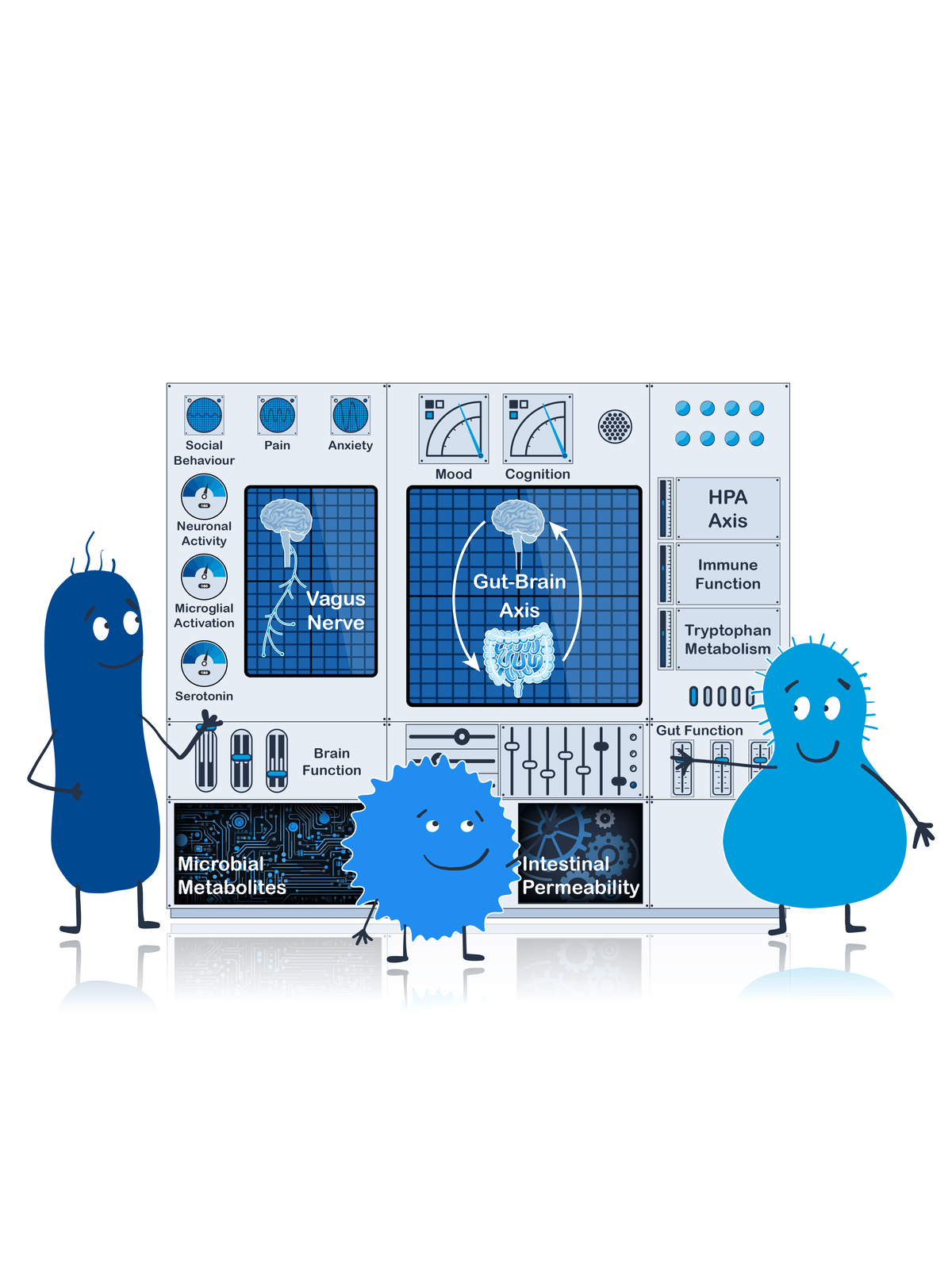
Explore the remarkable benefits of Lactobacillus rhamnosus GG "LGG®", one of the most studied probiotic strains in the world. Known for its ability to regulate immune responses, this strain helps reduce infections and manage allergic conditions. In infants with cow’s milk protein allergy, it promotes earlier immune tolerance and may help reduce or lessen progression along the allergic march - shaping long-term gut and immune health from the start.
This presentation is by Dr. Jon Vanderhoof, Attending Physician, Division of Gastroenterology, Hepatology and Nutrition, Boston’s Children Hospital, Massachusetts, USA.

GNS US 2025: The Role of LGG in Cow’s Milk Protein Allergy Management
Jon Vanderhoof, MD
Narrator
Introducing Doctor Vanderhoff, a pediatric gastroenterologist, professor and leader in the field of pediatric gastroenterology and nutrition. He held leadership positions, including vice president of global medical affairs and chief medical officer for Mead Johnson Nutrition. Doctor Vanderhoff currently serves as chief of Pediatric gastroenterology at the Boystown National Research Hospital in Omaha, Nebraska, USA. Is an attending physician in GI Nutrition at Boston Children's Hospital, senior lecturer in pediatrics at the Harvard Medical School, and Professor Emeritus of Pediatrics at the University of Nebraska College of Medicine.
Please welcome Doctor Vanderhoff.
Doctor Vanderhoff
So they put me on after the cheerleader, for God's sake. I was talking to Ben Gold, and he said, ‘how are we going to compete with that?’ And it sort of reminded me about the story, about the two guys running away from the bear. And the first guy said, ‘how are we going to run away from this bear?’
The second guy said, ‘I don't have to run away from the bear, I just have to run faster than you.’ You know? So anyway, the topic that's been assigned to me is the role of LGG in cow milk protein allergy. And, you know, this is going to be a little bit of a different talk than probably, you were expecting or that any of the people from Mead (Johnson) were expecting.
But I thought it was something that you needed to see. And it's kind of a historical perspective that I'm going to throw in about my experience and working with Lactobacillus GG, and it kind of goes back a long ways. So with that little bit of an introduction. I have, well, let's just say if you run a company and you want to get your name on this list, it doesn't cost very much.
So pediatric gastroenterologists, raise your hands. Oh, wow. Good. What is this? EOE, right. If I would have shown you that slide in 1995, nobody would have said that. And you know, and it wasn't because we weren't looking, I swear. You know, I trained at UCLA back in the 70s.
I scoped everything. And I promise you that if this thing was around, I would have remembered it. And I never saw this at that time. So this is this is something new, and it is allergic. It's a food allergy of the esophagus. And people talk about it as, kind of asthma of the esophagus, where you get these little you can kind of see these little concentric spasming rings, and they often present with food impaction.
But in kids, you don't see that so much, at least not early on. And it's more the abdominal pain. And I can't even remember why. My nurse told me I needed to scope this kid. ‘You need to scope this kid’, and I don't ever argue with her. I just do it. And so, sure enough, we found this, and then we found some other things.
But this kid obviously had, a cow milk protein allergy. So, why am I showing you that? Because the incidence of allergic disease and all sorts of diseases or disorders of immune function have been skyrocketing over the past 50 years. And this has been happening, and people been looking at it and trying to figure out why.
And sure enough, it correlates, with a reduction in biodiversity, in our GI tract and our microbiome, and so could the two be related? Well, you know, if you look at the Epidemiology of allergy, it sort of suggests it might be, it's more common in post industrialized countries, people with very hygienic lifestyles and so forth, who obviously have a different microbiome, seem to have more allergy.
So, we kind of think, well, maybe we can, relate to that. And I suppose it maybe we to say this is a German slide. Bert Klesko I'm sure will recognize it. But, it looks a lot like Nebraska, where I live. A bunch of cows and kids and, what these folks, discovered was that the children who grew up on farms had more had less allergy than the kids who grew up in the cities.
And in fact, the kids who grew up in, close, environment with the animals or close contact with the animals seem to have even less allergy than the other kids. And I think it was Erika Mutius told me once that the kids who grew up in households with two dogs. Two, not just one. Also had, a lower incidence of allergy.
And so, people now think at least I think they still think this, is that this probably has something to do with early colonization, that these children who grow up in this kind of more, microbiological or more contaminated environment tend to colonize in a different way during the first year of life. And this leads to a reduction, in allergic disease.
And sure enough, if you, look at children who are destined to develop allergy, early on, they have a microbiome that looks a little bit different than the children who have, that do not go on to develop allergies. So it looks like there may be something going on, and there are more and more data that are supportive of this.
And sure enough, in this goes back to that very nice little, question that somebody made, from my talk. I didn't do it. But, sure enough, things that we do to perturb the microbiome in a negative way are more associated with allergy. And we talked a lot about C-section. I think Alessio brought it up this morning.
And sure enough, C-section babies have more allergy. I was a C-section baby. I have allergies. I have, autoimmune disease. I think I do anyway. Anyway, maybe it's just being old is bad, but don't do that. But other things that we do to perturb the microbiome, likewise, will have a negative effect.
Everybody knows antibiotics, but what about PPIs? And what about H2 receptor antagonists? They are also more associated with allergies when you give them to babies. And, I've been trying to get people not to do that, because, there's no data that suggests it does anything for the baby. But, it sure screws up the microbiome because a lot of the microbes from the upper GI tract that are normally killed off by the stomach acid, then get down in and colonize the lower GI tract and perturb the microbiome in a negative way, and consequently, in children who as babies got,
PPIs and H2 receptor antagonists are more likely to develop allergy. And the correlation according to this is better than with antibiotics. And interestingly enough, now, there are data to show that, the same is true with EOE, with both the antibiotics and acid suppression, regardless of whether it's a PPI or an H2 receptor antagonist.
So, what's going on here is that it looks like that we, in very simplistic, terms that, well, no an immunologist could understand, is that we've developed, kind of a TH2 for dominant immune response with the TH2 cytokines being the ones that sort of drive the allergic side of the equation, and that the intestinal microbiota appear to be involved in this process.
And for some reason, our T regulatory cells, which we need more of, are not expressed as much as they should be. And our immune systems aren't working the way they were originally programed to do through, many years of evolution. I think Alessio showed very nicely how our immune system can't evolve as quickly as we can change our, microbial environment.
So is there anything that we could do, that might change this equation? And then, of course, brings us to the whole concept of probiotics. And what we do is we have, an immune system that needs to be in balance with the TH2 side and the TH1 side, and, hopefully a nice regulatory response to kind of hold them both down a little bit.
And there are certain organisms that stimulate the allergic side and certain organisms that stimulate, the non allergic or the TH1 side. And could we find some way that we could, feed these organisms to, our patients and, make them, react in a different way. So, this brings us to the discussion of Lactobacillus GG.
I got involved with this organism back in probably, I must have been in the late 1990s, or mid 1990s, when I got a call from, a food company that wanted to know about, making a probiotic product or probiotic food. And, they were looking at some, organisms and asked me to look at their stuff, and I kind of went through the literature.
I said, well, I said, there's, there's just something that might work for you called the lactobacillus GG. But I don't know anything about it. And, they called me back a few hours later, said, ‘Well, the patent has been on that organism is held by Doctor Sherwood Gorbach. And I said, ‘Well, when I was at UCLA, back in the back in the 70s, Sherry Gorbach was the infectious disease guy out at all of you.
VA and at UCLA. It was on the faculty, and I had interacted with him a couple of times.’ And they said, ‘well, would you go talk to him?’ And, so, I agreed to do that. And, one of the things that I learned from Sherry and some other people, was that each probiotic organism and this is a very important point.
It varies in what it by and what it can do at the level of the strain, not at the level of the genus and species. So a lot of what LGG does. So you could see these little hairs called pili coming out of this thing.
And this is how Lactobacillus GG reaches in and touches the immune system. And it is the only strain of Lactobacillus rahmnosus that has these. And that's encoded by that little, piece of DNA. That's, in their little red triangle. And that's unique to Lactobacillus GG. So, this particular strain is the only one that can do that.
And so, and here's a couple of other, concepts of where you can find in nature that, the same genus and species of animals don't always give you the same thing. I mean, these are these are Canis lupus familiars. They don't look anything like. And that's like bacteria. The same way. These effects are at the strain level.
And if you want to use a probiotic, you got to get the strain that was used, not just the genus and species. It doesn't have to be Bifidobacterium breve, it has to be Bifidobacterium breve sub species or strain such and such. And that's very, very important in a lot of people don't understand that. So, the fellow here on the left is Sherry Gorbach, and his colleague, a microbiologist, Barry Golden.
That's where the term GG comes from. These guys, screened hundreds of different organisms, human derived organisms looking for acid and bile resistance and adhesion and bacteria and production and all sorts of things. And Sherry told me, he said, ‘I tell you, nobody's going to ever come up with anything that's going to top this, because I know how hard we worked to find this’. And this was going back in the 80s and early 90s, and I think it's still true. I haven't seen anything that's come close to what this organism can do.
And so the first part of this, talk is, I want to do is kind of walk you through, some of the other things that LGG does. And this is the part that you may not have ever seen before. And, what I did with this food company is I convinced them not only to make this thing, and use this organism. But I convinced them to make a capsule and not put it in a food because I said people are too fat.
We don't need to be filling them full. Well, that's what we want them to eat. No, we're going to do this. So they agreed. And we made this thing and it's called Culturelle. And it was done on a shoestring budget. So, I told them the only way we can do this is to do a whole bunch of clinical studies with it.
People read the studies, and then they'll start using the thing. And that's cheaper than running television ads or whatever, and it'll get you a lot further. So that's how this was started. And in the process of that, we and others did a whole lot of studies, with it. And, and this was, Vanderhoff on it.
This was this was the antibiotic associated diarrhea study. I did this one, looking at, frequency of development of loose stools on in kids who were taking antibiotics. And you can see the difference. Pretty obvious. This was done, in Sweden by somebody, I don't know, at the same time, and found exactly the same thing and the bars even looked the same. So, yeah, two studies show that the doggone thing that seems to work for that.
This was a study by the Isolauri group, in Finland, who did a lot of the early work on this because a lot of this was developed in Finland. They showed that it shortened acute diarrhea, in kids and we did some studies, subsequently with it down in Brazil, showing exactly the same thing doesn't affect how sick they get, but it affects how long they stay sick.
And, this was a nice little study that showed, that if you give it to kids in daycare, they get fewer respiratory infections and GI infections. So we're not dealing here with something that's only, a GI thing. But this is systemic immunity because it affects respiratory infections as well.
And, the same investigator looking at nosocomial infections in hospitals showed exactly the same thing. And, this was a more recent study that that specifically looked at, antibiotic prescriptions in kids and found that if they were given, you know, lactobacillus GG they were, significantly less likely to need antibiotics.
It was kind of a, survey that they did. And then this goes, back to the original studies of, of Isolauri that showed that you the thing was effective in reducing the severity of Atopic dermatitis. And the people who now make Culturelle said, well, that needs to be duplicated. So they got some people in Italy to do the study again.
And sure enough, the atopic dermatitis was less severe if the kids were taking LGG. It works both as a preventive agent and as a treatment agent in those kids. This was a colleague study, and it was done in preemies by the Finns. And it shows a pretty significant reduction in, ‘colic’ at 30 days of age.
My own opinion, these were probably really allergic kids. They were looking at, but they did say that that's my own, prejudice. This was duplicated very, very much later, again, by an Italian group, that showed a significant improvement after two weeks through administration of LGG in colicy babies. But interestingly enough, the fecal protections also went down, which to me suggests that it's, inflammatory.
And I like to think of colic as a head thing. And so this is, showing reduction of inflammation in the GI tract in these kids in conjunction with improvement of the crying. And, they also showed, lower TNF levels in the kids that got the LGG, again, suggesting must be inflammatory.
This must be an anti inflammatory response. Here's another little study that, the Finns did looking at the, IGA antibody response to rotavirus and convalescent stage. And it seems that they kicked out a better antibody response. In, patients that, were recovering from rotavirus. So, we were kind of wondering if we could transfer this to adults.
And this was, again, when I was working with Culturelle, we took a bunch of adults and gave them typhoid vaccine and then with or without LRG and then look at their antibody response and indeed, it was stronger, if they got to LGG before they got their vaccine. And so this is kind of more of an up to date recent thing.
And this was done in adults at Duke. And these people were taking, health care providers that were exposed to Covid, and treating the whole household with LGG or with a placebo, and then looking at how many people in the household got Covid. And sure enough, the number of diagnoses went down, the number of patients that actually had symptoms of Covid went down if they were on LGG.
So it seemed to be, somewhat, protective in stimulating, an immune response to Covid. Traveler's diarrhea. Another adult study that was published in a journal that you'll never find, called, travel medicine. But, anyway, it did show about a 50% reduction and, enough so that when I go somewhere, which I don't do much anymore, I usually take this stuff.
The other thing, and this was a slide, Sherry gave me, Sherry Gorbach. He said that that, even if they're, taking antibiotics or not taking antibiotics, if you sequentially look at the stools of this stuff, the lactobacillus GG will go away in two weeks. So it's not a permanent colonization.
The exception to that rule. So we were working with Culturelle during the early days, and my daughter was pregnant, and her two year old son was milk allergic. And she says, is there anything I can do?
And I said, yeah, I want to do an experiment. So which is what your daughter loves to hear, so I conned her into taking a LGG, in Culturelle during the last three months of pregnancy. If she had a preemie. So it was really only about a month, but she was obviously colonized with it. And then we grew this stuff out of Andy’s stools for three years. And she never took it. So she got it from, from my daughter Denise, who was taking it during pregnancy. And a bunch of our nurses heard about it and they wanted to do it. And, all of the nurses that, took LGG their kids were positive and the ones that got C-sections, there were three of those. They didn't they didn't colonize.
So that's pretty interesting because I think it proved the, the concept that you get your microbiome from, delivery and in fact, my colleague Michael Schultz, who is a German fellow who was over with us at the time, actually got an adult GI guy, his kid was one of them.
And he also, participated. And he published the thing, somewhere. I can't remember where it was, but it's out there in the literature, so now that that kind of takes you through, the stuff on LGG and the stimulation of the TH1 site. What about the downregulation of the TH2 site of the immune system?
This is where I want to just mention whenever I give a talk to, to pediatricians about, about this subject, I always throw in this a little bit about, why babies cry, why babies with, cow milk, protein allergy, cry. And, and they said there's usually two reasons for it. One is allergy, which is a GI thing, and the other is colic, which is a head thing.
And basically the difference is the allergic kids have another symptom along with it. They're constipated; they have diarrhea. They don't eat very well. They do something other than just cry every afternoon. And, if you just use that little simple algorithm, you can often separate them out. And if you look in the small bowl, you see something that looks like this, and that's obviously, an inflamed, small bowel with a lot of lymphoid nodularity.
And I think Bert could probably verify that. In Europe, if you see this, it means allergy. In the US, it means I don't know what it is, but trust me, it's allergy. And, in fact, this was a little kid with the atopic, or with the eosinophilic esophagitis. You can see the exact same lesion.
And anytime you have inflammation in the gut and the stomach empties and you get, food going into the small bowel, it hurts. And that's why these babies start to cry about 15 or 20 minutes after they eat, they quit eating, and then they start to spit up and they start to spit up. Not because their lower esophageal sphincter, function is bad, but because their stomachs don't empty very well.
And then when they do that, the pediatrician says, this is reflux and starts them on the PPI. And, Susan Orenstein did this little study a long time ago where she gave, PPI to fussy babies, and it absolutely made no difference on any symptoms at all related to spitting up or vomiting or feeding or crying or whatever.
There have been four studies that I know of like this, and no studies that show that it's a benefit. And we still see people do this all the time, despite what it does to the microbiome. So big point number two. Don't do that. Okay. And then the other point I like to make whenever we talk about allergy is that, that there are two types of allergy.
I'm not sure they're really different, but basically what you can measure is different. The IGE, once we can measure antibodies to the food. And these people often have systemic reactions and a non IGE response these kids have. And we can't measure IGE antibodies or we can rarely measure them. And these children have predominantly GI inflammation.
And so that's the eosinophilic esophagitis the cow milk protein allergy the enterocolitis kids and whatever they're typically not IGE. And it does no good, to try to do skin tests on them to make a diagnosis. It might help you with it. And so I'd have to challenge him or something. The reasons to do it, but not to make the diagnosis.
So this then brings us, to, IGE and allergy. Can we tamper down that, IGE or that TH2 response and do something positive to our patients by changing the microbiome with LGG? And so we have a lot of data now that shows that this works. And people I say, do probiotics work in allergy?
I don't know. Probably not, but this one does. They're all different. You can't say probiotics do this or probiotic do that. You have to be specific about the strain. And so we have to say lactobacillus REM gnosis strain GG does this. And if you give this stuff according to Mariela Mary Ella Baldassare, her little nice little study shows that if you put this stuff in an extensively hydrolyzed formula, I don't know if you all know this, but I was Alessio Fasano three Fasanos ago.
I used to run medical at Mead Johnson. And in fact, when I came to Mead Johnson, because of my experience with Culturelle, I made him put it in lactose or put them in Nutramigen because I knew that it worked an allergy. And that's kind of where this came from. And so, I gave her this formula to do this study, and, she took a bunch of kids that had, bloody stools, little babies, one month old put them on, either the, formula with LGG or the same formula without the LGG and looked at their stools in a month.
And sure enough, all the LGG babies had heam negative stools. But a lot of the non LGG babies still had heam positive stools and the calprotectin were higher in the kids that did not get the LGG. So this had an acute inflammatory effect on the GI tract in these babies. Isolauri much earlier showed the same thing in the skin.
And this was this was with the, reduction in, atopic eczema, in cows milk allergic kids. And like I said before, it seemed to work both, in a treatment, as well as a, preventive rule. As you can see, in this study, I realize I've gone through this very fast. There's a lot of stuff, you know you look at any other probiotic, and you're lucky to see one study.
I mean, I'm only going through a small number of these things. This is how much stuff we know about lactobacillus. GG. It's amazing. So another thing that happened to me, and when I was, back at Mead Johnson Days is we had just put this formula out and, this young fellow from Italy came up to me.
He says, ‘you know, I said I was seeing that these kids that you have on lactobacillus GG and their formula, they, they seem to become milk tolerant earlier’. And he had some data, a little chart. You showed it to me and said, well, can you study this in a formal way? And he agreed to do it.
And, he has access to a lot of allergy kids because of their health care system. And he took, these kids and randomly they came in, they all got challenged to prove that they were cow milk allergic. And then they randomized him to either get the LGG or the non LGG formula. And then he challenged him at six months and he challenged them at 12 months.
And fascinating. The kids that had the LGG formula, were these are the ones shown in yellow were much more likely to tolerate milk at both six months and 12 months of age. I always expected the bell to sorry thing. I expected the Finnish stuff. And I kind of thought the colic stuff would work, but I never even thought to look for this.
And yet this this may be the most impactful thing, that we've been able to show. So, pretty neat stuff. And, the same fellow, Canani, I actually, followed, some of these patients, for a while. And he said these patients have fewer functional GI disorders, at five years of age than the kids that didn't get the LGG, and he thinks it affects the GI nerves and gut brain interaction and whatever my interpretation of the data, which he doesn't agree with, is that there's probably some micro inflammatory stuff going on in the gut in these non-IGE kids that they haven't totally gotten away from. And that's what's driving this thing. And I, was pleased to hear Alessio talk a little bit about, inflammation and, disorders of gut brain interaction, water, because I think that's kind of what's going on here. He also said that, these kids, also have a reduction. It depends on what formula they get.
If you have kids that get the LGG formula, they're going to have a reduction in the development of other kinds of allergic manifestations, later in life, like rhinitis and asthma and so forth and, and whatever. So you know may have the ability to kind of make this change, more relevant in other parts of the immune system, than just the gastrointestinal tract.
So how does this thing work? Well, I think we we've kind of said it seems to balance the immune system. And how does it do this? Well, part of it, and I think a big part of it is direct crosstalk with the, underlying, immune system. And I wish, Alessio was here because he understands, immunology way better than I do.
But those a little pilli, can get down there and talk to antigen presenting cells and kind of shed little messages and, do a lot of that kind of stuff. And I think that's part of how it works. But it's not the whole story. And, that then goes back to this was something that we were doing back in the cultural days.
And this was it done at UCSF. In what, they were doing was trying to find out if giving LGG early would reduce the risk of asthma. And so they took a whole bunch of babies and they randomized them. They either got LGG or no LGG and then it at a year of age, they just, grabbed stools from everybody, didn't break the bind on the study and just seeked, you know, shotguned.
What was growing in the stools. And they found out that if you had lactobacillus GG in the stool, you were very much more likely to have a whole bunch of other things. Predominantly other strains of Bifidobacterium and other strains of lactobacilli and so forth, and some other things that the kids, that didn't have the LGG didn't have, back to Kanani’s data when he did the same sort of a thing, he found that there was a whole big group of, organisms in his LGG kids that were different from the kids, that that did not get LGG and, and he said, well, what are these doing?
Turns out that a lot of them are butyrate producers. LGG doesn't make butyrate, but LGG fosters the growth of other organisms that do make it. And what is butyrate do? It's anti-inflammatory. The colonists like to eat it, because it's good fuel for them.
It also, through some epigenetic mechanisms, which, I have to admit, I don't fully understand, seem to, stimulate, TH2 production or Treg production and dampen down the TH2 response a little bit. So this thing changes the whole neighborhood. It works like what we think we do when we give prebiotics.
But really does it work. And that is it changes the ratio of the organism enough so that we get a whole different few, chemicals produced in or what we call post biotics. Now, that's the new word for that somehow, can you interact with the immune system and cause these sorts of things to happen?
Are there other organisms that do this? Maybe. I don't know, somebody has got to study them. But, my guess is probably not many. So how do we interpret all these data, microbial populations in our GI tract or appear to be able to program us to be more susceptible to allergy or to autoimmunity or to neither one, changes in our microbiome over time, may explain some of these epidemiological shifts that we've talked about in the onset of these allergic diseases and things like, eosinophilic esophagitis and so forth.
We may be able to alter the microbiome to reduce the risk of these disorders, but the greatest opportunity to do this is going to be during that first year of life. That's when we acquire the organisms. That's when a lot of this priming is done or anything we do, when we're 78, probably doesn't matter a lot.
But if you do it when you're, you know, when you're a year old, you can make a real difference. And how can we do this? Don't give the PPIs. Don't give the antibiotics unless you have to. And, don't let the obstetricians willy nilly do C-sections. I’m proud of my youngest daughter. The obstetrician said, well, you had a C-section.
You can't have a. No, you're going to do it. You're going to sit here and you're going to do it. You know, I'm going to have a vaginal birth. So, it's important to fight with them for that. And then I think this whole probiotic story with Lactobacillus GG and maybe something else that we'll find later on may have the potential for being a real game changer with that.
And then, of course, as Alessio said, diet's going to be really important. I'm not sure we know exactly what to change it to yet. But I think we know a lot more about that than we did. So, that's all I have to say. I'm sorry I wasn't a cheerleader. I tried my hardest.
.webp?width=1200&quality=75&auto=webp)