Early MFGM and the electro-physiological impact
Watch Dr. Cecilia Algarín explore the findings from the "Chilean Project Infant Nutrition Trial" which investigated the effects of different feeding methods on infant growth and cognitive development. Learn about the impact of MFGM on brain circuits and the influence early nutrition may have on cognitive development and language-related processes.
This presentation was delivered at MJNI’s 2024 Global Nutrition Summit by Dr. Cecilia Algarín, MD, MSc, Child Neurologist at the University of Chile.

Narrator:
Introducing Doctor Cecilia Algarín, an esteemed child neurologist with a master's in behavioral neurobiology and over 30 years of experience in research, doctor algorithms, extensive investigation primarily focused on early cognitive development, with a keen interest in the interaction between sleep development and nutrition. As an adjunct professor at the University of Chile, she imparts her expertise and neuroscience to postgraduate students.
Doctor Algarín research endeavors aim to elucidate the genetic epigenetic interaction, particularly concerning micronutrient deficiencies during infancy, and her findings have led to the publication of several articles highlighting the long term impacts on myelination, dopaminergic receptors, and hippocampal activity. Please welcome Doctor Algarín.
Doctor Cecilia Algarín:
Good morning. Thank you for, the part the participants to pay attention to this conference. Thank you to Mead Johnson for the invitation to Phuket, this beautiful place that I have never imagined.
And, my conference today is about the early nutrition and the impact of early nutrition, cognitive development and cognitive function. I have to press.
Okay. I have the disclosure for this conference. And, to continue the agenda, we are going to talk first about the electrophysiological studies in cognitive neuroscience to explain to you how these studies could help to understand better how, the impact of the nutrition, in the developmental in neuroscience.
And, we are going to talk about, the research that we have conducted in the last seven years and the results of these, research, the conclusions of the research and, the follow up. But we have done a 60 years after we begin the investigation.
First, the cognitive neuroscience methodologies have been, evidently, helped to, understand how the, brain function and how, the different type of, inputs, in this case, nutrition inputs could, help or delayed the development of different cognitive functions.
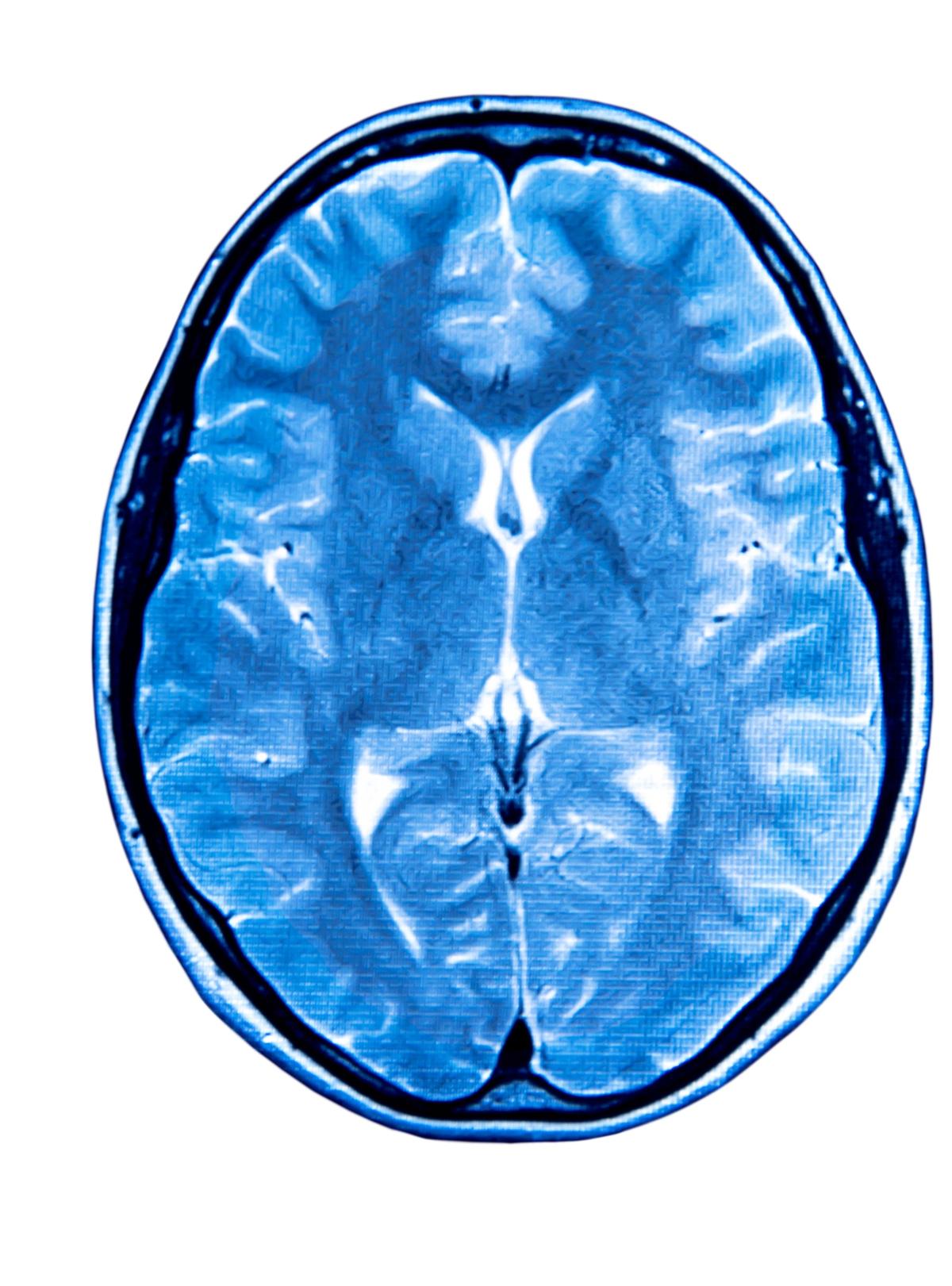
Two of them are very well known. The imaging studies that, some of them are very well, used in the clinical practice, like the MRI that you use to do all the kind of diagnosis of, cerebral, cerebral disease. But the MRI is used again also in research, in other aspects. For example, the functional MRI, we can use that to know how some, action that we do, is reflected in the different structures of the brain.
And the other kind of a sequence that we use in the MRI is the resting state functional MRI that we could see how the connectivity, of the brain in during the resting state when we are not doing anything is very important, to, reestablish all the connections to do things when we are functioning.
The advantage of these imaging is that, the resolution, the spatial resolution is very high. So you can see the structure of this brain that is function in a when you are doing something. But the disadvantage are the high cost of the equipment. That is more difficult to use. For example, when you are going to research infants and young children and the temporal resolution is lesser than other techniques, the other technique that we can use for the investigation of the cognitive development is the electroneurophysiology techniques.
Some of them would also is well known for you in the practical, clinical, that is the ECG electroencephalogram. The polysomnography, for example, for the disorders and the evoked related potentials that maybe are not so useful in the clinical field, but it is very useful in the research. We can, capture captured what is the response of the individual to an event that is could be a visual stimulus, auditive stimulus. A stimulus that can produce emotion, different scenes of that different task. And, the advantage of this, a type of test and examination are that have a high temperature resolution. So you, produce the stimulus and you can see the response in milliseconds. So very, very fast. The low the equipment have lower cost.
And you can do ERP at all age. Since newborns to adults. The disadvantage of this technique is that have less spatial resolution. So you can use a more or less a approximately see in which a part of the brain is the response. But you cannot is especially, say, the structure of the brain that is function in an, in the moment of the stimuli.
As we are talking about the ERP, because, the work is about the ERPs, I want to go for the generality in the brain activity neurophysiology. And as you know, the brain is always in activity. The neurophysiology tests showed this activity represented in waves that change all the times. And the change is, are in frequency.
So, the number of waves in a period of time and the amplitude that is the distance since the bottom to the top of the wave. So these are the, principal measures that we have in the electrophysiological studies. The amplitude and the latency, the evoke related potentials reflects the brain's electrical activity recorded from electrodes that are placed in the surface.
And, they, we collect all the response that, result from the stimulus and the stimuli are a lot of stimuli because we have to do several, several thousands or hundreds of stimuli to, capture a response. Why is this? Because the response of the whatever stimuli that you offered to the participant is very, very little in a micro balls and in tiny milliseconds.
So, in order that you get a good response, you have to repeat the stimuli several times. And that is, the mean of these hundred of a stimuli can say to you more, precisely the response the and as I said before, ERPs can be used across the entire life span. One beautiful example that I want to want to present, is the this one that was published in 2010 by the Dr Chuck Nelson.
And they did this to babies, maybe so three to the four months, and they presented a visual stimuli, of the model, the face of the model, the the stimulus could be with the face of the model in the right position or the face of the model upside down. And as you see in the, in the slide, the response is when the mother is in the right position, the very with response, it with a high, high response with the spot very red, dark red in the temporal sight, where the face of the mother is upside down the red spot is there here, but is less than high, less and is less important in intensity, compared to the other one. So, they can establish at that time that they did this way with 3 to 5 months, could recognize the face of the people that take care of them.
Therefore, they ERPs has been widely used to study cognitive development is and we know that over the the time they change in, morphology, the amplitude and latency. And these changes correspond to the modulation of the central nervous system. And we know that greater myelination, is represented for shorter latency. So when do a with the central nervous system mature is more mature.
They lack latency. And the conduction is faster and the modulation is represents with the circuitry formation that promotes faster and synchronized responses in daily life. This is an example that a test that we conducted in our laboratory, in the, left size is a girl of ten years old. And in the right side is a woman that, you know, I, write about forty years old because you never know how.
How old is a lady? So, the ten years go on and the girl, she responds in the test that we call go no, go test with a short, wave. That is the P three or P 300. But as you see, this P 300 appears at 700 milliseconds and has an amplitude of 20 microvolts. In the lady of 40 years, the P 300 appears at 500 milliseconds, so is shorter the latency and the amplitude is 50 microvolts so half lesser amplitude.
And this means the modulation in ERPs of the central nervous system. Now this time to the question can evoke related potential assess cognitive development. What do you think? Yes or no?
Okay. Congrats for, for everyone that said yes, but congrats to those that don't believe you have to maintain this capacity to, I'm not sure. Still, I'm not sure that you say the truth, we can continue. And and now we move to, How could we relate all this cognitive neurosciencemethodology and studies with the early nutrition and public health policies.
For example, in Chile, in Chile, I am going to Chile because I work there. The exclusive breastfeeding, is about the first month is the 74.5% of the cases, but it decreased very fast. And at six months, only 50% of the mothers breastfed to their infants. So they did a law that allowed to all the mothers that, works.
That is six months of license income in order to take care of the baby. Breastfeed the baby. But in spite of this law, they, the statistics didn't move. They stay like, before the law. So why what that is happened? We don't know yet. We don't have the explanation, but we know that there are several, situations that the mother cannot, breastfeed, to the baby.
And of course, they have to use formula, during the this period of time. That is very important. Like a the earlier speaker said for the development, for the cognitive development. So we have to pay attention not only to the breastfeeding that we have to improve and do everything for the mother to breastfeed the infants. But we have to be they to pay attention to, to the formulas.
Therefore, about by year 2015 to 2016, the University of Chile adding that the this the Institute of Investigation where I work with Mead Johnson we decided to do a research project, to investigate the effect of feeding mode on infant growth and cognitive development. And it was a study that was designed with the double blinded, randomized, controlled trial.
All the infant was healthy. We could be infants a when they were less than four months. and the thing that we want to study was the difference, in development and cognitive development and and height and weight and other variables development, if they consume a breastfeeding or a standard formula or the formula that was enriched with MFGM that you know already, what is this?
And, they were followed during the first 12 months of life. We were we controlled after the three groups, but we, keep the human milk group like the reference group, and we performed their ERPs at baseline 4 to 6 months, and ERPs at 24 months, when they were not consume the experimental formula they consume after the first years was the the formula that they want to consume.
And, that was the principal aim, examination that we did to analyze the cognitive functions of the babies. And this study was, begin in 2016 and finish in 2019. And it would kind of study we, we aim just to measure the cognitive function. We, choose the auditory ERPs. And why the auditory ERPs? Because we know that the first two years of life are crucial for brain development, including language development.
The auditory ERPs has been used to characterize brain processes related to language development. Because responses do not require active attention, ERP acquisition is well suit for the infant, early childhood studies. And the thing that this very important is that the origin and the rotation of the response that in this case is the P1 wave have been widely studied.
They have consensus is that they pick one. That is the work that we study. It represents an early perceptual encoding of language learning. So we have a the back, the base to interpret it the way we have, in normal development, cognitive development or they have different development because we have previous studies, the procedures of ERPs, for the people that are not familiarized with that is more or less complicated because we have to install the net in the baby that will wear 4 to 6 months.
And this net is, with 128 electrodes. We have to position the net in the right side. The baby and the mother stage the special room that was isolated electrical and for the sound isolation. And everything has to be very well installed to get the signal that these that you can see in the right. Very well, you have to, to obtain this kind of, signal because, you are going to, to do the mean of these signals.
And if there are interference or everything you like movement or blinking or whatever the the results are not going to be okay. The, the type of stimuli that we used, that was auditive stimuli. We, it were one that were used in language, in the Spanish language, because the most of the studies of language development with ERPs are in English or Germany or some European countries.
And so we, choose one that was done in Mexico and it was used with the, sounds from a Spanish language. We use three sounds. That was Ta that is in native sound in Spanish, we call frequent because we use and repeat this Ta, ta, ta, 800 times the second sound that we choose was Da that is a Spanish native, sound, and we call it infrequent because we repeat 100 times and the third sound that we use was the these that we call Tha and is not native Spanish sound.
And we used 100 times too. So, the baby received the stimuli stimuli 1000 times during more or less 45 minutes. So after we performed the ERPs at six, 4 to 6 months, we do we go to the analysis and we analyze each group. Standard formula. That is SF, experimental formula that was that enriched with MFGM, and the human milk as reference.
And there were no difference in the sociodemographic characteristics that we could collect. We tried to collect them was a a lot of variables, because we know that all variables are important for the cognitive development. But, and we found that the group was more or less the same, and we didn't find any difference in the ages and in the way that was to learn at birth, maternal age, maternal education, maternal BMI, family income, all these variables that could, reinforce for the for the cognitive development were similar between groups.
When we analyzed the ERPs, we analyzed the P1 wave response. And we didn't find any significant difference at the 4 to 6 months. So the first, ERPs were similar in the, in the three groups. So 24 months later, we recruit the same babies that were at that time, 24 months. And, we repeat the same, the same ERPs.
And we found in this time that there were differences, those who received, the when we analyzed the amplitude of the P1wave that you remember, that is the, wave that, is used to encoding the language, when we are babies, it was different, between, the three kinds of feedings and, the latency was different, too.
And the more important thing was that the difference in the latency, that is, the conduction, faster conduction, well, between the standard formula and experimental formula. So those children that receive experimental formula had faster conduction, than those who receive, a standard formula. So experimental formula, allowed to the children greater value, myelinization, and greater conduction.
And this is the representation of the difference in the P1 wave latency at 24 months that they tried to put a big difference. But if you see it's really seven milliseconds, 5 to 7 milliseconds and you say what is this? Five milliseconds is nothing. Why is so important to the cognitive development? And you are right, it's difficult to explain, but these five milliseconds is in one sound that you, a give to the baby in a in a range of time of1000 milliseconds.
And if you, go to the real life, this is is multiply because is so you receive a in a time several sounds when you when the baby is with the mother or with the or in in environment who receive no one sound who receive several sounds. And if you have a delay in several sounds at the same time, maybe all this is are very difficult and multiply the effect of the delayed and to.
Okay, so we do an example of that. I use this example I it's I, I expect that could be good. That is the Olympic Games in Paris last time in the last June. And this is the most important, event in the Olympic Games. That is the marathon. And, this marathon of the 100m, were won for Noah Lyles and Kishane Thompson, because they mark 9.79 Both of them that are in the arrow, the yellow arrow.
But when they they look at the official chronometer, the chronometer marker for one 9.784, and for the second, that was Thompson, the chronometer marker 9.789. So who won? Well Noah Lyles. And he won for a different of five. So, when you say, okay, what is the difference? Let's see. Five milliseconds. What does it mean?
Could mean the gold medal in the Olympic Games. So, this is important. Whatever delay that we have in our cognition is very important because when you, you do all the decisions that you receive at the same time, it's going to be a, a delay compared to the other people. And it's very well presented in this competition.
So this time of order question greater myelination leads to faster conduction of stimuli. We are aware of that. No. Examples of faster conduction in daily life is better academic achievement, capacity to perform executive functions according to the age to answer faster, correctly or incorrectly a question. All of levels A or B, A and B, please. I would like to know your response.
Okay, congrats. That is, to the 40% of the audience. But I like that, the 50%. thinks that all of the above is correct because. But because I can do one. One, intervention. And I did this, question Because I know that you are going to answer B, the C is to answer faster, correctly or incorrectly.
No. If you do a thing fast. But is incorrect, you are not doing well. Now, you know that. So the conclusions of the study is that the findings in the ERPs, at 24 months of age showed that participants who receive the experimental milk present a P1 wave response with shorter latency. So were faster compared to those receiving and a standard formula, these results could be interpreted as a higher rate of myelination and improved brain connectivity.
That, in turn, promoted greater efficiency to perceive a specific and well-characterized stimulus. I am talking here about the auditory stimulus. I am not talking about everything. Because the impact of this environmental factor only in fact condition cannot be accurately measure a conservative approach the interpretation was taking. And however, understanding and reporting health based outcomes of adding MFGM to infant formula is important, if breastfeeding is not received during the first year of life.
After pandemic, we can, recruit again the the our subject because, we, we wanted to follow up them at three years, four years, five years. But we couldn't because the pandemic. So we can a them at six years old and we repeat the test. The results showed that the, those, those children that receive the experimental formula, presented lower amplitude compared to those that received a standard formula and lowered amplitude, of 3% better synchronization.
For that, that would be a little tricky. I, I both again though, the, the figure that's showed that when you are older, you have less amplitude and faster latency. So less amplitude meaning more synchronization, more better connection, better connectivity, better circuitry. So, the P1 amplitude of the the children at six years that receive the experimental formula has less amplitude that those that receive a standard formula.
So, these represent that the effect of the, of receiving the experimental formula during the first year of life, it continue the good effect after six years, old. What does it mean? It's a synchronization amplitude. What does it mean? This is microvolts. Can you say but again, the Olympic Games and the swimmers, and the swimmer that won the gold medal arrive a little bit before put the arm before synchronized for some seconds, before the second one.
So what does it mean that synchronization in milliseconds could be the difference between gold medal and the other medals that are not gold. So thank you. I left this to think I thank you for your attention.