Puntos Clave
In early years of life, some of the most remarkable brain processes are happening at top speed including myelination and synaptogenesis. Both processes play a vital role in learning and memory.1,2
Demystify myelination
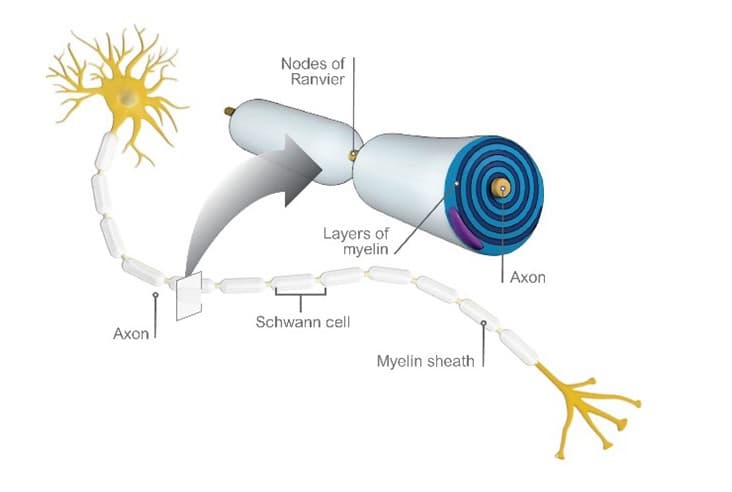
During myelination, nerve axons are wrapped with myelin sheath laid down by oligodendrocyte glial cells, a process that accounts for a large portion of brain growth during late gestation and the first 2 years of life.3 Myelination increases nerve conduction speed by 10-100 times, enabling rapid transmission between neurons.4
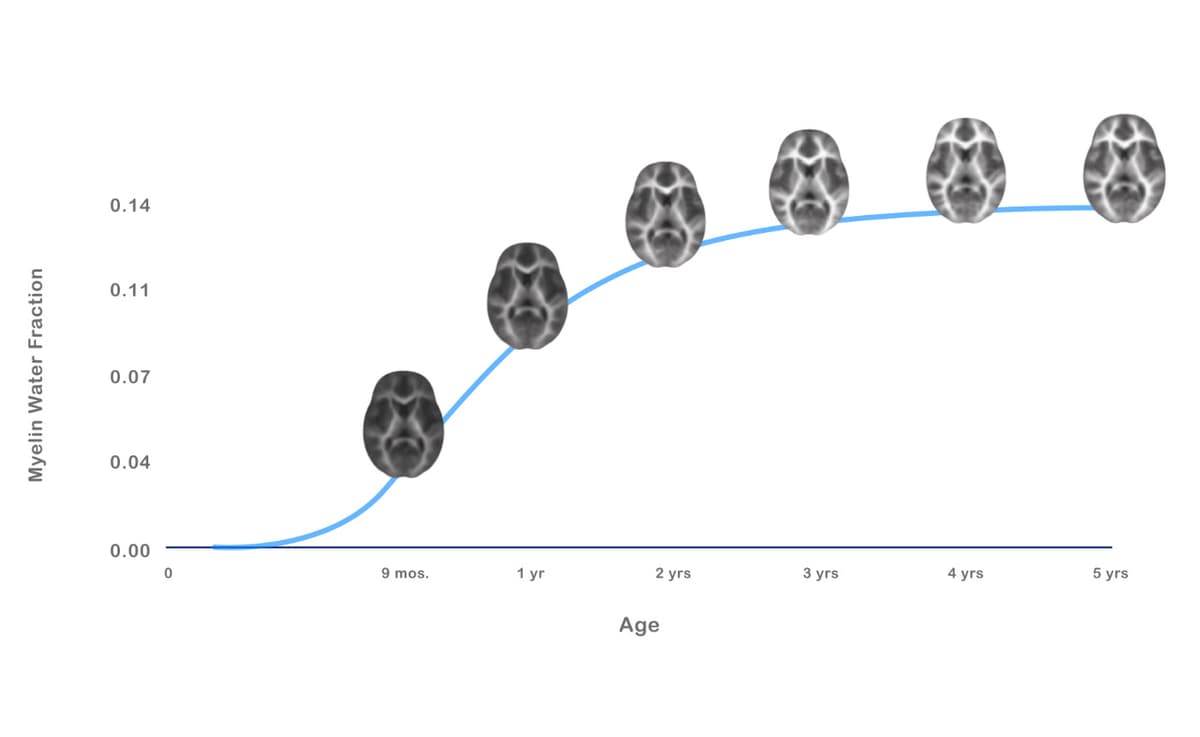
In the recent decade, Dr. Sean Deoni and colleagues have developed a Magnetic Resonance Imaging (MRI) method called “myelin water fraction” (MWF) that allows the direct measure of myelin volume.5,6 This technology has revealed the largest increase in myelin volume occurring in the first 2 years.5,6
Brain Myelination Growth
The peaking of synaptogenesis in early life
Synaptogenesis is the formation of synapses between neurons. Toddlers have over 1,000 trillion synapses, the most they will have in their entire life, and they create more than 1 million synapses every second7 - faster than at any other time in their life.8
The rate of synaptogenesis in the prefrontal cortex and auditory cortex peaks after 3 years of age (see animation), while it peaks in the visual cortex before 12 month of age.6
Synaptic Density Across Development

Supporting brain development through nutrition
The supply of nutrients to the fetus and the infant during the first 1,000 days, from conception to 2 years of age, depends on the diet of the mother during pregnancy and infant feeding. The challenge of optimizing nutrition, therefore, is to identify and promote a diet containing an appropriate blend of nutrients that best support healthy growth and development at each stage of life.
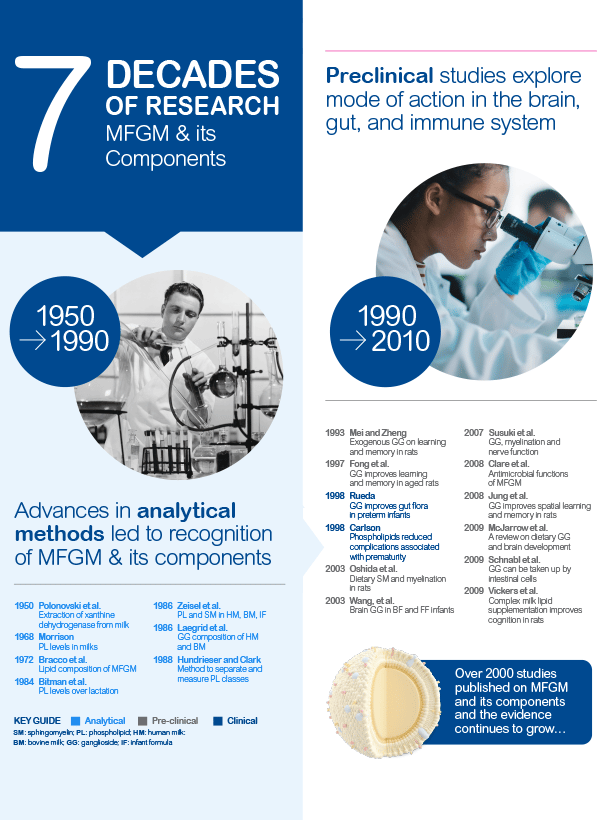
Every drop of breast milk contains Milk Fat Globule Membrane (MFGM), a rich source of many components beneficial for brain development, such as sphingomyelin, gangliosides, and phospholipids. To understand the latest research discovering the impact of MFGM on brain development, read Scientific Evidence for the Benefits of MFGM to Brain Development and Cognitive Function.