Learn how milk fat globule membrane (MFGM), a rich source of sphingomyelin, phospholipids, and other brain nutrients, support myelination and cognitive outcomes in early life using advanced MRI imaging and developmental testings.
This presentation is by Dr. Sean Deoni, Associate Professor of Pediatrics and diagnostic imaging at Brown University, Rhode Island, USA.
GNS US 2025: MFGM and the Developing Brain
Sean Deoni, PhD
Narrator
Introducing Doctor Sean Deoni, a globally recognized doctor in medical biophysics. Doctor Dion has authored more than 80 peer reviewed journal articles and was the senior program officer for the Bill and Melinda Gates Foundation's Maternal, Newborn, and Child Health Discovery and Tool sections from 2018 to 2022. His research focus includes the process of myelination in healthy infants and toddlers in relationship to behavioral development.
Doctor Deoni currently serves as an associate professor of pediatrics and diagnostic imaging at Brown University, Rhode Island. Please welcome Doctor Deoni.
Dr Deoni
Okay, cool. So again, I'll echo Doctor Jimenez in saying thank you again to the organizers for setting this all up and for welcoming me here, and for everyone being here. It's great to get a chance to talk a little bit about the work that we've been doing.
I feel a bit like the clown that has to come on after Pink Floyd and LED Zeppelin, with the two speakers that came before me. I'm going to try to travel a little bit up the vagus nerve, I guess, from your gut to your head, and talk a little bit about taking the next step on some of the work that they were discussing.
They seem to have really nicely set it up in the sense that you'd think that there seems to be a really nice story as to why MFGM and other things would play such an important role in neurodevelopment and brain maturation. However, if I got a penny for every idea that made logistical sense, and didn't pan out, I would have flown here in my own jet, and I would never have to apply for an NIH grant.
Before we get going, though, just so you know, I was always kind of known as a bit of a softie at Brown in terms of being a prof, so I'm going to give you the questions before you take the test, and then we're going to get the lesson, and then you can come back.
So, just keep an eye out for some of these questions as we go through, in terms of thinking about nutrients that are important for brain development, and if all infant formulas are created the same and have the same effect. So, we've nicely followed this story. Now we're going to go above the neck, as it were.
But we're going to start off with the Why?, right, ‘why do we care about brain development?’, ‘why do we care about early infancy and nutrition?’. And my why starts with these little guys, right, so these are my kiddos. They're from a number of years ago, as you'll see, but this is my son Stefan, who is about two in this picture, and he just welcomed home Neela from the hospital.
And so when you think about the first thousand days of a child's life, this is the post-natal portion of the first thousand days, right? It also nicely demonstrates that genetics are non-linear because, thankfully, they take after their mum. But, what I like to see and show about this picture, is it really reminds me and sets the ground stage for all the amazing things that we learned to do over the first two years of our life.
When you think about what Neela is going to learn to do, as she grows up to be like her older brother, in terms of, taking her first steps, learning to crawl, saying her first words, going to daycare, learning how to make new friends. She's also going to learn how to lie.
She's going to learn how to manipulate her parents. Which one, you know, will play off the other to get what she wants? She's going to learn how to manipulate her brother and get him in trouble for getting her stuff and taking the blame for things. So, she's going to learn a lot of amazing things. She's also going to learn how to make new friends; she's a physicist like her old man, so she will not do that, but nonetheless! So, all these things she's going to learn.
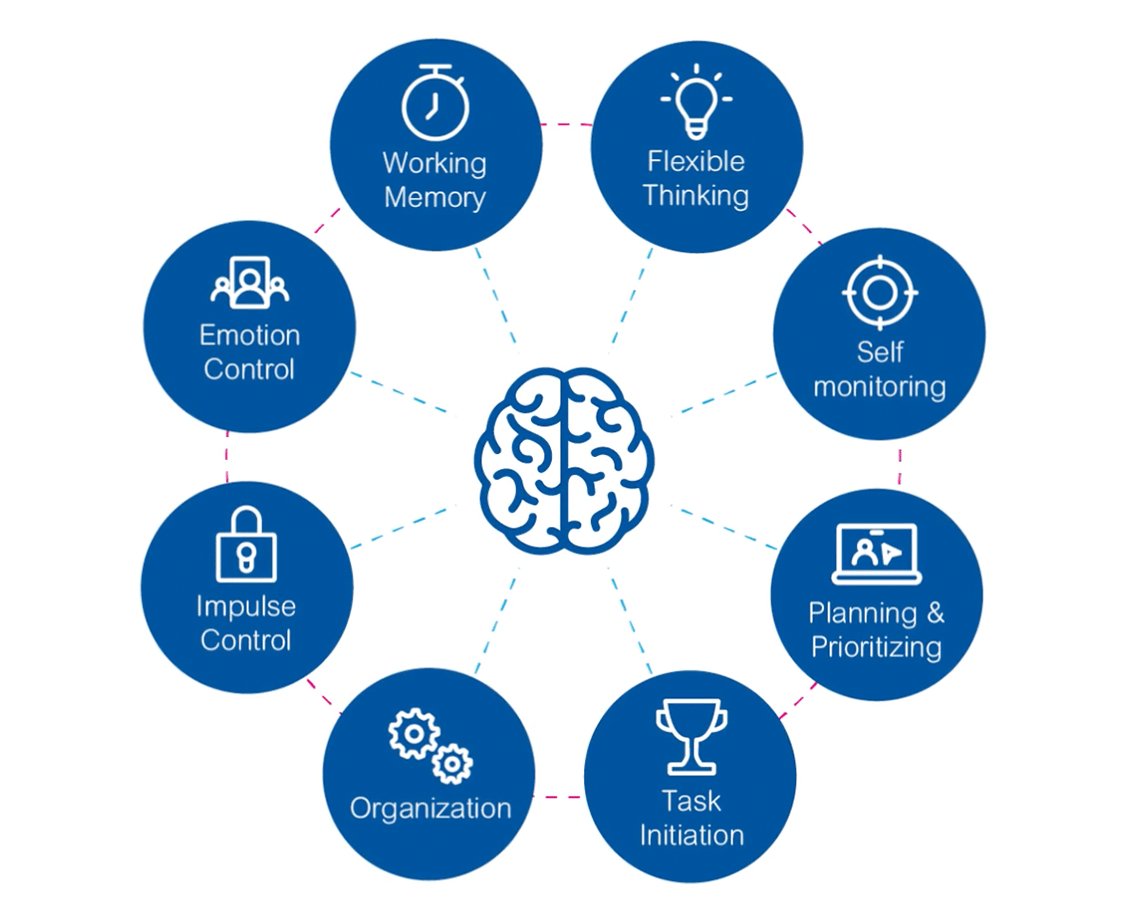
And of course, those skills set the foundation upon which other, more complex skills will begin to scaffold. And of course, she'll use those skills like attention, inhibition, working memory, things that we call executive function, she'll take those as she begins her school career, and they'll, of course, play a role throughout her school career, helping her achieve good grades, do well in school, hopefully grow up.
Maybe she'll become a physicist like her old man, and start subjecting her brother to various experiments. But nonetheless, they'll continue to play a role. And, of course, they will also play a role in her personal life, right, and maybe she is fortunate enough to find a partner, get married, and have her own children, and then begin this generational cycle over again now.
And so, the key thing to take away from this is that all these skills are developing in those first two years of life. So, they are really setting the stage – whether you're going to go off and be someone who's going to change the world, or become a supervillain and live in a hollowed-out volcano – all of those skills are being developed in those first two years of her life, and they will continue on and continue to mature.
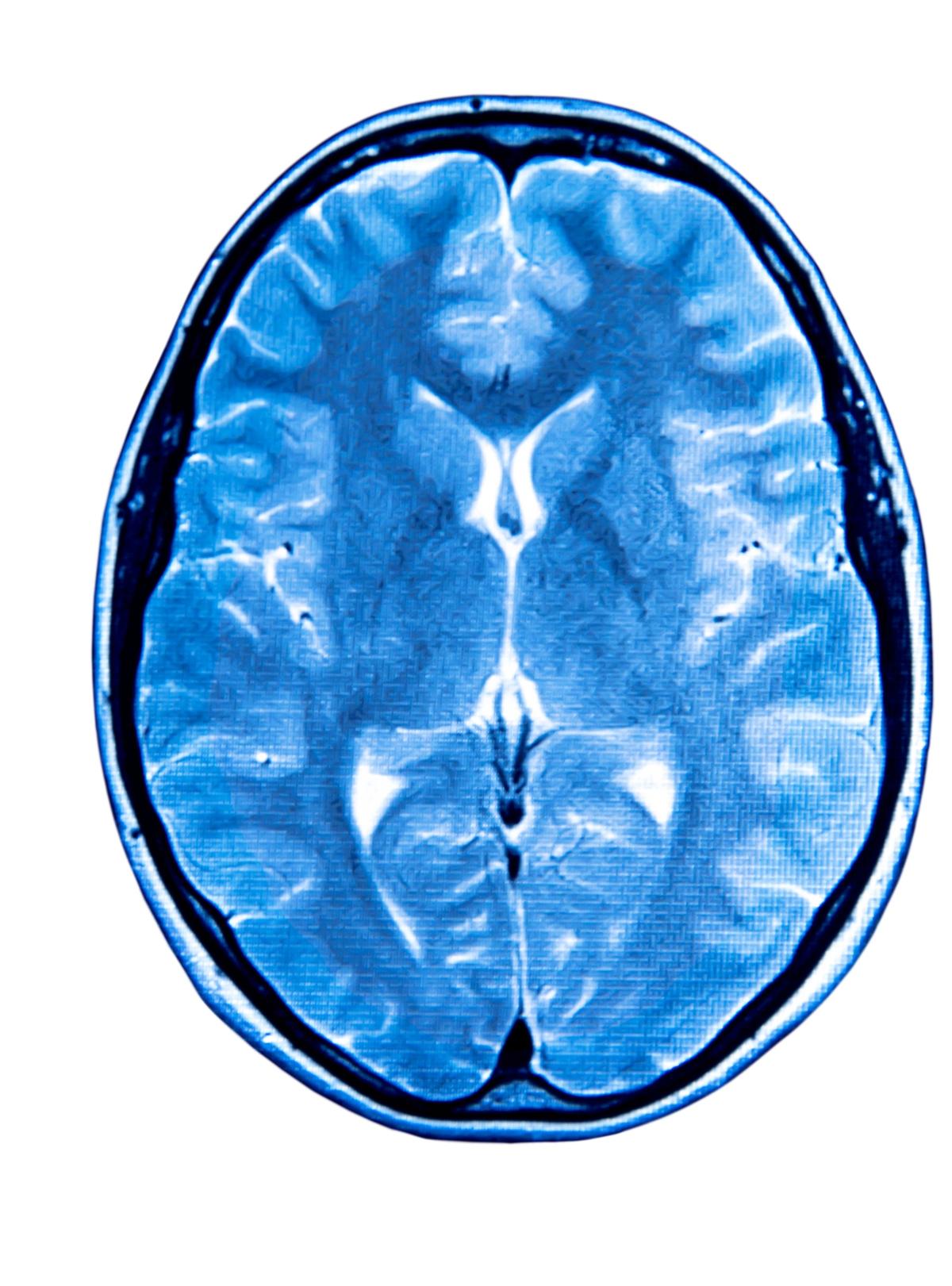
Not surprisingly, then, if we were to look under the hood and see what's happening in her brain, you might expect there to be significant changes. And indeed, Neela was a really good sleeper, so we chucked her in the scanner as often as we could, and these are just a collection of some of the images, I think we scanned her about weekly for the first two years of her life.
But this is just showing her brain at three months of age, one, and two years of age. And what you can see is, again, not surprisingly, given the immense amount of cognitive and behavioral change, is there's an immense amount of change going on in her brain. The first thing you notice is that the brain is growing, right?
It's growing by about three times, or three times in volume, or 300%. And that's being driven by changes in the underlying gray matter and white matter microstructure and macrostructure. In terms of the gray matter, you see how that’s maturing across the cortex. So, the surface of the brain, how it's becoming more folded, basically as you have increased numbers of neurons, increasing synaptic genesis and changing synaptic genesis, that's all expanding out the gray matter in order to maintain that or control that within the fixed skull, it begins to convolve over on top of itself and you get more folds and wrinkles.
So again, increasing the amount of neurons, therefore the horsepower in her brain, the amount of thinking power she can do. And the other thing you see, that's perhaps the most striking, is the appearance of that bright white stuff throughout the brain, or the maturation of the brain’s myelinated white matter, that really is the wiring of the brain and facilitates all the communications in her brain.
If we were to just take these three processes and map them out, in this case over early childhood so up to about age 6 or 7, what you see is they follow these beautiful logarithmic curves, this is very rapid development over the first year to two years of life, slowing down throughout the later part of childhood. That will continue on until about 35 to 40 years of age, and then unfortunately, be in a long, slow decline into old age.
Okay, so hopefully all of you are at the initial part of that curve. But if we just draw a line down at age two, so ending that first thousand day period, what the take home message here is that you spend the first two years of your life developing 90% of your adult brain, and the last third, the next two decades of your life, refining the last 10%.
Right? So, it's an incredibly important period of your child's life. Now, my wife would say that I stopped developing at age 2, but nonetheless, the majority of people will continue to mature those systems and whatnot. But it's an incredibly important period, and it's an incredibly rapid period of development. And in biology, anytime we have things happening rapidly, they're also incredibly sensitive.
They're sensitive to environmental conditions, chemical conditions, genetic conditions, etc., and any sort of change that can happen can have a tremendous impact on the outcome. For example, you can imagine sending a rocket, if you get it off by one degree at Earth, by the time you get to the moon, that's a long miss, right? So you want to get this right.
The process that we focus on a lot at our lab is that process of myelination, and the reason for that is because it's fundamentally a link to brain cognition, as well as environmental sensitivities. And so, if you're to think about your brain, it is this, right, it’s just a whole bunch of neurons.
I got one here. It doesn't fit quite into my head. But this is basically a neuron. You have all these beautiful neurons that send information back and forth to different parts of the brain where they're processed and then sent off elsewhere to be acted upon. When we send a signal, we're literally sending a signal and a depolarization point by point by point along those axons.
Now, when we're born, all those axons are completely bare, right? They're just like an electrical cable that you'd have in your home. And as a result, to send an electrical impulse, you are literally sending it point by point by point along that axon. And that's incredibly slow and takes a lot of energy to do it. In fact, it's been estimated if we were to maintain our infant brain, to do all the stuff we do as an adult, we need a head three times bigger and we need to eat about 30 times as much.
Now I don't know about yourselves, but I was born in an Irish Catholic household. There was a lot of guilt involved in that upbringing. If I came out of my mum with a head three times as big with the shoulders to match, I would still be hearing about that. So, thankfully, nature came up with a solution, which is this process of myelination and this substance called myelin, which is literally a fatty lipid layer that gets layered around this axon and that allows information to flow far more rapidly across this axon because it's hopping along it like a kangaroo.
Much, much more rapidly. And it's about 1000 to 10,000 times faster, so a huge increase in the speed of transmission. And because of this, we're able to do far more sophisticated things. That myelin sheath acts to protect the axon and speed information transfer as well as reduce that metabolic cost, allowing us to do amazing things without requiring a lot of energy to do it.
It links up to brain cognition in the sense of going through functional architecture. If you think about these two images here, we have our structural change in myelination, these link onto the functional architecture of the brain. So, these are functional connected ramps - what you're basically seeing here is a number of different parts of the brain, that are color-coded by the functional system.
So those purple balls at the top are part of your motor system, the yellow balls at the back are part of your visual system, the black balls on the side are part of your language system, and then you have other systems as well. And the green lines are just connections, areas that are talking to each other.
Then you can see as a neonate, when you can't send information rapidly across the brain, your functional systems are like little islands, lots of connections between them, but not a lot of connections between them. What that means functionally, is if I were to take a three month old and put them in a high chair and toss a ball to them, what happens?
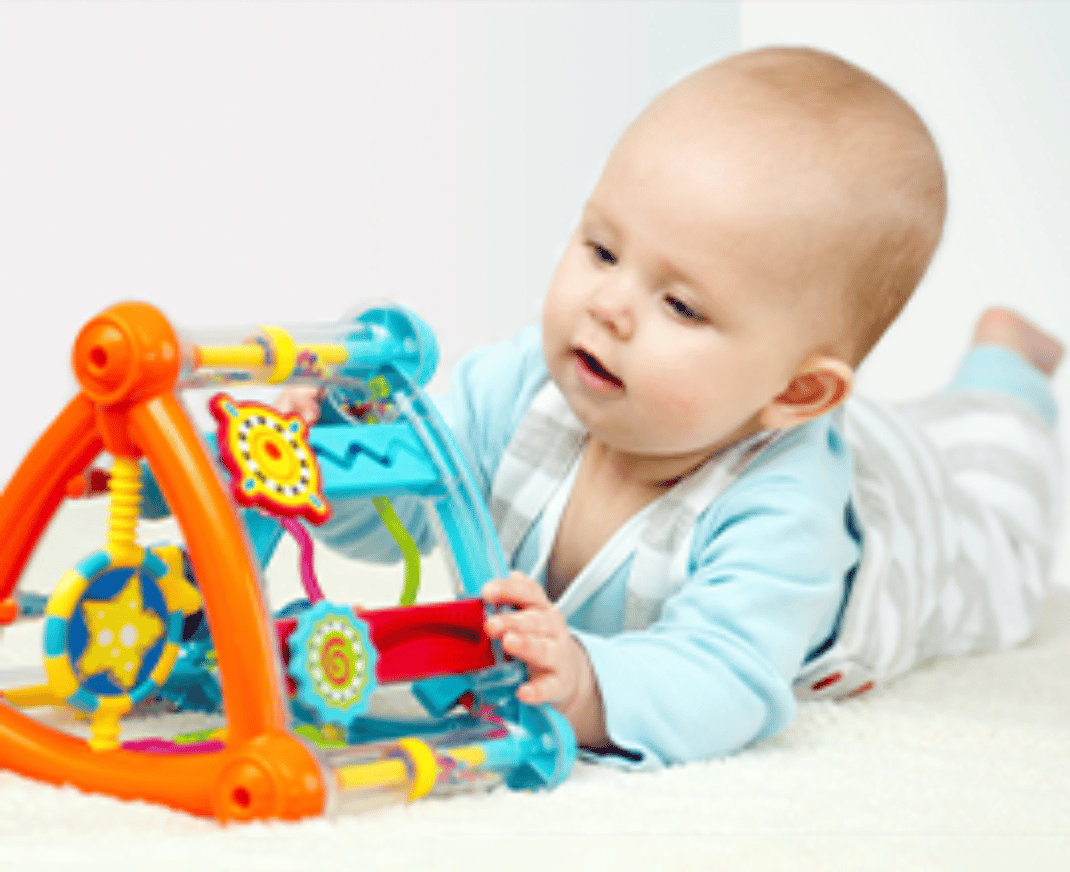
It bounces off their forehead and then they move their hands, right? Because they're both working, both those systems are working, but they're not working in a coordinated manner. However, as you get down and you play with your kiddo, right, you roll around the floor with them, you crawl with them, you tickle their tummies, you build blocks with them.
It stimulates those neural systems, it stimulates that process of myelination, you begin to lay down that myelin sheath, information begins to flow more rapidly, and now your neural functional systems begin to integrate into each other. They begin to evolve and change, and share and integrate information across them. So, now you can see at a two year old how there aren't those little islands anymore, but very integrated networks that are talking to each other.
And so now you take your two year old, you put them in a chair and toss a ball to them, they easily catch it and throw it back to you, or play soccer or football, etc. So, you can see how you go from this structural change to the functional architectural change, which then ultimately leads to your cognitive change.
Going from very simplistic reactionary behaviors, to more complex, involved processes. The key thing is that this whole process is entirely environmentally driven. It requires stimulation, sending electrical signal along that neuron to stimulate the oligodendrocytes, to begin to lay down that myelin sheath. And that stimulation literally begins on almost day one in the in-utero environment. Is mom healthy, well nourished? Supported relationship? That changes the in-utero environment and how those early brain systems are laid down, continues throughout pregnancy into the later part of the pregnancy, into the third trimester when you actually begin to myelinate, then it goes into obviously the postnatal phase.
Was it a healthy birth? Is mom in the NICU? Is mom at home? What kind of caregiving quality? Obviously early nutrition. Those begin to shape that early postnatal development. That continues on as that child begins to grow in the stimulating activities that might be happening at home in terms of play, reading, iPads, these sorts of things.
And then obviously, as a child goes off and goes to school. Right, so lots of different sequences. But all those environmental changes are shaping how that child's brain is developing. And this is really what we focus on, we try to understand how a child's environment writ large impacts those patterns of brain maturation, and how that ultimately leads into those cognitive outcomes, be it cognitive development, be it worrisome behaviors, be it the development of psychopathology like ADHD, autism, or the development of intellectual disorders, dyslexia, math learning disorders, etc..
And the case of today, what we're really focusing on and thinking about in terms of those environmental factors, is what is the role of nutrition, and in particular MFGM? Because as you can imagine, not only do you need stimulation to build a healthy brain, you need something to build it upon, right? Or with, and all that with is nutrition, right, and nutrients.
And so, building a healthy brain really requires a delivery of very key nutrients at both specific time points and at specific quantities throughout the phases of development. And this includes our usual suspects that we hear a lot about, right, your LC-PUFAs, lipids and fatty acids, DHA, omega-3 fatty acids – but also things like phospholipids, sphingolipids, like sphingomyelin that we'll talk about, and even cholesterol.
We tend to want to avoid that later on, because it's not so great for the hips, but really great for the brain. Minerals like iron and zinc, vitamins – B12, vitamin K in particular, but you can just go down the alphabet, they're all important – and then various micronutrients. And you can see that all of these are key for either being a part of the myelin sheath, assisting with myelin synthesis, or adhering the myelin sheath to the neuronal axon.
And, of course, if we looked at other neurodevelopmental processes, synaptic genesis, neurogenesis, we'd have a similar laundry list of nutrients. But these are the ones that are particularly involved in myelination. And if we just think about those top ones, those fatty acids, we're going to come back to those and focus in on those. But the cool thing about nutrition and nutrition delivery, is that with the exception of iron, which is delivered directly from mom to the fetus in the third trimester as well as during delivery and in terms of cord blood, all of those other nutrients are perfectly delivered in the process of breastfeeding.
Right, they're all present in breast milk. Everything that baby needs at exactly the time that they're needed is coming through from mom's breast milk. And if we were to delve into breast milk, as we've sort of already done and touched on, and we start to think about the actual process and the compositions, if we just focus in on those lipids, the primary lipid source, as we've heard, is this milk fat globule.
And this tri-phospholipid layer structure that is similar across all species – at least mammals. So, whether you are, a whale, a cow, a goat, a platypus or a free range human female, you all have this, and they all look pretty much the same.
And of course, the key thing here being that they have all these very important nutrients, things that we just talked about, things like sphingomyelin, cholesterol, your glycolipids, etc. And so, these all play a role, and we should think about the early myelin sheath because they're all incredibly integral parts of the myelin sheath.
So, for example this is looking at a cross-section going back to biochemistry 101 of what the myelin sheath looks like. It is primarily a bi-phospholipid layer, but it contains a number of cholesterols, glycolipids, and phospholipids. When you put this together you can see why things like the milk fat globule membrane play such an important role.
So, when you think about actually building a myelin sheath, you go from ketone bodies, you create into fatty acids, those get combined into ceramides that then becomes Sphingomyelin and then ultimately, the myelin sheath. So, when we think about your milk fat globule, as well as other aspects of breast milk, they're providing each of these individual nutrients that play such an important role.
So, this leads to that last question, right – Can we now actually use this knowledge to improve brain development, particularly in our formula-fed kids? One of the key things here is that while all those nutrients that we talked about are amply provided and near-perfectly provided in breast milk, traditionally many of them have not been provided in infant formula or not provided at the levels needed.
And so this has led to some idea that maybe that underlies why we see cognitive differences, for example, the ones that Doctor Romano-Jimenez showed between the infant formula, standard formulas, and some of the newer formulas in breast milk. So, one way that we wanted to go back and look at this, was to actually delve in and go back, and have a gander at different formulas.
Right? Because if you've ever had that PTSD-inducing event where you go into a supermarket and you go down the feeding aisle, right, it's longer than the biscuit aisle in the UK, there's more infant formula than there is chocolate, that you can almost get lost as to what's going on. But the key thing is that all those different colors, and different things on the shelf, really respond to and correspond to different nutrient combinations.
And some of them have more DHA, some have more iron, some have more folic acid, etc.. And so we actually ended up doing this. We went down we, we picked up a number of different canisters off the shelf. We threw them through a lab who actually quantified the amount of nutrients within each one, you can see that there is actually a pretty significant difference in the number of these key nutrients, even up to about 50 to 60% in some of the cases in those nutrients that we know are important for neurodevelopment, for example, DHA is about a 50% difference between the lowest and the highest.
The Sphingomyelin, which we're just talking about, Sphingolipids that are a key part of the MFGM, again, that's about a 60% difference between the lowest and the highest. So, you might think then, if nutrition is playing an incredibly important role on neurodevelopment, that we would start to see differences in development depending on the formula that child received.
So, that's what we ended up doing. We went back, we tried to put all of our kiddos into one of these big things. Now this is a bit of a challenge. If you’ve ever had an MRI scan, you know that putting a kiddo into one of these is not easy. You know, they tend to be quite loud.
They're dark. They're colder than this room. They're definitely just not very environmentally friendly. And so, these things tend to go together about like this. But if you overcome this challenge and actually get these kiddos into there, you can get those beautiful images that we were showing earlier. We take that information and we plot it out and across our different formulas, we can see that indeed, there are significant differences in neurodevelopment across those different formulas, suggesting that nutrition is playing an incredibly important role.
Now, it doesn't explain all the difference between what we would see as a formula to breastfeeding comparison, but it's about 60 to 70% of the variance explained just by the differential nutrient combinations within each of those formulas. When we then pop this over and look at cognition, we see that these results are mirrored. So, those kiddos who had the better brain development have better cognitive development, and those that had worsened brain development have worsened cognitive development.
Now I'll maintain my academic virginity and not tell you exactly what those three formulas are, but I'll give you some breadcrumbs. The green one you couldn't get your hands on a couple of years ago. And you can imagine I wouldn't be standing here on this stage if one of the top two wasn't made by our host.
Right. So, those should be enough breadcrumbs to get you to what those three formulas are. Okay. But the key thing here being that nutrition is playing an incredibly important role. And these groups are all matched for various socioeconomic and birth outcome indicators. So, we're not being sort of contaminated by some of those effects. We can then take this to the next step and say, well, are those nutrients important for neurodevelopment across or across the whole brain?
What nutrients are actually important, is it all of them? Is it certain individual ones? How do we pull this out? So, we went back, we did logistic regression on each of the different nutrients that we had quantified, and indeed we can see that some nutrients seem to be pulling up across the brain.
So, what we're seeing is different nutrients across the columns and different brain regions that they're associated in; anywhere that you have a bright red number shows that there's a significant relationship where the amount of that nutrient is significantly associated with maturation in that particular brain region. Now, this is a way real scientists like Dr Jimenez and others would look at this data.
If you're a physicist, we look at it like this, much easier. These are the different nutrients, again, that are important for different parts of the brain. And you can see that across the brain, things like DHA playing an incredibly important role, LC-PUFAs, which we expect, iron, folic acid being involved in certain brain regions, choline being involved, but also this Sphingomyelin nutrient being involved across the entirety of the brain.
So again, really kind of letting us know that these are important nutrients. Now we can actually go a step further and say, well, let's actually do a test of this. If we think that these nutrients, in particular Sphingomyelin, choline, DHA are important for neurodevelopment, let's go do an RCT.
So, we did that. We went and compared two formulas, a control formula and a trial formula, over a two year period, in which case each of these formulas was provided to the children for up to a year, to give you a sense of those two formulas. So again, the trial formula was entirely boosted, for those nutrients that we think are important, Sphingomyelin, DHA, ARA, iron, relative to a control formula.
And they’re even boosted relative to breast milk, they're about 50% higher than what we would see in about an average 3-to-6-month breast milk sample. We followed these kids out, and what we began to see was at six months of age, or rather 3 months of age, we start to see improved brain maturation in those kids receiving that trial formula, again, boosted for a Sphingomyelin and those other nutrients. At six months of age, this is amplified.
And then if we look across the full two-year spectrum, we see again just about an overall improvement, about 20 to 26% improvement in brain maturation and myelination in those kids who received that trial formula that was boosted for those specific nutrients. Now that's great, but you can't buy this formula, right? You can't buy that trial formula.
But all those nutrients as we talked about are available in the MFGM. And so the key question then is can we come back and find a product on the market that has MFGM, and indeed we do, right, our hosts create one. Now, we didn't receive any money from B Johnson to do this study, but we actually had the data nonetheless because we've been following kids longitudinally since about 2009 until present day.
So, we've been following kids with scans every 3 to 6 months, but we recruit about 150 new kiddos every single year. So, if you can think about that, is that every single year for the last 16 years, we have a cohort of 200 kids that are receiving sort of yearly, you can sort of think about them as yearly cohorts. Now that becomes important because B Johnson introduced MFGM-added formula or supplemented formula in 2018.
So, we immediately have kids who receive that same formula, without that out of the MFGM, we have kiddos who received that same formula with the added MFGM, and then we have kids who went through COVID, so we were able to exclude them. But nonetheless, we take those two groups, we're able to compare those. What we find is very similar to what we were seeing in our RCT is improved brain development in those kiddos who received that MFGM-added formula predominantly through motor-related brain regions.
So, you have the corpus callosum, you have the thalamus, you have the motor cortices, etc. in the cerebellum, all real motor-related regions. When we look at just those regions, and plot those out, it's about about a 20 to 22% increase in myelination across those brain regions. And specifically in those brain regions, very similar to what we were seeing in the RCT.
And then when we look at neuro cognition, we see improved motor skills, so the non-verbal skills, which we would expect given where we're seeing those differences in brain development. We unfortunately don't begin to see differences in verbal cognition or in overall cognition. We might say there's a trend towards one in overall cognition – I think what that's really reflecting though is the fact that these kids are only followed to about age two, o we're not really seeing any language scores begin to pop up because language is just beginning to really develop.
And I think that would spill over to intellect and overall cognition, if you're able to follow these kids a little bit longer. And of course, the reason I say that is because this is setting these kids up for long term differences, which we then see being mirrored in this study by Columbo, which Dr Jimenez spoke about, looking at five and a half years, just looking at the cognitive scores.
So, we're already sort of beginning to see these changes early on. Taking this all into context, what I hope I've managed to convince you, is that indeed, nutrition does play an incredibly important, and more importantly, modifiable role in early brain development. Those nutrients, specifically your LC-PUFA’s, DHA, ARA, as well as these new nutrients like Sphingomyelin, are incredibly important for brain development.
They are amply provided in breast milk, but are just now beginning to be provided in infant formulas. And when we see them now in infant formulas, we're starting to see that those kids who are exposed to these nutrients have improved neurodevelopment. And we're seeing this, as we say, both in observational findings, but also in RCTs, and it's about a 5 to 8 point IQ increase in those kiddos who receive that myelin-supporting formula.
I will say, though, and this kind of goes along with I think some of the comments that were made before, is that nutrition is only one of the many factors that affects a child's development. And interestingly, and I won't show you any data to support this, but if you ask me about it afterwards, if you remember back to Doctor Fasano’s talk, we talked about some of the Malawi data and the microbiome data.
We similarly have data from Malawi, South Africa, Uganda. What's interesting in those populations is that your microbiome actually interacts, or influences, parent-child interaction and then neurodevelopment. So, there is an interesting link between microbiome, parenting stimulation, and attention, joint attention, and ultimately brain development all being linked and mediated by microbiome. So again, all of these things come back together into one big healthy vagus nerve, I guess, to bring us together.
Okay, so with that, I will hop back to unfortunately, your exam. But you should be able to do well. So, I think if you all have your clickers, or I guess not, clickers, your phone. We'll go back to our poll. Question number one is, ‘which is which of these nutrients is important for myelination and early brain development?’, is it a) iron b) vitamin A c) cholesterol d) Sphingomyelin or e) all of the above.
So, even if you didn't get it, you know now. Well done. Okay. So, it helps when you know the questions before the course. Poll question number two, ‘all infant formulas are roughly the same and have the same effect on brain and cognitive maturation’. Basically, I would say that this is the old pediatrician’s common refrain.
Hey! Alright, perfect. I think I'm done, thank you so very very much.